Showing posts with label Kettlebells. Show all posts
Showing posts with label Kettlebells. Show all posts

Kettlebell Workout - Unilateral Focus ⤵️
The kettlebell is one of the most versatile training tools available. I love the barbell just as much as the next fitness enthusiast, but the kettlebell is perfect for so many reasons. There's a ton of variety and versatility - and - you always get a great grip challenge since the handle is typically thicker in diameter.

🎯 Kettlebell Workout - Bilateral Focus ⤵️
🧱The kettlebell is one of the most versatile training tools available. I love the barbell just as much as the next fitness enthusiast, but the kettlebell is perfect for so many reasons. There's a ton of variety and versatility - and - you always get a great grip challenge since the handle is typically thicker in diameter.

What can 8 weeks of Kettlebell Training do? Watch to find out!
If you want to implement some of these techniques with your older adult population - check out the Essential Modifications to use Kettlebells with Older Adults! https://goo.gl/11kzbK
Want to learn in person? Attend a #manualtherapyparty! Check out our course calendar below!

Learn more online!


Want an approach that enhances your existing evaluation and treatment? No commercial model gives you THE answer. You need an approach that blends the modern with the old school. Live cases, webinars, lectures, Q&A, hundreds of techniques and more! Check out Modern Manual Therapy!
Keeping it Eclectic...


The patient in the video had several level spinal fusion from T7-S1. He had several years of being able to golf and return to function and running. However, he noticed continued lumbar lateral shift to the right. His lumbar spine and left LE is still Sx free, however it has atrophied significantly and in the past year, he has found it difficult to load. His balance is affected and he now needs a cane to walk. He is a PT and is also going to several PTs for gait and general strengthening/conditioning.


After resetting someone's shoulder mobility with something like IASTM and/or repeated shoulder extensions, the mobility may need to be re-educated under load. My former student, friend and colleague, Dr. Russell Manalastas demonstrates a simple but effective progression for working newly gained shoulder mobility.
Expect to see more of Russell in the future as he's launching his own brand, and if you meet him at a seminar, make sure to call him "Little E" - he shaved his head back when I was teaching him ortho, and that quickly became his nickname!
Shoulder Press Progressions

code: turkey20 to save 20%


In addition, Mike Reinold and I have a sale on our most popular program, IASTM Technique 2.0! Use coupon code BF2016 - saves 20%
Want an approach that enhances your existing evaluation and treatment? No commercial model gives you THE answer. You need an approach that blends the modern with the old school. Live cases, webinars, lectures, Q&A, hundreds of techniques and more! Check out Modern Manual Therapy!
Keeping it Eclectic...


Failure is a detour, not a dead-end street-- Zig Ziglar
A little over a year ago, I began teaching myself the Turkish get-up. With guidance from YouTube and Simple and Sinister by Pavel. I started with a shoe balanced on my fist. I quickly progressed to a cute little 20 lb kettlebell, and eventually to a 16 kg bell (35 lbs). The weight itself wasn't heavy, but my movements were disjointed. I felt awkward and uncoordinated. It was frustrating. But I kept at it because I wanted to get better. And I did get better....by doing it. And then I did some more. The first time I attempted a respectable load (24 kg/53 lbs), it didn’t go very well, but at least I didn't drop it on my face. So the next day I tried again with the same weight and it went a little better. And on and on it went.
The get-up is the perfect metaphor for learning and for life. It's all in the name. You must get up. You will struggle. You will fail. You might stumble. You might drop the bell. But if you learn, make adjustments, and are persistent, you can succeed.
Do the thing, and you shall have the power-- Ralph Waldo Emerson
The get-up teaches patience. It is a slow, deliberate movement. It's not meant to be rushed. Performed too quickly or out of control, and you could end up in a world of hurt. But done correctly, it can be extremely rewarding. The get-up is also very versatile. It is an expression of strength, mobility, and control. It can be done as a warm-up during a training session, as a strength exercise, or as a movement "corrective." Gray Cook refers to the get-up as "Yoga under load."
The get-up requires intention and attention. Each movement has to be planned in advance, yet you must also be prepared to make subtle adjustments as necessary. And with substantial weight overhead as you transition from the tripod position on the hand to 1/2 kneeling, and then to standing, you had better be focused. Jeff Sokol (sokolstrong.com) a StrongFirst team leader describes the get-up for him as being in a "flow-state," where everything else falls away and you can be better while getting better.
The get-up requires intention and attention. Each movement has to be planned in advance, yet you must also be prepared to make subtle adjustments as necessary. And with substantial weight overhead as you transition from the tripod position on the hand to 1/2 kneeling, and then to standing, you had better be focused. Jeff Sokol (sokolstrong.com) a StrongFirst team leader describes the get-up for him as being in a "flow-state," where everything else falls away and you can be better while getting better.
However, once you're up, you must then control the descent back down. Because we're never quite finished. We're never done learning and growing. We never reach a point when you're satisfied, because that can lead to complacency. We've been to the moon. Now we're going for Mars. Why? Because that's what's next.
In May, many of you will be graduating from PT school--that's terrific. Celebrate for a few minutes. Then get ready for the next thing. Because if you're serious about the career you've chosen, your journey has only just begun. It's similar to the get-up in a way. The get-up is composed of 7 movements that build on the previous movement. You must OWN each movement and position before proceeding to the next. As important as I think the skill of spinal manipulation is for the manual therapist, I see too many students and #freshPTs that want to jump into learning that skill before they are even competent with simple mobilizations. Getting from the ground to hand support is challenging enough in the get-up. If you can't do that well, the next phase will be even harder.
Master the basics. Own the movement and position. Then proceed to the next step. Yes, it can be slow. Yes, it can be frustrating. But you'll be rewarded by being stronger or more skilled than your counterpart who rushed their way through.
A unique aspect of the get-up is that when performed well, the movement should be able to be reversed at any point. However, it's not as forgiving if you bail or just quit the movement all together--it has the potential to end badly. Apply that same logic to other endeavors, whether it be business, relationships, or with increasing your clinical skills and knowledge. Take things one step at a time, stay persistent, keep learning, enjoy the process, and before you know it--you're up.
In May, many of you will be graduating from PT school--that's terrific. Celebrate for a few minutes. Then get ready for the next thing. Because if you're serious about the career you've chosen, your journey has only just begun. It's similar to the get-up in a way. The get-up is composed of 7 movements that build on the previous movement. You must OWN each movement and position before proceeding to the next. As important as I think the skill of spinal manipulation is for the manual therapist, I see too many students and #freshPTs that want to jump into learning that skill before they are even competent with simple mobilizations. Getting from the ground to hand support is challenging enough in the get-up. If you can't do that well, the next phase will be even harder.
Master the basics. Own the movement and position. Then proceed to the next step. Yes, it can be slow. Yes, it can be frustrating. But you'll be rewarded by being stronger or more skilled than your counterpart who rushed their way through.
A unique aspect of the get-up is that when performed well, the movement should be able to be reversed at any point. However, it's not as forgiving if you bail or just quit the movement all together--it has the potential to end badly. Apply that same logic to other endeavors, whether it be business, relationships, or with increasing your clinical skills and knowledge. Take things one step at a time, stay persistent, keep learning, enjoy the process, and before you know it--you're up.
Don't worry about being an expert. Don't worry about being great today. Just learn-- Tom Bilyeu, CEO of Quest Nutrition
With some of my patients and with many physios at courses that I teach, I am often disheartened with the fear of failure that I regularly observe. Certain patients bristle at trying new or more challenging exercises--perhaps because they're either afraid they can't do it, or think they will look silly. I try to make light of the situation, saying "if you could do it already, we wouldn't need to be doing it."
Physios are often resistant to embracing ideas that may either challenge their current perceptions. (I've certainly been guilty of this in the past). or may make things harder for them by taking them out of their comfort zone, and requiring them to actually think. As Jerry Durham (@Jerry_DurhamPT) frequently quotes, "get comfortable with being uncomfortable."
It's easier to just keep doing what we know how to do. It's like the person with 25 years of experience who has just repeated their first year twenty-five times. Learning a new skill or increasing your knowledge and understanding of a challenging concept takes time, effort, and a willingness to fail. But if you want something bad enough, you'll do it.
We want the path of least resistance, but often we need the path of most resistance in order to grow and change-- Danny Kavadlo author of "Strength Rules"\
One training goal I have is to be able to perform a get-up with "the beast." (48 kg/106 lbs), as performed by Alan Philips (pictured below). It would be wonderful if I could do it now, but I can't. I'm currently at 32 kg/70 lbs for multiple sets and ready to move up. But if I rush it, or if I'm careless, I could possibly get injured and set myself back from achieving my goals. Yet, that doesn't mean I'm not steadily moving forward. Sometimes you can progress quickly, other times slowly. The key is to try to always keep moving. And when I'm able to do it (notice I didn't say 'if'), there's always the next goal to reach for around the corner. The journey is often more rewarding than the outcome. (Incidentally, if anyone at Rogue Fitness happens to be reading this, I'll be happy to provide my address if you'd like to send me 80 and 88 lb bells :) )

Alan Philips (@alphill4305) performing the TGU with "the beast"
It's normal to look at other people and assume we can never achieve what they have because we're not like them. The truth is, most successful people didn't start out successful. They worked for it. We often just see the finished product--we don't get a glimpse behind the curtain to see the hustle, sweat, and sacrifice. Michael Jordan may be the best basketball player of all time. But he also outworked everyone else. Successful people tend to do the things that non-successful people won't do. The road gets a bit tougher and many people get discouraged and quit. I'm not judging. I've certainly quit on things. It's human nature to want to take the easy way out. But we can also learn not to.
One recommendation I frequently hear on podcasts and read about in books, is to model behavior and practices after those we admire who have already been successful. What's interesting, is that so many of those practices are consistent across individuals--things like gratitude for what they have, persistence in the face of obstacles, and clearly defined values and goals. At the same time, though, we should stop short of comparing ourselves to others. Try to be the best version of yourself. Then you can compare your present self to your past self.
Aside from taming the beast in the get-up, I have other lofty goals, (arguably more important), both personally and professionally. And when I think about the things I'm currently doing and other things I want to accomplish, it can get a little overwhelming. It would just be easier to not do them. I would have much less stress. I could relax more. No one would really know. But I would, and I know I wouldn't be happy.
Many of you reading this probably find yourselves in a similar situation. I don't always do a good job of taking a strategy that was successful in one aspect of my life and apply it to another. But I'm trying. So here's an exercise we can do together. Lie down on the floor. Better yet, go outside if you're able. Look up at the ceiling or the sky. It's certainly relaxing to do once in a while, and it might even seem easier to stay down here. But eventually, we have to get up. So let's do that. And let's do it again. And again....
-Andrew
header image credit: strongfirst.com
Interested in live cases where I apply this approach and integrate it with pain science, manual therapy, repeated motions, IASTM, with emphasis on patient education? Check out Modern Manual Therapy!You don't always get what you wish for. You get what you work for-- Strength Matters
One recommendation I frequently hear on podcasts and read about in books, is to model behavior and practices after those we admire who have already been successful. What's interesting, is that so many of those practices are consistent across individuals--things like gratitude for what they have, persistence in the face of obstacles, and clearly defined values and goals. At the same time, though, we should stop short of comparing ourselves to others. Try to be the best version of yourself. Then you can compare your present self to your past self.
Simple daily disciplines--little productive actions repeated consistently over time--add up to the difference between failure and success-- Jeff Olson, author of "The Slight Edge"
Aside from taming the beast in the get-up, I have other lofty goals, (arguably more important), both personally and professionally. And when I think about the things I'm currently doing and other things I want to accomplish, it can get a little overwhelming. It would just be easier to not do them. I would have much less stress. I could relax more. No one would really know. But I would, and I know I wouldn't be happy.
Many of you reading this probably find yourselves in a similar situation. I don't always do a good job of taking a strategy that was successful in one aspect of my life and apply it to another. But I'm trying. So here's an exercise we can do together. Lie down on the floor. Better yet, go outside if you're able. Look up at the ceiling or the sky. It's certainly relaxing to do once in a while, and it might even seem easier to stay down here. But eventually, we have to get up. So let's do that. And let's do it again. And again....
Never forget that you can only stumble if you're moving-- Richard P. Carlton, former CEO, 3M Corporation, 1950
Thanks for reading,Current training partner--32 kg Rogue Kettlebell

-Andrew
header image credit: strongfirst.com
Keeping it Eclectic...

In this episode of Therapy Insiders podcast we are joined by Dr. Dustin Jones to discuss kettle bells, working with the elderly population and West Virginia. Have you been hearing a lot about kettlebells? They seem to be everywhere these days. Listen to Dr. Dustin breakdown the important certification programs and how to get up and running with a good kettlebell training program! Click here to listen!
 Therapy Insiders is sponsored by WebPT: The ultimate EMR for physical therapists. Want to know why they are the ultimate? Want to learn more about ICD-10? Yes, yes you do! Check out WebPT.com/podcast and find out the latest information about ICD-10 and much more. Want a free demo? Of course you do! Give them a call at 866-221-1870!
About Dr. Dustin Jones from www.dustinjonespt.com
I am a Home Health Physical Therapist working to keep people resilient and independent at home. My background is in sports and orthopedics. Yet, I’ve now found myself mainly working with older adults and loving it!
The aging process is tough…for everyone involved. It can wear people down physically and mentally. I’ve seen this first hand and have found great joy in doing what I can to help.
I blend a lot of what I learned working in the athletic realm with helping my elderly patients improve their function. This often involves lifting a kettlebell or two and maybe crawling on the ground.
|  |
I am by no means an expert, but I hope to help patients/clinicians by sharing mistakes made & lessons learned along the way.
- Doctor of Physical Therapy from University of Kentucky (DPT)
- Bachelor of Science in Athletic Training from West Virginia Wesleyan College
- Functional Movement Systems Trained (SFMA-I & FMS-I)
- Certified Strength & Conditioning Specialist (CSCS)
- Russian Kettlebell Instructor (RKC I)

Interested in live cases where I apply this approach and integrate it with pain science, manual therapy, repeated motions, IASTM, with emphasis on patient education? Check out Modern Manual Therapy!
Keeping it Eclectic...
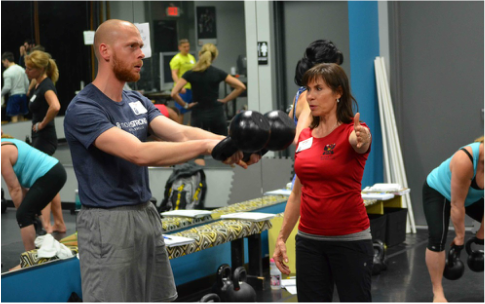
Today's Guest Post is from Dr. Dustin Jones, PT, DPT, CSCS, RKC. What's RKC and why is it important for PTs? Read on!

Thanks to a patient who learned this exercise from an excellent personal trainer, I present the kneeling kettlebell plank!

At the beginning of each year, I take a look at where I want to develop myself professionally and my weaknesses. I then come up with a list of courses I want to take that year.


I learned this from Charlie Weingroff and immediately started implementing in my shoulder patients with scapular dyskinesis.
Today's Quick Links come from Chris Johnson, Gray Cook, and Body in Mind.
Today's Quick Links come from Dr. Perry Nickelston, Dr. Charlie Weingroff, and Everything RKC.

Today's Quick Links come from The Body Mechanic.ca, The International Journal of Sports Physical Therapy, and Jeff Cubos.
Today's Quick Links come from In Touch Physical Therapy, Chaitow's Chat, and SMR Blog.
Today's Quick Links come from Chris Johnson, Orthopedic Manual Physical Therapy, and LEAF Lifestyle via youtube.

Today's Quick Links come from Kettlebell Athletics, MobilityWOD and My Physical Therapy Space.