Modern Manual Therapy Blog - Manual Therapy, Videos, Neurodynamics, Podcasts, Research Reviews: #DPTStudent
Showing posts with label #DPTStudent. Show all posts

Thanks to Dr. Leon Knight, @theperformancedoc for letting me compile his recent and amazingly hilarious instagram video compilation. Which student have you come across recently? Or more importantly, were YOU one of these students?


Everything should be made as simple as possible, but not simpler -- Albert Einstein

We've all heard of KISS, No, not the rock band that grew to fame in the 80's. I'm talking about the phrase "Keep It Simple, S....(insert your word of choice)" Within our profession, there has been a propensity to make things more complex than necessary Why is that? There are several possible explanations. I heard Greg Lehman (@GregLehman) make an interesting observation while on the Chews Health Podcast (@TPMpodcast) and more recently the NAF Podcast with Adam Meakins (@AdamMeakins): "There are a lot of smart people in the profession. It's hard to get in [to school] and you work really hard and I think there's a desire to do something that's complex because simple makes it seem that anybody can do it." 

That does make a lot of sense. However, do patients want what's simple? Ideally, I think so, but I so know that if we each reflect upon our own clinical practice, we'll probably find several examples of a strange balance between the simple and complex.

Early in my career I ran into a situation that illustrates why I think phyios struggle when it comes to keeping things simple. The patient was a middle aged female that would have been every McKenzie MDT instructor's dream demo subject. She had low back pain with radiating pain into the right leg. Symptoms peripheralized with flexion and centralized with extension. I sent her home with prone press-ups as her primary exercise with standing repeated extension for her to do during the work day. I saw her for a second visit and she was already significantly better. We continued with press-ups without any force progression as that was all that was necessary to centralize/abolish symptoms. She demonstrated improved lumbar flexion motion on re-assessment without production of low back or leg symptoms. I had planned to continue and gradually reintroduce flexion in a future treatment as long as it was indicated, but she never came back. When I called two weeks later to follow-up, the discussion that followed was not anticipated.

"You didn't do anything" was the response I received when I inquired as to why she had not followed-up with her appointment. (Remember, this was very early in my career when my patient interaction skills were still quite lacking! But I remember the conversation almost verbatim) "What do you mean?" was my reply.

"I was expecting a massage or something more." So there we go-- lesson one, establish/understand expectations. 

"Are you having any back or leg pain now?" I asked. "No." "So, you're better?" "Yes." "Then I don't understand; how is that you say I didn't do anything?" "Because all I did was that simple exercise that I could have done by myself!" And there it is. 

"But you didn't come up with it by yourself, did you? You came to me and I determined that was a good movement for you to do. I could do that other stuff, but I didn't think it was going to be as beneficial for you." Silence. And then, "Well, I was expecting something different." I don't remember exactly how the conversation ended, but you get the idea. 

While that very well may have been an example of how NOT to perform a follow-up patient interaction, the point there highlights what some  physios do fear with regards to simplicity. However, there are times when patients do gravitate towards simple, as in the explanation by physicians for the reason for their back/leg pain as a "pinched nerve." We know that's rarely what actually is happening and the true reason is often more complex. 

Simple with exercise is usually good. Most patients will struggle with movements/exercise with too much complexity. Even if it's the "best" exercise, if they do not do it, it's not very effective. However, something as simple as a Farmer's carry is met with skepticism. "What is this supposed to do?" I'll get asked. "Why don't you go walk to the end of the room and back and when you get back you tell me what you feel?" What can I say, I'm a smart-ass. 

via Dr. Andrew Rothschild, DPT, FAAOMPT
Lead Instructor: Modern Patient Education
Mentor: Modern Rehab Mastery
@spear_physio

If you want to go beyond the seminar, our next cohort for Modern Rehab Mastery, our one of a kind online mentoring group is starting soon! Sign up here.

Want to learn in person? Attend a #manualtherapyparty! Check out our course calendar below!


Keeping it Eclectic...


Today, I talk about an important question my brother asked me the other day:
“Is physical therapy school really that expensive?”


March Madness is upon us for NCAA Basketball. And so, in celebration of such “madness,” we’re bringing our own “March Marketing Madness” in this special e-resource series. In this special collection of articles, we’ll be covering:
  • Branding
  • E-Mail marketing
  • How to grow a following
  • Metrics to measure in marketing
  • How to start a blog
  • The formula for creating captivating stories
  • Keys to social engagement
  • Mission critical business competencies PT practices NEED to have
  • And… a bunch more topics and even more articles, linked within the e-series contents.
This special March Marketing Madness e-resource series is available for SUBSCRIBERS, ONLY! Don’t miss out and do not delay!

[CLICK HERE to SIGN UP]


This post… has been a long time coming. It’s needed. It will not be comfortable. And, it shouldn’t be! If you’ve read any of the below posts…
You know what I’m about, and, you know for the most part that I nigh annoyingly positive, constructively inclined, and inherently optimistic. Rarely, do I flat out say something needs to stop. Well… today is one of those rare days.

5 Things in Physical Therapy We CANNOT Ignore Anymore

1. The Debt

It isn’t just because there are, for the most part, daily online conversations about the tremendous student debt happening in the field of allied rehab therapy. It’s not just because I get regularly flooded by questions in my many inboxes on the matter of personal finance and career path. The reason we NEED to talk about the debt, isn’t even for the sake of student debt, itself.
I believe it was said best in a major highlight point in the Graham Sessions 2018 conference [click here for the recap] — “The debt we are saddling our students with is unconscionable and threatens the health of our profession.”
There will be no profession, if professionals cannot afford to practice.
This is as much of a problem in the health of supply in new clinicians, as it is in the business practices en masse of our profession. If we have no supply, how can we suffice any demand…. not to mention, our historical desire to raise demand for Physical Therapists beyond the 7-10% marketshare for musculoskeletal health service delivery — a great segue to #2…!

2. The Atrocious Attitude Towards “Marketing”

For far too long, Physical Therapists along with our allied rehab therapy colleagues have taken this curious “step back” in accepting our station as “ancillary services” to the “primary” services, that of physicians. We’ve been happy enough — at the very least, happy enough not to change anything. Still, when it comes to being at the mercy of referring medical offices versus aggressively going after the market — we do a lot of talking, and not much action.
A market, mind you, which is WIDE OPEN. As mentioned, only 7-10% of the general population that medically qualifies to be seen by a Physical Therapist — ever does. AND, of that marketshare, the outpatient sector can boast a conservatively aged industry value estimate of $30 BILLION dollars [see here & here, “classic numbers”].
This attitude problem is furthered with so many practices “proud” of have a “zero marketing budget” or being 100% driven by referrals and word-of-mouth. What happens when referrals stop? What happens when people stop talk about your practice? What happens when the majority of healthcare consumers do what every other consumer group does… and, shifts their shopping behaviors online channels as they’ve ALREADY DONE?!
This “we don’t need to market because the excellence of our care will market for us” needs to go away… FOREVER.
Disney. Amazon. Apple. Google. Starbucks. Target. They are all pretty dang savvy at what they do. Do you see THEM bragging about their “zero marketing dollars spent???” HELL NO! These industry giants don’t measure their marketing success by how much money they DIDN’T SPEND; they measure their marketing success by the Return On Investment (ROI) by scale to which they DID INDEED SPEND! AND, many times… the more they spent, the more they gained!
Marketing isn’t a dirty word. Sales isn’t a dirty world. Public Relations isn’t a dirty word. Community Outreach isn’t a dirty word. Spending isn’t a dirty word.
If any of the words above made you uncomfortable, as if it’s not part of the clinician’s role… then it represent a naive outlook that if we are good enough, people will support us. WRONG! If we share the message of WHY we are the best choice they’ve ever made for their lives and their well being… THEN they will support us — which then leads us to…!

3. Acting As If Someone Else Will Advocate For Us

In the scope of physical therapy, we are a doctoring profession. That means Physical Therapists are doctoring providers; and, Physical Therapist Assistants are extenders of doctors. This isn’t about if we should be; this isn’t about how it came to be; this isn’t about how we should change; this isn’t even about how some of our colleagues missed the “D” in front of their “PT by mere months or handful of credit hours; this is about what is presently the situation for the Physical Therapy profession. And — we need to own this.
HOWEVER, what we are trained to do is ultimately trumped by how we are LEGALLY allowed to practice. It doesn’t matter how great our training gets, how advanced our schooling gets, or how backed by science our methodologies are — if our LICENSE doesn’t reflect those knowledge & skill sets… our hands are tied.
All these political and legislative battles are fought in another playing field — outside of the clinic walls, on top of another veritable treatment plinth. The victors of these battlefields are the true gatekeepers of supply. It is here, we must fight and win.
Speaking of… have you heard of the PT PAC? Any ideas what they do? Honestly, I didn’t while I was in school… I barely understood the significant even three years post grad… and, only recently have I had in depth discussions with the PAC on what they do — and, how simple things like: how APTA membership dues and lobbying dollars come and go in different buckets. Confused? Angry? Feeling like your dues should somehow lead to advocacy dollars for lobbyists? Well….. it’s a different story in this battlefield and we must be AWARE of the weapons if we are to be strategically involved in actionable game plans.
Tragically, this ever present lack of awareness to the importance, logistics, and flow of how advocacy works for our profession is crippling us. It’s beyond ridiculous to think a PROFESSION can care so little to act upon the very barriers and boundaries to which govern its ability to practice. Sadly, so much of this can be attributed to…!

4. The Lack Of Ownership Mindset

In the practice of physical therapy, clinicians are conditioned to be workers, not owners. You heard me, you read that correctly — Workers. And, regardless of if an individual professional is an equity owner or shareholder, it’s not so much about the title as much as it is the MINDSET. Our tendency as clinicians is to think and value only the clinical aspect of our profession — after all, someone else will take care of it, right?
Someone else will do marketing, someone else will cover billing and coding, someone else will do training, someone else will surely take care of the political battles on Capitol Hill… right??? Right? Please??? Somebody?!
This is a huge problem as the clinical practice is but once facet of the bigger picture; a bigger picture that includes things like business administration, marketing, healthcare administration, corporate compliance, human resources, billing, accounting, finance, business development, company culture, legislative and political advocacy, public relations, systems building, etc. etc. etc.
We need to stop thinking as clinicians, and start thinking as a profession.
Further on the ownership mindset: There are these weird and terrible myths we still circulate. Thoughts like it takes 5 years of experience before clinicians should think about opening up a practice. Or, that business is bad & corporations are greedy.
BUSINESS isn’t bad. Bad business, is bad.
If we continue to ignore all the other various facets of professional practice, we will only continue to pigeon hole ourselves as replaceable technicians.

5. Comfort Is The Enemy Of Progress

“Comfort is the enemy of progress” — P.T. Barnum
Competitive advantages don’t come from comfortable situations. Sadly, one of the highlighted “benefits” of the Physical Therapy profession as well as the Rehab Therapy Allied Industry at large… is that it’s comfortable! At WORST: You will always have a comfortable, recession proof, average middle-class American job and lifestyle.
I don’t know about you… but, for me… with the amount of training, sweat, blood, tears… oh, and of course… the aforementioned #1 thing we can no longer ignore… THE DEBT… “average.” is no where near good enough.
Average comfort is not good enough for me, for my profession, for my colleagues, for my stakeholders, for the patients we serve… it’s not good enough for a health-stricken society that NEEDS US to step up and be the doctors they deserve… the doctors we are supposed to be.
Comfort has left our feet, stuck in the mud, because all we’ve done is let rain water gather around us whilst we failed to prepare our crops for the coming seasons. And, while not taking any credit nor due recognition away from those who continue to fight for us, lead us, pioneer, suffer, and otherwise put themselves out there for public critique — we’re not talking about those already sacrificially leading the way on the bleeding edge….. we’re talking about our entire profession en masse. We need to stop being, feeling, and aiming to be comfortable.
We need to get comfortable being UNCOMFORTABLE.

I know, I know… I’m just so positive on a usual day. This is a rather aggressive post for someone like me. Well, sometimes you have to draw a line and take a stand… sometimes, you can’t just promote what you love. SOMETIMES, there are barriers that get in the way. And, as much as I’m known as an advocate for building bridges, sometimes you have to knock down a few barriers first, before you can make meaningful progress in making those connective crossways.
These are five areas we just cannot ignore anymore. And, sure… there are probably way more. Starting here is a good place to begin planting the seeds for other concerns, such as narrowing the gap and tightening the confidence interval in our clinical excellence as a profession. Honestly, it shouldn’t be the case that going to one Physical Therapist while compared to the care of another, becomes a drastically different experience. Sure, stylistic uniqueness should remain; but, the amount of brand damage we receive from such variance between consumer experiences doesn’t help show how unique we are as practitioners. It only communicates to healthcare consumers that they can’t trust the consistency when “going to get physical therapy.” *barf*… #YouGetTheIdea…
#EndRant

Oh, if that bit on attitude towards marketing for you a bit fired up… here’s some light reading material on marketing that you can check out via our exclusive e-series “MARCH MARKETING MADNESS 2018.”

[Click HERE to Sign UP!]


Keeping it Eclectic...


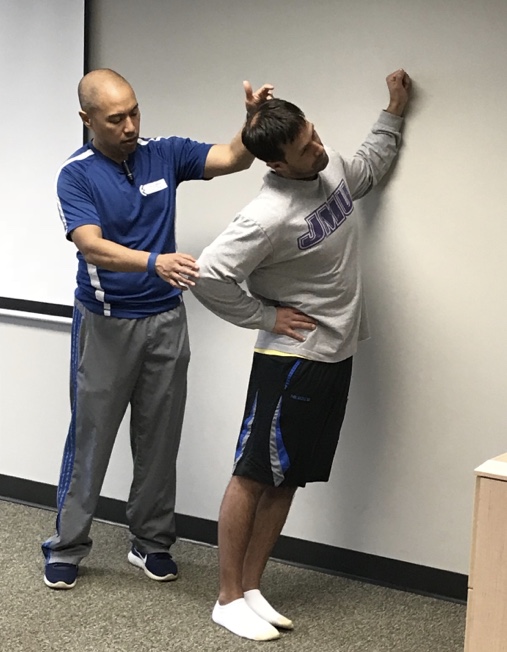
More than three years after becoming a part of the Modern Manual Therapy team, I had the opportunity this past weekend to finally meet Dr. E in person and attend his "Eclectic Approach to Upper and Lower Quarter Assessment and Treatment" at The Virginia Center for Spine & Sports Therapy (my home clinic) in Richmond, VA.

What I like about Erson’s approach is that he synthesizes some of the best attributes and techniques from many schools of thought and applies them in practical and simple manner together with what the evidence is currently showing.

I’ve been a practicing clinician for 12 years, and aside from being residency and fellowship trained, I have taken numerous con-ed courses on all manner of techniques and topics. What I can say after attending this course, is that one, there is always more to learn. And two, I have never been able to apply concepts and techniques from a course as seamlessly and effectively right away as I did with The Eclectic Approach.

If you have the opportunity to take a course from Dr. E, don’t miss out! Also, (shameless plug alert), stay tuned for The Eclectic Approach to Modern Patient Education from yours truly coming soon!

Without further ado, here are my five biggest takeaways from the weekend:

1. Many of the treatment techniques produce change rapidly!!

I have to admit, I was very skeptical at first with the apparent effectiveness of many of the approaches even after I saw them be used in demonstration and then even personally during lab breakouts. My fears were lessened after implementing them multiple times in the clinic and seeing some rather drastic and significant improvements in symptoms and range of motion where previous gains had been achieved slower and through more “work.”

2. If we can make a technique pain-free, why not?
 img via http://www.quickmeme.com/meme/3rtl11
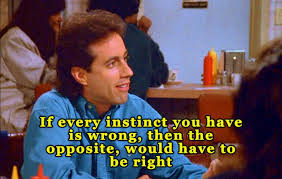
Erson admitted to past years of bruising people in an effort to “deform fascia” and “break-up” scar tissue. We have probably all been guilty of causing our patients pain through excessive pressure or force because we thought we needed to. The reality, is we know we’re not deforming fascia or breaking up “adhesions” with our hands or putting joints back into place. Do you want to help improve patient adherence? Do you want your patients to enjoy coming to therapy? Your technique does not have to be painful to be effective!

3. The “Costanza” approach


Early in my manual therapy residency training, we were taught that an initial approach to a painful movement or technique would be to go in the opposite directions. For example, if cervical sidebending or lateral glide to the right was painful, ie a “closing” movement, perhaps an opening movement was more appropriate. That sounds logical enough. However, sometimes it’s painful because it’s not used to being loaded and has developed sensitivity and fear-avoidance which creates threat messages that our brain perceives as painful. Only by gradually exposing ourselves (and our patients) to loading strategies may we see more significant and lasting changes in pain and motion and eventually return of function.

How’s your loading strategy currently working with your patients? Are you making progress as expected? Perhaps consider trying the opposite approach.

4. The best strategy is novel and simple

It’s human nature to crave novelty. And when dealing with people in pain, novelty can be very powerful. Remember Einstein’s definition of insanity: doing the same thing over and over again and expecting a different result. What habitual movements, postures, positions has your patient been in? What previous treatments have they had and were they effective?

The advantage of a new movement or gentle manual technique (see above) is that it can often help reduce what David Butler refers to as DIMs (Danger In Me) and enhance feelings of SIMs (Safety In Me). The advantage of simple, whether it be a movement or a manual intervention, is that it further enhances feelings of safety as opposed to those that could be perceived as threat.


5. Educate, educate, educate!

Even the best technique or exercise will ultimately be ineffective if we do not empower the patient towards independence and self-efficacy. Manual therapy opens a window that the patient must keep open. If we are able to produce change in the clinic, that means that ultimately they should be able to keep those improvements in pain or mobility on their own.


While it is true that some patients just want to be “fixed,” often times, we are at fault as well. Let’s be honest- it feels good to be needed, to think we have “magic hands” or that special technique that our patients can’t get anywhere else. The truth is, we’re just guides along the path, albeit, very good guides, but guides nonetheless.

We need to continually make it clear that the positive effects from manual therapy and even some active movements are only short-term and to keep that window open, they need to be consistent with the home treatment loading strategies that we have found work in clinic. Demonstrating effectiveness and value while empowering the patient to be self-efficacious should help improve treatment plan adherence and overall outcomes.

Thanks for reading,

Andrew

Want to attend a #manualtherapyparty? Check out our course calendar here!


Want an approach that enhances your existing evaluation and treatment? No commercial model gives you THE answer. You need an approach that blends the modern with the old school. Live cases, webinars, lectures, Q&A, hundreds of techniques and more! Check out Modern Manual Therapy!

Keeping it Eclectic...