Modern Manual Therapy Blog - Manual Therapy, Videos, Neurodynamics, Podcasts, Research Reviews: #PTstudent
Showing posts with label #PTstudent. Show all posts


Everything should be made as simple as possible, but not simpler -- Albert Einstein

We've all heard of KISS, No, not the rock band that grew to fame in the 80's. I'm talking about the phrase "Keep It Simple, S....(insert your word of choice)" Within our profession, there has been a propensity to make things more complex than necessary Why is that? There are several possible explanations. I heard Greg Lehman (@GregLehman) make an interesting observation while on the Chews Health Podcast (@TPMpodcast) and more recently the NAF Podcast with Adam Meakins (@AdamMeakins): "There are a lot of smart people in the profession. It's hard to get in [to school] and you work really hard and I think there's a desire to do something that's complex because simple makes it seem that anybody can do it." 

That does make a lot of sense. However, do patients want what's simple? Ideally, I think so, but I so know that if we each reflect upon our own clinical practice, we'll probably find several examples of a strange balance between the simple and complex.

Early in my career I ran into a situation that illustrates why I think phyios struggle when it comes to keeping things simple. The patient was a middle aged female that would have been every McKenzie MDT instructor's dream demo subject. She had low back pain with radiating pain into the right leg. Symptoms peripheralized with flexion and centralized with extension. I sent her home with prone press-ups as her primary exercise with standing repeated extension for her to do during the work day. I saw her for a second visit and she was already significantly better. We continued with press-ups without any force progression as that was all that was necessary to centralize/abolish symptoms. She demonstrated improved lumbar flexion motion on re-assessment without production of low back or leg symptoms. I had planned to continue and gradually reintroduce flexion in a future treatment as long as it was indicated, but she never came back. When I called two weeks later to follow-up, the discussion that followed was not anticipated.

"You didn't do anything" was the response I received when I inquired as to why she had not followed-up with her appointment. (Remember, this was very early in my career when my patient interaction skills were still quite lacking! But I remember the conversation almost verbatim) "What do you mean?" was my reply.

"I was expecting a massage or something more." So there we go-- lesson one, establish/understand expectations. 

"Are you having any back or leg pain now?" I asked. "No." "So, you're better?" "Yes." "Then I don't understand; how is that you say I didn't do anything?" "Because all I did was that simple exercise that I could have done by myself!" And there it is. 

"But you didn't come up with it by yourself, did you? You came to me and I determined that was a good movement for you to do. I could do that other stuff, but I didn't think it was going to be as beneficial for you." Silence. And then, "Well, I was expecting something different." I don't remember exactly how the conversation ended, but you get the idea. 

While that very well may have been an example of how NOT to perform a follow-up patient interaction, the point there highlights what some  physios do fear with regards to simplicity. However, there are times when patients do gravitate towards simple, as in the explanation by physicians for the reason for their back/leg pain as a "pinched nerve." We know that's rarely what actually is happening and the true reason is often more complex. 

Simple with exercise is usually good. Most patients will struggle with movements/exercise with too much complexity. Even if it's the "best" exercise, if they do not do it, it's not very effective. However, something as simple as a Farmer's carry is met with skepticism. "What is this supposed to do?" I'll get asked. "Why don't you go walk to the end of the room and back and when you get back you tell me what you feel?" What can I say, I'm a smart-ass. 

via Dr. Andrew Rothschild, DPT, FAAOMPT
Lead Instructor: Modern Patient Education
Mentor: Modern Rehab Mastery
@spear_physio

If you want to go beyond the seminar, our next cohort for Modern Rehab Mastery, our one of a kind online mentoring group is starting soon! Sign up here.

Want to learn in person? Attend a #manualtherapyparty! Check out our course calendar below!


Keeping it Eclectic...


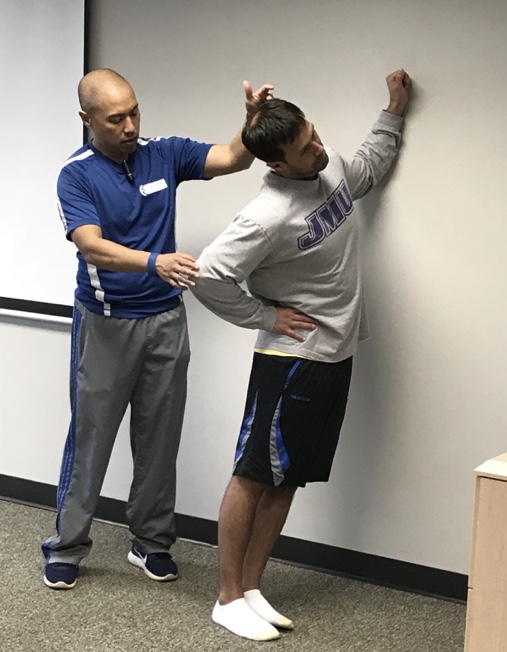
More than three years after becoming a part of the Modern Manual Therapy team, I had the opportunity this past weekend to finally meet Dr. E in person and attend his "Eclectic Approach to Upper and Lower Quarter Assessment and Treatment" at The Virginia Center for Spine & Sports Therapy (my home clinic) in Richmond, VA.

What I like about Erson’s approach is that he synthesizes some of the best attributes and techniques from many schools of thought and applies them in practical and simple manner together with what the evidence is currently showing.

I’ve been a practicing clinician for 12 years, and aside from being residency and fellowship trained, I have taken numerous con-ed courses on all manner of techniques and topics. What I can say after attending this course, is that one, there is always more to learn. And two, I have never been able to apply concepts and techniques from a course as seamlessly and effectively right away as I did with The Eclectic Approach.

If you have the opportunity to take a course from Dr. E, don’t miss out! Also, (shameless plug alert), stay tuned for The Eclectic Approach to Modern Patient Education from yours truly coming soon!

Without further ado, here are my five biggest takeaways from the weekend:

1. Many of the treatment techniques produce change rapidly!!

I have to admit, I was very skeptical at first with the apparent effectiveness of many of the approaches even after I saw them be used in demonstration and then even personally during lab breakouts. My fears were lessened after implementing them multiple times in the clinic and seeing some rather drastic and significant improvements in symptoms and range of motion where previous gains had been achieved slower and through more “work.”

2. If we can make a technique pain-free, why not?
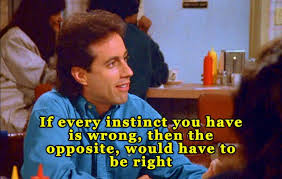
 img via http://www.quickmeme.com/meme/3rtl11

Erson admitted to past years of bruising people in an effort to “deform fascia” and “break-up” scar tissue. We have probably all been guilty of causing our patients pain through excessive pressure or force because we thought we needed to. The reality, is we know we’re not deforming fascia or breaking up “adhesions” with our hands or putting joints back into place. Do you want to help improve patient adherence? Do you want your patients to enjoy coming to therapy? Your technique does not have to be painful to be effective!

3. The “Costanza” approach


Early in my manual therapy residency training, we were taught that an initial approach to a painful movement or technique would be to go in the opposite directions. For example, if cervical sidebending or lateral glide to the right was painful, ie a “closing” movement, perhaps an opening movement was more appropriate. That sounds logical enough. However, sometimes it’s painful because it’s not used to being loaded and has developed sensitivity and fear-avoidance which creates threat messages that our brain perceives as painful. Only by gradually exposing ourselves (and our patients) to loading strategies may we see more significant and lasting changes in pain and motion and eventually return of function.

How’s your loading strategy currently working with your patients? Are you making progress as expected? Perhaps consider trying the opposite approach.

4. The best strategy is novel and simple

It’s human nature to crave novelty. And when dealing with people in pain, novelty can be very powerful. Remember Einstein’s definition of insanity: doing the same thing over and over again and expecting a different result. What habitual movements, postures, positions has your patient been in? What previous treatments have they had and were they effective?

The advantage of a new movement or gentle manual technique (see above) is that it can often help reduce what David Butler refers to as DIMs (Danger In Me) and enhance feelings of SIMs (Safety In Me). The advantage of simple, whether it be a movement or a manual intervention, is that it further enhances feelings of safety as opposed to those that could be perceived as threat.


5. Educate, educate, educate!

Even the best technique or exercise will ultimately be ineffective if we do not empower the patient towards independence and self-efficacy. Manual therapy opens a window that the patient must keep open. If we are able to produce change in the clinic, that means that ultimately they should be able to keep those improvements in pain or mobility on their own.


While it is true that some patients just want to be “fixed,” often times, we are at fault as well. Let’s be honest- it feels good to be needed, to think we have “magic hands” or that special technique that our patients can’t get anywhere else. The truth is, we’re just guides along the path, albeit, very good guides, but guides nonetheless.

We need to continually make it clear that the positive effects from manual therapy and even some active movements are only short-term and to keep that window open, they need to be consistent with the home treatment loading strategies that we have found work in clinic. Demonstrating effectiveness and value while empowering the patient to be self-efficacious should help improve treatment plan adherence and overall outcomes.

Thanks for reading,

Andrew

Want to attend a #manualtherapyparty? Check out our course calendar here!


Want an approach that enhances your existing evaluation and treatment? No commercial model gives you THE answer. You need an approach that blends the modern with the old school. Live cases, webinars, lectures, Q&A, hundreds of techniques and more! Check out Modern Manual Therapy!

Keeping it Eclectic...


Failure is a detour, not a dead-end street-- Zig Ziglar


A little over a year ago, I began teaching myself the Turkish get-up. With guidance from YouTube and Simple and Sinister by Pavel. I started with a shoe balanced on my fist. I quickly progressed to a cute little 20 lb kettlebell, and eventually to a 16 kg bell (35 lbs). The weight itself wasn't heavy, but my movements were disjointed. I felt awkward and uncoordinated. It was frustrating. But I kept at it because I wanted to get better. And I did get better....by doing it. And then I did some more. The first time I attempted a respectable load (24 kg/53 lbs), it didn’t go very well, but at least I didn't drop it on my face. So the next day I tried again with the same weight and it went a little better. And on and on it went. 

The get-up is the perfect metaphor for learning and for life. It's all in the name. You must get up. You will struggle. You will fail. You might stumble. You might drop the bell. But if you learn, make adjustments, and are persistent, you can succeed.

Do the thing, and you shall have the power-- Ralph Waldo Emerson 

The get-up teaches patience. It is a slow, deliberate movement. It's not meant to be rushed. Performed too quickly or out of control, and you could end up in a world of hurt. But done correctly, it can be extremely rewarding. The get-up is also very versatile. It is an expression of strength, mobility, and control. It can be done as a warm-up during a training session, as a strength exercise, or as a movement "corrective." Gray Cook refers to the get-up as "Yoga under load." 

The get-up requires intention and attention. Each movement has to be planned in advance, yet you must also be prepared to make subtle adjustments as necessary. And with substantial weight overhead as you transition from the tripod position on the hand to 1/2 kneeling, and then to standing, you had better be focused. Jeff Sokol (sokolstrong.com) a StrongFirst team leader describes the get-up for him as being in a "flow-state," where everything else falls away and you can be better while getting better. 

However, once you're up, you must then control the descent back down. Because we're never quite finished. We're never done learning and growing. We never reach a point when you're satisfied, because that can lead to complacency. We've been to the moon. Now we're going for Mars. Why? Because that's what's next. 

In May, many of you will be graduating from PT school--that's terrific. Celebrate for a few minutes. Then get ready for the next thing. Because if you're serious about the career you've chosen, your journey has only just begun. It's similar to the get-up in a way. The get-up is composed of 7 movements that build on the previous movement. You must OWN each movement and position before proceeding to the next. As important as I think the skill of spinal manipulation is for the manual therapist, I see too many students and #freshPTs that want to jump into learning that skill before they are even competent with simple mobilizations. Getting from the ground to hand support is challenging enough in the get-up. If you can't do that well, the next phase will be even harder. 

Master the basics. Own the movement and position. Then proceed to the next step. Yes, it can be slow. Yes, it can be frustrating. But you'll be rewarded by being stronger or more skilled than your counterpart who rushed their way through. 

A unique aspect of the get-up is that when performed well, the movement should be able to be reversed at any point. However, it's not as forgiving if you bail or just quit the movement all together--it has the potential to end badly. Apply that same logic to other endeavors, whether it be business, relationships, or with increasing your clinical skills and knowledge. Take things one step at a time, stay persistent, keep learning, enjoy the process, and before you know it--you're up. 


Don't worry about being an expert. Don't worry about being great today. Just learn-- Tom Bilyeu, CEO of Quest Nutrition

With some of my patients and with many physios at courses that I teach, I am often disheartened with the fear of failure that I regularly observe. Certain patients bristle at trying new or more challenging exercises--perhaps because they're either afraid they can't do it, or think they will look silly. I try to make light of the situation, saying "if you could do it already, we wouldn't need to be doing it." 

Physios are often resistant to embracing ideas that may either challenge their current perceptions. (I've certainly been guilty of this in the past). or may make things harder for them by taking them out of their comfort zone, and requiring them to actually think. As Jerry Durham (@Jerry_DurhamPT) frequently quotes, "get comfortable with being uncomfortable." 

It's easier to just keep doing what we know how to do. It's like the person with 25 years of experience who has just repeated their first year twenty-five times. Learning a new skill or increasing your knowledge and understanding of a challenging concept takes time, effort, and a willingness to fail. But if you want something bad enough, you'll do it. 


We want the path of least resistance, but often we need the path of most resistance in order to grow and change-- Danny Kavadlo author of "Strength Rules"\

One training goal I have is to be able to perform a get-up with "the beast." (48 kg/106 lbs), as performed by Alan Philips (pictured below). It would be wonderful if I could do it now, but I can't. I'm currently at 32 kg/70 lbs for multiple sets and ready to move up. But if I rush it, or if I'm careless, I could possibly get injured and set myself back from achieving my goals. Yet, that doesn't mean I'm not steadily moving forward. Sometimes you can progress quickly, other times slowly. The key is to try to always keep moving. And when I'm able to do it (notice I didn't say 'if'), there's always the next goal to reach for around the corner. The journey is often more rewarding than the outcome. (Incidentally, if anyone at Rogue Fitness happens to be reading this, I'll be happy to provide my address if you'd like to send me 80 and 88 lb bells :) )


Alan Philips (@alphill4305) performing the TGU with "the beast"

It's normal to look at other people and assume we can never achieve what they have because we're not like them. The truth is, most successful people didn't start out successful. They worked for it. We often just see the finished product--we don't get a glimpse behind the curtain to see the hustle, sweat, and sacrifice. Michael Jordan may be the best basketball player of all time. But he also outworked everyone else. Successful people tend to do the things that non-successful people won't do. The road gets a bit tougher and many people get discouraged and quit. I'm not judging. I've certainly quit on things. It's human nature to want to take the easy way out. But we can also learn not to. 


You don't always get what you wish for. You get what you work for-- Strength Matters

One recommendation I frequently hear on podcasts and read about in books, is to model behavior and practices after those we admire who have already been successful. What's interesting, is that so many of those practices are consistent across individuals--things like gratitude for what they have, persistence in the face of obstacles, and clearly defined values and goals. At the same time, though, we should stop short of comparing ourselves to others. Try to be the best version of yourself. Then you can compare your present self to your past self. 


Simple daily disciplines--little productive actions repeated consistently over time--add up to the difference between failure and success-- Jeff Olson, author of "The Slight Edge"

Aside from taming the beast in the get-up, I have other lofty goals, (arguably more important), both personally and professionally. And when I think about the things I'm currently doing and other things I want to accomplish, it can get a little overwhelming. It would just be easier to not do them. I would have much less stress. I could relax more. No one would really know. But I would, and I know I wouldn't be happy. 

Many of you reading this probably find yourselves in a similar situation. I don't always do a good job of taking a strategy that was successful in one aspect of my life and apply it to another. But I'm trying. So here's an exercise we can do together. Lie down on the floor. Better yet, go outside if you're able. Look up at the ceiling or the sky. It's certainly relaxing to do once in a while, and it might even seem easier to stay down here. But eventually, we have to get up. So let's do that. And let's do it again. And again....

 Never forget that you can only stumble if you're moving-- Richard P. Carlton, former CEO, 3M Corporation, 1950

Current training partner--32 kg Rogue Kettlebell

Thanks for reading,

-Andrew


header image credit: strongfirst.com


Interested in live cases where I apply this approach and integrate it with pain science, manual therapy, repeated motions, IASTM, with emphasis on patient education? Check out Modern Manual Therapy!

Keeping it Eclectic...


Hi. My name is Ryan. I'm a business intern. I'm a physical therapy student... Wait, what?

"There is no business being taught in DPT programs." This has been shouted from the rooftops since I arrived in PT school. Let me first state say, that is not entirely correct. From the Mentoring Millennials session at CSM it was apparent that almost every student had a business class in PT school...however it was a business class that had almost all those same students "create their own clinic."

For every student that just rolled there eyes at that, I'm right there with you. It is a bit of an archaic exercise... even for those students who are interested in the business aspects of physical therapy. 
This leads to this large disconnect. On one side you have all the #bizPT people shouting that schools aren't preparing the students right. On the other side you have schools that are just trying to squeeze in everything CAPTE requires in order to make sure students will get licensed. Who is left in the middle of these two sides? The students. So where in the hell do you go?

This is called a lead in.  Unfortunately I just used way too many words to lead in to the point behind this article so I hope I don't lose you. My point is this... take control of your own future in business. Entropy Physiotherapy and Ohio State have been gracious enough to allow me to integrate business into my clinical experience (which I set up last summer through the proper channels) with them for 8 weeks and from this I want to share what I am learning about being a BUSINESS INTERN in a physical therapy-cash based-private practice. 

It has been two weeks and here is a quick run-down. 

  • Even if you don't want to get into business for yourself, understanding your economic role in healthcare is vital to help patients with their questions and problems. 
  • Business is defined in a multitude of ways. Mine is this... "Business is helping people understand what problems they are having, solving those problems and then getting paid for being part of that process." This will change. It's the best I got so far. 
  • As a business intern I'm also a: Website Designer, Photographer, Apps-to-make-things-simpler-guru, Social Media Marketer, Blogger, Accountant, Scape-goat-to-call-the-insurance-compnay-and-be-on-hold-for-1-hour-guy. (The PT's here said it was 35 minutes... it felt like an eternity.)
  • Business classes in PT school trained us how to bill but you don't truly understand the impact of that on the patient until they bring it up. "What do you mean you can't afford it?" **Looks at out-of-network costs** "Holy shit, how can anyone afford this?"
  • Business classes in PT school teach us how to best comply with the current system... But maybe the current system isn't ideal for physical therapists.
  • Time has a monetary value to it when running your own business. Time spent here versus time spent there creates either a net gain or a net loss. Your time is vital.


This will be divided into multiple parts... The next installment will go into more details of what I actually do on a daily basis (I know, stop being so excited), how I am incorporating business lessons learned here into my own business and who serves up the best pizza in Chicago.

Thanks for reading.

-Ryan
@RyanSmith_ATC @uMovePhysio
  

Interested in live cases where I apply this approach and integrate it with pain science, manual therapy, repeated motions, IASTM, with emphasis on patient education? Check out Modern Manual Therapy!

Keeping it Eclectic...


5 Things you MUST know before opening a Cash Based Physical Therapy Practice!


1.  Become an expert Physical Therapist


You need to show better outcomes and results as compared to standard care.  Period.  But not only will you see patients who see the value in this, but you will also see complex cases that has failed multiple treatment approaches.  So you need to be able to see complex cases.  Your PRODUCT needs to be better than your competition

2.  Learn how to sell physical therapy


In business this is simple:  no sales = no revenue = no profit = no business.  

3.  Start with the end in mind


Clearly identifty your vision and goals, and then work backwards from this and desgin a plan to meet them.

4.  Learn how to market your business


If you want to open a cash based PT practice in an oversaturated healthcare market and keep the prinicple of getting patients better, faster, in fewer visits then standard care, you will have a marketing problem.  This is why I say you need to understand, master, and learn marketing.

5.  Take advantage of this current healthcare opportunity now and get ready to work hard


What better time than now to open a cash based practice!  Standard healthcare is so bad right now!  We can survive healthcare reform and truly show the real value that we can show the public and prospective patients.  9/10 small businesses fail and it is not due to the idea or product, it is due to execution and working hard.  Just be prepared to work hard.  Really hard!


BONUS TIP:  Never lose focus on your priorities in life, no matter how busy you get with your business and work.  Your priorities should always be : 1.  God, 2.  Family, and 3.  Work and business.

For more information on marketing strategies, landing pages, business concepts, how to start a cash based PT practice and to get my FREE START UP CHECKLIST click below or click here.


Don't forget to like our facebook page for free information, marketing ideas, and new business strategies for a cash based physical therapy practice .


Best Regards,

Ron


Owner of Pursuit Physical Therapy
email:  cashbasedpt@gmail.com
Adjunct Faculty of University of Central Florida


Interested in live cases where I apply this approach and integrate it with pain science, manual therapy, repeated motions, IASTM, with emphasis on patient education? Check out Modern Manual Therapy!

Keeping it Eclectic...


For the love of money is the root of all kinds of evil. And some people, craving money, have wandered from the true faith and pierced themselves with many sorrows-- 1 Timothy 6:10 (as supplied by my colleague Eric Jorde (@EricJorde_dpt))

To describe myself as passionate about the things I care about and value would be accurate. If asked, some of my colleagues, (@EricJorde_DPT, @sowerskristen, and @ARedden_SPT) might say that my passion sometimes manifests itself in the form of declarative statements and the occasional f-bomb. I would be lying if I said that it has never gotten me into trouble. I don't necessarily wake up like a hot bowl full of passion (or is that beard-full?) like Jeff Moore (@jeffmooredpt) does in his daily #PTonICE periscope broadcasts, but it's there on a regular basis. This is one of those times. 

In July of 2015, I returned to Richmond, VA after two years in Tennessee. I was especially happy to be able to return to the private practice I had worked at before having to moving away. However, within the first few weeks of being back, I knew something was different. 

The clinic is owned by a physical therapist and his wife (also a PT), who have been in Richmond for almost thirty years and have had the private practice now for over ten years. They have built a great reputation in the community and have very good relationships with a number of physicians over the years, some of them even becoming personal friends. The owner's leadership philosophy reminds me very much of Southwest Airlines as highlighted by Simon Sinek in Start With Why--> 'put your employees first and they will take great care of the customers.' After some previous frustrating managerial/ownership experiences, it was a welcome return. 

Two years ago, our largest referral source had been a orthopedic spine surgeon from one of the main ortho groups in town, which incidentally, just bought the other two ortho practices in town, giving them an essential monopoly. What was unique about this particular physician, is that he was first a physical therapist before going back to med school. He and the clinic owner have been good friends since they were both in school together in Baltimore back in the 1980's. The ortho's wife, who also happens to be a physical therapist, actually works part-time for us, handling orthotic fabrication and spending time at a local gymnastics gym performing screenings.

What I used to respect about this physician was that while most of the other orthos, especially in his practice, worked hard to keep referrals in-house, his attitude was "no one is going to tell me where to refer my patients." He was one of the few orthopods in town that "got it." Well, that ship evidently, has sailed. The number of referrals we now receive has substantially dwindled from several per week to just a handful over the past seven months. What supposedly is happening, is that the physicians in this practice are given regular breakdowns of how much money each is bringing in to the practice in the form of surgeries, in-house PT referrals, etc. I imagine this simply adds fuel to an already ultra-competitive fire. As the practice has expanded (also having purchased another ortho practice in Northern VA), I imagine the pressure to keep referrals in-house as an added revenue generator has substantially increased. Not to mention, there are home additions and private schools to finance. The reality is, physicians in this type of practice, whether purposefully or not, are likely making clinical decisions based on what is best for THEM financially, not what truly is in the best interest of the patient. 

This phenomenon was highlighted in 2009 and 2011 articles in The Washington Post by Shankar Vedantam and Rob Stein, respectively, looking at the internal referral practices of Urologists. Here are the links to those articles but I've included a few of the highlights below:

http://www.washingtonpost.com/wp-dyn/content/article/2009/07/30/AR2009073004285.html

https://www.washingtonpost.com/national/doctor_owned_centers_spark_criticism_scrutiny/2011/01/28/ABMoISK_story.html


 In August 2005, doctors at Urological Associates, a medical practice on the Iowa-Illinois border, ordered nine CT scans for patients covered by Wellmark Blue Cross and Blue Shield insurance. In September that year, they ordered eight. But then the numbers rose steeply. The urologists ordered 35 scans in October, 41 in November and 55 in December. Within seven months, they were ordering scans at a rate that had climbed more than 700 percent.
The increase came in the months after the urologists bought their own CT scanner, according to documents obtained by The Washington Post. Instead of referring patients to radiologists, the doctors started conducting their own imaging -- and drawing insurance reimbursements for each of those patients. 
"I think it's one of the biggest scandals in America today," said Peter D. Grimm, head of the Prostate Cancer Treatment Center in Seattle, WA. "Do you want your dad going to somebody who has a highly incentivized reason to give him one particular treatment that is not necessarily in his best interest?" 
Critics charge that they are a disturbing development in an alarming trend: doctors in many specialties referring patients to facilities in which they have a financial interest, possibly leading to unneeded and sometimes dangerous procedures and adding to the nation's bloated medical bill.
"We need to figure out what's best for patients, not the bank accounts of  (doctors)"-- Rep Pete Stark (D-Calif)

Despite the reduction in direct referrals, patients who have been previously seen by us regularly request to come back. We still occasionally see some patients who have "failed" the in-house POPTs therapy. and we regularly receive feedback from them regarding the stark contrast between the two entities. Probably because we utilize such complex skills as "listening" to our patients and "taking the time" to build a relationship. 

In full disclosure, my first job out of PT school was for one of these POPTs. I was naive and foolish; kind of like when you got that butterfly tramp-stamp on that crazy night in Vegas. At least I was able to get a inside look on how the sausage is made. Within a few months, however, I quickly realized that while I was quite green, the other therapists who had several years of experience, were simply just repeating one year multiple times. I saw very little motivation for skills and knowledge improvement. Continued education certainly wasn't encouraged by any of the PT or medical management staff. Unless you had your own internal drive, why bother trying to better yourself when there's a steady stream of patients just waiting around the corner? 

This is the culture that I witnessed. Sure, the physicians try to sell patients on the convenience of care by going right across the hall. Plus, they can maintain easier communication by being in such close proximity. (Because it's so hard to pick up a phone or send a text these days). But really, that's just lip-service that sounds good to the ears and in a magazine article. What the doctors care about (most, not all), is money in their pockets. PT is a cash machine for them and it's sold under the guise of quality patient care. I know we've seen the debates over the term "quality" on the Twitter-sphere, but at the end of the day.we know quality when we see it. And POPTs PT ain't it. 


Always bet on the horse called 'self-interest'--  Glenn Ruscoe @GlennRuscoe

Which brings us back full circle. This is partly a discussion about friendship and business. While I've always enjoyed Mafia-themed entertainment like The Godfather, Goodfellas, and the Sopranos, I never understood the "it's not personal, it's just business" line (like that helped the guy who just got whacked feel better about it). But this IS personal. It affects the business of people who I value who I chose to work for and who chose me to work for them. They do things the right way. While clinics all around us are trying to increase their bottom line with increased volume, reduced patient treatment times, and the bulk of treatment delivered by PTAs or unlicensed personnel, we have maintained a certain standard to deliver the highest possible quality of care. And that standard is being threatened by one of their long-time friends, no less. Money, it seems, is strong enough to break the ties that bind. But perhaps it's none of my business. After all, I'm just an employee. Well, I don't see it that way. Because what we're facing here in Richmond, VA is simply a microcosm of what's happening around the country. In fact, many of you might be experiencing similar circumstances. 

"Leave the gun. Take the cannoli"

Before you get the wrong idea, I don't want you to think that this particular physician should be referring patients to us based solely on a friendship (although marketing is all about creating relationships, right?). This particular physician, and many others alike, have repeatedly acknowledged how good we were, especially compared to their own PT practices. They send us their "difficult" cases or those that have "failed" their own PT. Despite all that, it has still not significantly curbed their referral habits. The real danger is for the general public, as I mentioned above but is worth stating again is that decisions made by physicians for their patients are not being made on the basis of what may be best for the PATIENT, but rather, what is in the best financial interest of the physician! 

And please, hold off on all the rhetoric that I already read daily on Twitter with regards to hard work and innovation, and providing value, etc. I get it. We're on it. We've got plans and we'll be fine. It's the bigger picture that I'm looking at. (It's actually about what's best for the customer (shout-out Jerry Durham @Jerry_DurhamPT) )

So, I'll conclude with this: If you're a PT who happens to be reading this and you work for one of these POPTs (and I know some of you are because we've chatted on Twitter), here's my question, WHY? If it's a stepping stone to something better--great. If you've been there for a short while and are taking advantage of whatever learning opportunities are offered, few as they likely are--fine. But if not, I challenge you with this. Do you feel you're helping your profession? And maybe an even bigger question-- are you part of something that is truly helping your patients? 


Thanks for reading.

-Andrew

(feel free to send all mean tweets to @EricJorde_DPT)


Interested in live cases where I apply this approach and integrate it with pain science, manual therapy, repeated motions, IASTM, with emphasis on patient education? Check out Modern Manual Therapy!

Keeping it Eclectic...