Healthcare clinicians aren’t, or at least, shouldn’t be remained to patient facing roles. In fact, there are three primary career tracks that providers and organizations should consider when mapping out plans for career development.
Showing posts with label Ben Fung. Show all posts
Showing posts with label Ben Fung. Show all posts

How can a clinician best help their patient? The answer seems simple. Fix their problem.
But what if the problem goes beyond a diagnosis. How can a clinician best help their patient? By caring about the human being in front of them.
This takes empathy. But is empathy even real?
On this episode, we are joined by Larry Benz, author of Called to Care. Hear his take on empathy and what he's learned over his career as a physical therapist and business owner.
Learn more online - new online discussion group included!


Want an approach that enhances your existing evaluation and treatment? No commercial model gives you THE answer. You need an approach that blends the modern with the old school.
Keeping it Eclectic...- NEW - Online Discussion Group
- Live cases
- webinars
- lecture
- Live Q&A
- over 750 videos - hundreds of techniques and more!
- Check out MMT Insiders


It’s been mentioned, discussed, and sadly… often joked about at professional conferences. Our business leaders openly admit it occurs, and, for the most part — it’s simply accepted as part of being a healthcare professional.

6. Offer workshops or seminars.
An offshoot opportunity that occurred for me through this kettlebell class were platform opportunities, TV interviews, and local workshops. Going down memory lane once again — here’s another highlight moment of my early clinical career: The Health Fair at the YMCA.
One afternoon, I was rushed out to offer an info/health-screening booth at a local YMCA health fair. Unfortunately, I wasn’t given much resource or time to prepare. I ended up seeing my last patient of the morning, printed out a paper from the EMR room that said “Spine Health Screening,” and hoofed it out to arrive barely on time.
The health fair was a 4 hour event surrounding lunch. I was to attend the 2nd half of the hour. It was organized in a fashion where attendees were allowed in time blocks of 30 minutes, with any exiting attendees allowing for those on standby to go into the hall early.
Attendees would browse the exhibit hall in the main gym to get information and experience health screens from the various exhibitors. There were diabetic screenings, blood pressure screenings, body composition screenings, etc. etc. etc. WELL! I was the only one out there, left in the corner since I was the only exhibitor that was a dedicated afternoon arrival… with no material, no table cloth, no easel, no posters, NOTHING. Just me, my print out piece of paper… in person direct from acute care in my scrubs.
What happened?
The most incredible thing. It first started with people coming to me asking about their spine, why it felt stiff, or sore… which led me down a “shallow” McKenzie style screening. After all, I had to make all this stuff up since I was given no time nor materials. That, of course, lead to the neck… then the shoulder… then the hip… the the knees…. then the ankle and foot… and, the elbows… and, the wrist, hand, and fingers.
Almost immediately, there was a crowd of attendees who I had to relocate to the bleachers and turn it into an impromptu agora like Socratic seminar — having attendee after attendee ask about their physical health ailments and concerns. My “booth” turned stadium seating Q&A turned out to be the most popular booth that entire afternoon. AND, it was during this time that I realized how popular and powerful our basic clinical knowledge is in physical therapy. It was also during this experience that I realized we have the answers to so very many of the questions that people have… they just don’t know to ask us Physical Therapists.
7. Blog about it.
There are free blogging platforms EVERYWHERE. The advantage of blogs over social media posts is that they are more visible to search engines. It also allows for longer form writing which allows you as the writer to be more expressive in detail to a medium that has longer lasting effects than a social media post or story.
Even if you’re not inclined to establishing a proper blog, perhaps you can influence your practice to open up a blog where each clinician takes a turn writing up a case or experience. Or, maybe you can request your marketing and PR department to feature a physical therapy story. Whatever the case, there’s definitely one thing that is unique about the every day user who reads a physical therapy story on a website versus one that quickly scrolls through on social media — they take time to internalize the content.
That internalization process is a profound moment which we’ve seen sets up potential patients for a better care experience, and, in many ways — creates stronger lead generation on the marketing front (something we can delve into on a future post).
8. Broadcast on social media about it.
As mentioned above, we have these wonderful digital outlets… we use them every day. Why not be purposeful and intentional about it in promoting our profession? Live broadcasts have been around for a little while now and there’s a distinct advantage of using this feature when compared to blogging and regular posts about #PTwins — notifications.
Users get notified when you go on live broadcast. Keep these broadcasts to a 5-10 minute window… surround them by commonly unopposed break times such as lunch, dinner, early in the morning, or towards the evening when people are winding down their day. Go on a topic series, whatever your clinical passions are. Talk about them at the basic level, go into little blurbs of the more “medical language stuff,” and return it back to what the general healthcare consumer can take home with them and act on right then and there.
This is a powerful way to not just build your own brand, but it in effect (and en masse, should you take up this challenge) creates a digital grassroots effect… and, as we know… grassroots when grown right, mature into lush forests.
9. Engage on consumer forums.
As we know, consumers are shopping in a very digital way — word of mouth is different now (new post coming) and we need to be where patients are shopping [See our State of Marketing Report for more].
That said, outside of the search bar, patients — especially those with more involved concerns or with family/friends suffering from emergent or chronic ailments — people are going to forums for their information. They are easy to find, easy to join, and the thing of it is — people trust people who have been through it before. What better place than to simply offer our available expertise (Habit #2, right there!) and help bring light in a giving, kind, unassuming, open way… not to correct anyone, not to dispel myths, not to compete for attention, not to set a few records straight… simply to be available, accessible, and open.
Interested in being that person? Here are three forums to look into:
PS. UpDoc is not attached to these forums in any way. These were a few sites I found quickly through that all powerful search bar… like anyone else who is looking for answer 😉
10. Keep up to date with legislative happenings AND encourage your colleagues to take action.
Advocacy is something we care about emotionally as licensed professionals… but, too tragically often, we don’t care enough to have it affect our actions or our daily lives. Then, something happens… something bad. Then, we’re all angry about it… such as with the Mass Rehab Therapy Layoffs in late 2019, or, as seen in a patient’s perspective on the 8% Medicare cuts.
This one is a harder pill to swallow and is certainly something I, personally, could get better on and aim to be more active in. A few resources for you to consider:
- Take Action with the APTA
- Federal Advocacy
- State Issues
- And, the APTA Media Corp of national spokespersons.
And, again… none of this article is sponsored or promoted content in any way — these are just some easily found, helpful links that one might consider.
As with all things affecting a licensed profession, it all starts with the law. What are we legally allowed to do? None of our credentials, none of our education, none of our training, none of our branding nor marketing, none of the content hold as experts matters unless we are legally empowered to act on it. ALL of this starts with having the law being written on our side, and most importantly, on the side that best serves our patients and our communities.
It’s 2020. It’s not just a New Year, it’s a New DECADE. And, it’s a great time to be resolved to promote profession with healthy habits. The challenge has been issued. Challenge Accepted? Let us know!
First posted on UpDoc Media via - Dr. Ben Fung
Want to learn in person? Attend a #manualtherapyparty! Check out our course calendar below!

Learn more online - new online discussion group included!
Want an approach that enhances your existing evaluation and treatment? No commercial model gives you THE answer. You need an approach that blends the modern with the old school.
Keeping it Eclectic...- NEW - Online Discussion Group
- Live cases
- webinars
- lecture
- Live Q&A
- over 600 videos - hundreds of techniques and more!
- Check out MMT Insiders

It’s past the New Year and a new decade of the 2020s. Around this time, many are looking to develop healthier habits, make resolutions, set goals, and dream big. The thing of it is, many times resolutions affect our personal lives; today’s theme is building habits that affect our professional lives as well.
The New Year brings all sorts of new energy, renewed motivation, etc.; and, marketing is almost always on the forefront. However, excellence in marketing is the same as excellence in many things — you’ve got to play the long game. “Growth hacks” or any other short term tactic are just that… the effects tend to be unimpressive and you’ll find yourself very much close to where you started.
In the world of marketing, there are all sorts of traps: There are mindset traps. Shiny object traps. All the eggs in one basket traps. So… BE WEARY!
Just as patient’s benefit most from a consummate approach when the clinician considers the big picture, marketing works in the same fashion when a company invests in a strategy as a whole — an ecosystem approach. Today, we cover the top 5 traps in marketing for a practice’s growth in business and some thoughts on what you can do to find your true north.
1. Our Website “Is What It Is”
Year after year, survey after survey, we find that websites are a sticky point for many healthcare companies. Typically, the website isn’t regularly maintained or worse — is ancient and requires an entire overhaul. Yet still, there’s this mindset that “it is what it is” — that there isn’t the time, nor resources, nor inclination to fix the website, invest in a new one, or at the very least… keep it up to date.
The fact is, websites are enormously important. In the data we’ve seen, a good website is the difference between people finding you and selecting you as provider of choice; versus, finding you then moving on because your content is hard to browse, isn’t mobile friendly, is out-dated, is too small on a screen, or doesn’t quickly address a prospective patient’s questions and concerns.
How convincing is the data? Very. We’re talking improving a website’s efficiency to attract and convert new patients by over 300% and gaining over 50 new calls in a month after a website is revamped. On top of this, many times the return is greater due to the compounding effects a website has as the anchor point after online reviews, from browsing on social media, after a word of mouth referral is made… etc. It’s a big, big deal.
There’s another layer to this. “Free” websites.
Freemium platforms have been around for a long time. Blogger, Wix, WordPress.org, WordPress.com, SquareSpace, and hosting service native builders… they all have the same problem: building on builder is laying your company’s foundation on top of someone else’s roof. There are noticeable negative effects as it pertains to Search Engine Optimization (SEO) — ultimately hampering the way and ease that your prospective customers find you. There are also big gaps of functionality lacking — such as analytics, customer journey tracking, retargeting, and customized content experience… all of which are desired by consumers seeking answers to their health concerns with urgency.
We also see less efficiency with digital advertisements when it comes to inexpensive website designs as paid user acquisition tends to have a high bounce rate with leads being generated typically being of lower quality when compared to a site that is precisely designed to guide a prospective patient to the answer: Not only can you help… but, they can trust you.
The best platform to date for most practices, healthcare and education companies remains a true WordPress build (not a WordPress.org or dot come) for a website.
If attracting new customers, engaging repeat customers, having meaningful metrics, analytics, and a data driven way to measure how your marketing dollars are being spent is important to you — then the website should be of paramount concern for your practice’s marketing strategy in 2020.
2. Word of mouth has always worked.
This was our rallying cry for 2019 and echos still now in 2020. Word of mouth HAS always worked — it continues to work, but has changed because consumer behaviors have changed. If you’re skeptical and like hard numbers and facts, you can find them here.
In short, while some who are given a name and number will directly make a call to inquire (and hopefully, schedule), most prospective patients will search you out in a fair amount of detail; they will check you for reviews, they will explore your website, and many will screen your social media content just to see if you are active and engaged… perhaps to get a sense if you hold the style of care they seek. If word of mouth has always worked for you, that’s great! But, you’ve been warned… it has changed and has changed for quite some time — and, it will continue to change.
Just as with all phases, generations, and lifecycles of consumer behaviors… Word of Mouth used to literally be just that. With time, it progressed to various forms of telecommunication and now, to all things digital via screen access touch points. We are officially in a time where we should consider the effects of Word of Mouth 2.0… particularly if your practice has a history of growth due to positive reputation within your regional communities.
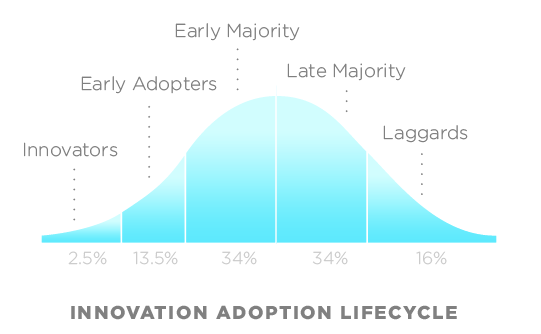
As noted in the State of Marketing Report, word of mouth is still very much relied upon in our industry and throughout healthcare at large. So, what is to be done that we can keep up with the changes in consumer behaviors? Well… there’s a blog coming up soon titled “3 Tip to Maximize Word of Mouth 2.0” — so stay tuned!
3. If I post it, they will see it.
This one reminds me of the Field of Dreams quote:

For those of you pop culture fans… my response is straight Jesse Pinkman’s “Fallacies.”

The reality of social media is that it’s crowded, it’s cluttered… and, many wish for a break from it all. This has been featured on Forbes and Psychology Today.
Now this doesn’t mean that social media is now irrelevant. Rather, this means you need to be relevant to your audience if you wish to be seen. Content marketing is a game of consistency, of understanding your customer’s journey, and producing written, visual, and video content that speaks directly to your customers by segment, buyer persona, avatars, and/or cameos — whatever your chosen terminology.
Most companies recognize the importance of being digitally visible — after all, visibility means discovery, and discovery means new customers. If you’re interested in learning more about how to do this, consider reading Standing Above The Social Media Content Clutter.
4. If I pay for it, they will see it.
Just as posting content isn’t a guarantee that they will be seen by the right people, or even seen at all in a meaningful way… paying for ads or promoted content doesn’t give a direct promise that results will come. Time and time again, we get asked questions about why a Facebook boost did nothing, or why Google Ads didn’t bring more patients, or why the paid listings on Yelp didn’t really glean any new patients.
It’s not just us saying so. We have industry agnostic marketing agencies saying the same thing — see 3 Myths About Boosting Facebook Posts, Don’t Boost! Promote Facebook Posts Properly to Increase Reach, and Are Facebook Boost Posts Worth it?
Success with digital advertising is very much like Physical Therapy — it’s an art and a science.
As mentioned, we’ve seen a direct correlation for the success of online advertising and paid content positioning with that ecosystem approach we constantly talk about… where when online reviews are favorable and fresh, when a website is properly designed, when social media is leveraged, when a brand’s content is fresh, then and only then do we see repeated and consistent results in the play to play environment of digital ads.
If you want to play in this field, you need have the right stuff to be in the same league. Otherwise, you’re hampering your own efforts and very likely barely striking break-even on your ad-spend… or worse, just throwing dollars to the wind. This leads us to our final marketing trap to be watchful for in 2020….!
5. “Set and Forget” = Spend and Fail
This is a FATAL error when it comes to anything related to email marketing, marketing automation, and digital ads such as Google Ads, Facebook Ads, Instagram Ads, etc. Unfortunately, this is a very easy trap to fall into because once you (or, someone in your marketing department) has done all the work of writing out copy, targeting factors, test scripts, landing pages, automation sequences, workflows, triggers, etc. etc. etc. — after all of that… it’s easy to just sit back and “wait for the automation to do all the work.”
Consumers are smart, and patients very intelligent. They know when they are getting spammed. They know that the first one or two search returns are paid for. They know that they are getting hit up for reactivation, repurchasing, reviews, and to refer their family and friends. THEY KNOW.
And, that’s the “easy part.” The ugly truth is that while setting targeting factors, budget limits, and ad sets are all well and good — algorithms change. In fact, ads algorithms constantly change. Even automation software have occasional updates that can turn workflows askew… they’ve been happening a lot more as of late, and, we use a lot of different platforms…. it’s happening everywhere. In fact, we had a recent client alarmed at a region they were self managing for online ads… algorithms shuffled and suddenly, they had no clicks, no calls, and a massive ad-spend that lead to absolutely zero new patients. Yikes.
So… if the algorithms are changing and our customers are hyper aware, what can be done? Be Authentic.
What we’ve appreciated about marketing efforts that are highly automatable is that automation means nothing if it doesn’t come across as an authentic customer touch point. What constitutes authenticity? Genuine interest and care for the patient’s well-being and benefit. This comes across in copywriting. This comes across in mixing and matching ad sets with demographics and targeting factors. This comes across in tremendous ways with timing, messaging, and brand narratives. All of it matters. To further delve into this topic of authenticity is our own Therapy Insiders podcast host, Gene Shirokobrod with “The Authenticity Paradox.”
Ultimately, this trap of “Set and Forget” is solved with setting a regular schedule to audit your ads, audit your automation, and create customer check points to test, inquire, discern, and decide if your current settings are in fact optimal. If they aren’t, adjust & re-test… if they are, mark your calendar reminders to ping you again at regular intervals to ensure that you ARE NOT on track to spend and fail. And, Yes… it is very much time intensive and we can go into the nuance as well as conflict of interests within alternate methodologies and agency schemas if you’d like 😉 — you can schedule a call HERE.
Want to learn in person? Attend a #manualtherapyparty! Check out our course calendar below!
Learn more online - new online discussion group included!
Want an approach that enhances your existing evaluation and treatment? No commercial model gives you THE answer. You need an approach that blends the modern with the old school.
Keeping it Eclectic...- NEW - Online Discussion Group
- Live cases
- webinars
- lecture
- Live Q&A
- over 600 videos - hundreds of techniques and more!
- Check out MMT Insiders