Modern Manual Therapy Blog - Manual Therapy, Videos, Neurodynamics, Podcasts, Research Reviews: marketing physical therapy
  • Start Here
  • MMT Online Seminar
  • MMT Insiders
  • Our Team
Modern Manual Therapy Blog - Manual Therapy, Videos, Neurodynamics,  Podcasts, Research Reviews
☰
  • Start Here
  • Blog
  • Online Mentoring
  • MMT Insiders
  • Top Products
  • Seminars
Showing posts with label marketing physical therapy. Show all posts
Untold Physio Stories - The Missing Link in PT Marketing - themanualtherapist.com


For this episode, we're joined by guest Dr. Derek Nielsen of The New Age PT. His story is how he went from a being a successful Cash Based PT clinic owner to helping PTs market their practices.

Untold Physio Stories is sponsored by


Helix Pain Creams - I use Helix Creams in my practice and patients love them! Perfect in combination with joint mobs, IASTM and soft tissue work. Get your sample and start an additional revenue stream for your practice. Click here to get started.

Check out EDGE Mobility System's Best Sellers - Something for every PT, OT, DC, MT, ATC or Fitness Minded Individual

Curv Health - Start your own Virtual Clinic Side Hustle for FREE! Create your profile in 3 minutes, set your rates, and Curv will handle the rest! From scheduling to payments, messaging, charting, and a full exercise library that allow for patient/clinician tracking, it's never been easier! Click to join Dr. E's new Virtual Clinic Collective to help promote best online practices.
Keeping it Eclectic...


The New Year brings all sorts of new energy, renewed motivation, etc.; and, marketing is almost always on the forefront. However, excellence in marketing is the same as excellence in many things — you’ve got to play the long game. “Growth hacks” or any other short term tactic are just that… the effects tend to be unimpressive and you’ll find yourself very much close to where you started.
In the world of marketing, there are all sorts of traps: There are mindset traps. Shiny object traps. All the eggs in one basket traps. So… BE WEARY!
Just as patient’s benefit most from a consummate approach when the clinician considers the big picture, marketing works in the same fashion when a company invests in a strategy as a whole — an ecosystem approach. Today, we cover the top 5 traps in marketing for a practice’s growth in business and some thoughts on what you can do to find your true north.

1. Our Website “Is What It Is”

Year after year, survey after survey, we find that websites are a sticky point for many healthcare companies. Typically, the website isn’t regularly maintained or worse — is ancient and requires an entire overhaul. Yet still, there’s this mindset that “it is what it is” — that there isn’t the time, nor resources, nor inclination to fix the website, invest in a new one, or at the very least… keep it up to date.
The fact is, websites are enormously important. In the data we’ve seen, a good website is the difference between people finding you and selecting you as provider of choice; versus, finding you then moving on because your content is hard to browse, isn’t mobile friendly, is out-dated, is too small on a screen, or doesn’t quickly address a prospective patient’s questions and concerns.
How convincing is the data? Very. We’re talking improving a website’s efficiency to attract and convert new patients by over 300% and gaining over 50 new calls in a month after a website is revamped. On top of this, many times the return is greater due to the compounding effects a website has as the anchor point after online reviews, from browsing on social media, after a word of mouth referral is made… etc. It’s a big, big deal.
There’s another layer to this. “Free” websites.
Freemium platforms have been around for a long time. Blogger, Wix, WordPress.org, WordPress.com, SquareSpace, and hosting service native builders… they all have the same problem: building on builder is laying your company’s foundation on top of someone else’s roof. There are noticeable negative effects as it pertains to Search Engine Optimization (SEO) — ultimately hampering the way and ease that your prospective customers find you. There are also big gaps of functionality lacking — such as analytics, customer journey tracking, retargeting, and customized content experience… all of which are desired by consumers seeking answers to their health concerns with urgency.
We also see less efficiency with digital advertisements when it comes to inexpensive website designs as paid user acquisition tends to have a high bounce rate with leads being generated typically being of lower quality when compared to a site that is precisely designed to guide a prospective patient to the answer: Not only can you help… but, they can trust you.
The best platform to date for most practices, healthcare and education companies remains a true WordPress build (not a WordPress.org or dot come) for a website.
If attracting new customers, engaging repeat customers, having meaningful metrics, analytics, and a data driven way to measure how your marketing dollars are being spent is important to you — then the website should be of paramount concern for your practice’s marketing strategy in 2020.

2. Word of mouth has always worked.

This was our rallying cry for 2019 and echos still now in 2020. Word of mouth HAS always worked — it continues to work, but has changed because consumer behaviors have changed. If you’re skeptical and like hard numbers and facts, you can find them here.
In short, while some who are given a name and number will directly make a call to inquire (and hopefully, schedule), most prospective patients will search you out in a fair amount of detail; they will check you for reviews, they will explore your website, and many will screen your social media content just to see if you are active and engaged… perhaps to get a sense if you hold the style of care they seek. If word of mouth has always worked for you, that’s great! But, you’ve been warned… it has changed and has changed for quite some time — and, it will continue to change.
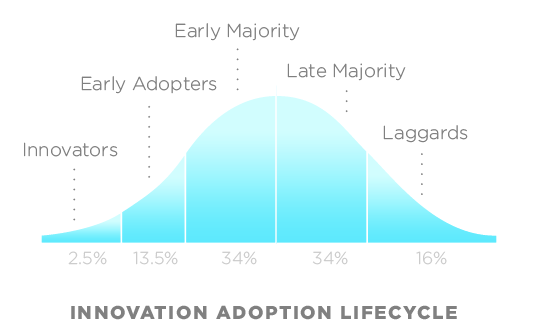
Just as with all phases, generations, and lifecycles of consumer behaviors… Word of Mouth used to literally be just that. With time, it progressed to various forms of telecommunication and now, to all things digital via screen access touch points. We are officially in a time where we should consider the effects of Word of Mouth 2.0… particularly if your practice has a history of growth due to positive reputation within your regional communities.
(Source)
As noted in the State of Marketing Report, word of mouth is still very much relied upon in our industry and throughout healthcare at large. So, what is to be done that we can keep up with the changes in consumer behaviors? Well… there’s a blog coming up soon titled “3 Tip to Maximize Word of Mouth 2.0” — so stay tuned!

3. If I post it, they will see it.

This one reminds me of the Field of Dreams quote:
(Source)
For those of you pop culture fans… my response is straight Jesse Pinkman’s “Fallacies.”
(Song from Breaking Bad, image source)
The reality of social media is that it’s crowded, it’s cluttered… and, many wish for a break from it all. This has been featured on Forbes and Psychology Today.
Now this doesn’t mean that social media is now irrelevant. Rather, this means you need to be relevant to your audience if you wish to be seen. Content marketing is a game of consistency, of understanding your customer’s journey, and producing written, visual, and video content that speaks directly to your customers by segment, buyer persona, avatars, and/or cameos — whatever your chosen terminology.
Most companies recognize the importance of being digitally visible — after all, visibility means discovery, and discovery means new customers. If you’re interested in learning more about how to do this, consider reading Standing Above The Social Media Content Clutter.

4. If I pay for it, they will see it.

Just as posting content isn’t a guarantee that they will be seen by the right people, or even seen at all in a meaningful way… paying for ads or promoted content doesn’t give a direct promise that results will come. Time and time again, we get asked questions about why a Facebook boost did nothing, or why Google Ads didn’t bring more patients, or why the paid listings on Yelp didn’t really glean any new patients.
It’s not just us saying so. We have industry agnostic marketing agencies saying the same thing — see 3 Myths About Boosting Facebook Posts, Don’t Boost! Promote Facebook Posts Properly to Increase Reach, and Are Facebook Boost Posts Worth it?
Success with digital advertising is very much like Physical Therapy — it’s an art and a science.
As mentioned, we’ve seen a direct correlation for the success of online advertising and paid content positioning with that ecosystem approach we constantly talk about… where when online reviews are favorable and fresh, when a website is properly designed, when social media is leveraged, when a brand’s content is fresh, then and only then do we see repeated and consistent results in the play to play environment of digital ads.
If you want to play in this field, you need have the right stuff to be in the same league. Otherwise, you’re hampering your own efforts and very likely barely striking break-even on your ad-spend… or worse, just throwing dollars to the wind. This leads us to our final marketing trap to be watchful for in 2020….!

5. “Set and Forget” = Spend and Fail

This is a FATAL error when it comes to anything related to email marketing, marketing automation, and digital ads such as Google Ads, Facebook Ads, Instagram Ads, etc. Unfortunately, this is a very easy trap to fall into because once you (or, someone in your marketing department) has done all the work of writing out copy, targeting factors, test scripts, landing pages, automation sequences, workflows, triggers, etc. etc. etc. — after all of that… it’s easy to just sit back and “wait for the automation to do all the work.”
Consumers are smart, and patients very intelligent. They know when they are getting spammed. They know that the first one or two search returns are paid for. They know that they are getting hit up for reactivation, repurchasing, reviews, and to refer their family and friends. THEY KNOW.
And, that’s the “easy part.” The ugly truth is that while setting targeting factors, budget limits, and ad sets are all well and good — algorithms change. In fact, ads algorithms constantly change. Even automation software have occasional updates that can turn workflows askew… they’ve been happening a lot more as of late, and, we use a lot of different platforms…. it’s happening everywhere. In fact, we had a recent client alarmed at a region they were self managing for online ads… algorithms shuffled and suddenly, they had no clicks, no calls, and a massive ad-spend that lead to absolutely zero new patients. Yikes.
So… if the algorithms are changing and our customers are hyper aware, what can be done? Be Authentic.
What we’ve appreciated about marketing efforts that are highly automatable is that automation means nothing if it doesn’t come across as an authentic customer touch point. What constitutes authenticity? Genuine interest and care for the patient’s well-being and benefit. This comes across in copywriting. This comes across in mixing and matching ad sets with demographics and targeting factors. This comes across in tremendous ways with timing, messaging, and brand narratives. All of it matters. To further delve into this topic of authenticity is our own Therapy Insiders podcast host, Gene Shirokobrod with “The Authenticity Paradox.”
Ultimately, this trap of “Set and Forget” is solved with setting a regular schedule to audit your ads, audit your automation, and create customer check points to test, inquire, discern, and decide if your current settings are in fact optimal. If they aren’t, adjust & re-test… if they are, mark your calendar reminders to ping you again at regular intervals to ensure that you ARE NOT on track to spend and fail. And, Yes… it is very much time intensive and we can go into the nuance as well as conflict of interests within alternate methodologies and agency schemas if you’d like 😉 — you can schedule a call HERE.
Via Dr. Ben Fung - UpDoc Media
Want to learn in person? Attend a #manualtherapyparty! Check out our course calendar below!

Learn more online - new online discussion group included!


Want an approach that enhances your existing evaluation and treatment? No commercial model gives you THE answer. You need an approach that blends the modern with the old school. 
  • NEW - Online Discussion Group
  • Live cases
  • webinars
  • lecture
  • Live Q&A
  • over 600 videos - hundreds of techniques and more! 
  • Check out MMT Insiders
Keeping it Eclectic...

Author: Ben Fung, Chief Operating Officer

We are in this interesting time in healthcare where things are truly getting shaken up. For every practice out there that is struggling is another that is flourishing. For every area that has a terrible marketplace price point for reimbursement comes another that seems "more like it" and far more favorable to the business owner or practice manager. AND, in this time when value based healthcare is on its way with some serious dollar based repercussions and incentives... disruption is EVERYWHERE and change is all over the place. Fortunately, there are constants despite disruptions that will NOT go away because healthcare is a people business.

1. Lack of Consistency.
If you’ve looked into or have tried your hand in any type of marketing — be it traditional, digital, guerilla, influencer, etc. etc. etc. — you’ve probably noticed two important truths: (1) It’s easy to get started. (2) It’s truly a struggle to stay disciplined and consistent.
You’ve probably heard the phrase from yours truly, “Consistency is KEY” from my Game of Chess metaphor on marketing.
Strong marketing does not exist outside of high quality, audience engaging content. The act of marketing itself, the “most valuable chess piece,” exists as your strongest channel(s) in distributing that content, and more importantly, creating demand for your brand.
Brand.
Resonate with this word for a moment. B-R-A-N-D. Without a consistency, you have no brand. And, without a brand, audiences (new and old) will struggle to identify with your company’s unique value proposition.
“Consistency is key” across all things marketing. Your content must have a consistent brand voice. Your social media posts need to have a consistent brand image. Your marketing to sales funnel needs to have a consistent brand experience. Your actual delivery of products and services must be congruent with the tone and positioning across the consumer’s conversion journey so that they don’t feel like they are in the wrong place when they walk through the front doors.
All these elements add up in spectacular ways to those who are disciplined enough to master consistency; and, can result in some devastating losses to those who fail to establish the requisite systems in keeping consistent.
2. Failing to be CONSUMER Focused.
We’ve covered some of these topics in the past; but, like all great topics of discussion — it’s worth a rehash.
All too often, healthcare marketing efforts come from the clinician’s voice; a narrative from provider-to-provider as if to show-off or brag to each other about how “awesome we are.” Sadly, this is a terrible blunder that happens far more often than we care to share.
Marketing is creating demand. In order to create demand, you need to define who what segments of the available consumer are your target customers. I’d like to suggest in healthcare, there are two primary buyer typologies to be catered too: (A) the “patient,” which may extend to a health-fitness-wellness client; and, (B) top talent, in the form of recruiting, human resources, and talent acquisition/retention concerns.
FOR THE PATIENT: Let’s be honest. Most patients do not care if you have extra credentials or are the best clinician, ever. As healthcare consumers, we EXPECT the care to have a certain level of excellence and ALWAYS want the best. Objectively proving that you are the best doesn’t make you any more marketable than the next option. What WILL make you more marketable is becoming more relatable, accessible, and authentic to your community. Direct-To-Consumer Marketing focuses on a brand narrative to what your prospective patient can expect before, during, and after care. Setting these patient expectations not only sets up the patient for success, it also sets up your providers for positive patient encounters.
FOR THE PROSPECTIVE TEAM MEMBER: In a similar vein, your marketing efforts should be consistently (there it is, again!) making authentic connections with the developing professional, attracting top talent to stay in touch for when opportune moment may arise within the company. Specific to Physical Therapy, we suffer ~16% turnover, annually; the costs of which are fleshed out in the 2018 Physical Therapy Industry Prospectus. This is an incredible financial and operational burden to practices of any size and/or scale. So, in order to cater content to what top talent is looking for, you must first understand their motivation and drives. To this, we’ve got the 2018 survey results in a Talent Acquisition Report — to view this report, just [Click HERE]! You can also check out our classic case study: “Attracting and Keeping Top Talent.”
If you’re interested in reading more, you can also check out these two of our classic blog posts: “The Big 3, Part 3, Marketing” and “5 Website Flaws That Are Killing Your Clinic.”
3. Your Strategy Fails to Incorporate an Ecosystem Approach.
I’m going to say it now, and, I will probably say it again… and, again…. AND, AGAIN.
ONE-OFFS NEVER WORK.
They just don’t work! The number of practice managers, owners, partners, marketing directors, etc. who have complained to me that their digital advertisements failed to bring in any new patients… is nothing shy of staggering.
When you peel back the cause, it becomes painfully apparent that the advertisements were simply one-offs. A boosted blog post here, or, a sponsored video there, or even, an influencer article far over which-where.
The root problem here isn’t the platform or channel of choice. It’s the fact that the behaviors above describe a marketing approach that simply chases tactics around or tries out the newest thing but just one time. What is the latest tool? What is the latest buzz? Who has the most recent automation update? Like a cat following a laser pointer, chasing the shiniest new marketing object rarely leads to anything outside of a financial wash. More often than not, the consequence is your classic short term gain paired with the long term losses suffered from NOT investing in an fully encompassing marketing strategy.
MARKETING FAILS WHEN IT IS UNI-DIMENSIONAL, THE SAME WAY CLINICAL CARE LARGELY FAILS IF A PROVIDER ONLY EVER USES A SINGULAR INTERVENTION FOR ALL PATIENT TYPES.
You need the right provider with the right clinical approach for the right patient at the right time.
Marketing is no different. You want the right message for the right audience for the right action at the right time.
To do this, you MUST have an ecosystem approach. What do we mean by ecosystem? It means, you can’t just rely on one or two primary marketing channels. You DEFINITELY CANNOT rely upon word or mouth or physician referrals — and, just in case you missed it: A recent study showed a 50% drop-off of PCP referrals to Physical Therapists.
So… what comprises a minimally viable marketing ecosystem?
  • A Discovery Channel — Example: A mobile optimized, SEO precise, website; organically searchable within the first few pages of results… ideally, within the top fold or first page.
  • An Attraction Channel — Example: A Facebook business page with high levels of organic engagement; and, a multi-tiered advertising campaigns, targeting ideal buyer personas in parallel.
  • A Conversion Channel — Example: A Facebook messenger bot that bifurcates for opt-ins and for direct calls to a designated clinical reception team, ready to close the sale.
The three above form the foundation of a true ecosystem. Need to read up on marketing? Check out 12 Marketing Articles You NEED To Read.
4. No Defined Budget.
It’s fact: Many healthcare companies do NOT have a defined marketing budget. A lack in defined funds to marketing also yields a lack of defined metrics.
THANKFULLY, it doesn’t require a multi-million dollar marketing and advertising budget to be successful or to even enjoy minimally reasonable ROI to a company’s marketing initiative. It DOES, however, typically require 20-40% of gross revenue for startups, 8-20% of gross revenue for growing entities rising to scale, and 5-8% of gross revenue for companies at scale to meaningfully create marketplace demand across an ecosystem approach [reference/read more…].
Now, does even 5-8% of gross revenue seem a bit high? Maybe… or, maybe it’d seem to be more normal if marketing is seen as the fuel for the vehicle of your business — the way many other industries, in fact, do. All too often, practices struggle for growth without ever investing in growth itself. We wrote up an article on this very topic in early 2016.
But… what about now? How should healthcare and health-tech companies budget out their marketing efforts for 2018?
  • First: Check out this article on “5 Steps To Recharge Your Marketing Strategy” via the APTA Private Practice Section’s Impact Magazine.
  • Second: Commit to a set marketing budget, beyond what you already have set aside as payroll et al for your marketing department. This means digging into your top line and identifying a specific number of dollars you’ll pull from your revenue stream to be dedicated for ads expenditures, public relations, customer relationship management platforms (CRM), Smart Automation Marketing (SAM), etc. 
  • Third: If you are so inclined… schedule a free strategy session with the UpDoc Team! At the very least, you’ll get a set of company recommendations, specific to YOU.
5. Failure To Establish A Tracking System.
The final point of failure that will stunt your company’s growth is failure to track your outcomes. It’s nearly silly to even mention this… except, it isn’t. In all honesty, it wasn’t actually that long ago that the healthcare market demanded for providers to actually track their outcomes. Similarly, it really hasn’t been that much of a window of time within recent digital marketing history that efforts could be reasonably and meaningfully measured.
Again… marketing is an art and science, just as it is for Physical Therapy practice. STILL, we can measure outcomes in a way that is significant to organizational growth and financial return.
Ergo, as in clinical practice, you can’t know if your interventions are working if you don’t measure them. And, you have to TRULY measure them with useful measures. It’s not just about range of motion; which is the marketing equivalent of lead source. You must track the entire conversion journey. HOW are consumers finding you? Becoming attracted to you? Converting as paying customers?
SO… WHAT SPECIFIC TOUCH POINTS SHOULD YOU TRACK?
  • Lead source: How and/or where did they hear of you?
  • Conversion journey: How, and/or, what steps along they way did they take in choosing you?
  • Purchasing behavior: Why did they end up choosing you?
  • Return on brand equity: Would they recommend you to a friend, a colleague, or family?
  • Identifying brand ambassadors: Who will share the amazing experience they’ve had as a result of purchasing your company’s services and/or products?
Some Final Words
I hope that this article and the many posts linked in the content above is helpful to you, no matter where your walk may be. For the many of you reading this as students or developing professionals, these are business competencies you can take along your career path as well as to the practice settings you join. If you are in practice management or have an executive influence within your practice setting, we’d like to encourage you to help elevate the profession and growing into new markets. After all, the Physical Therapy profession boasts a mere 7-9% of the musculoskeletal market. Surely, we can do better. Surely, there is much to do in bringing our legacy to the next level and beyond.

As always, your communiqué is warmly welcome should you have any concerns, questions, comments, or if you have the desire to make your voice heard. AND, OF COURSE… if you wish to chat about building out an ecosystem for your practice, company, or organization — if even to simply rebrand… [Click Here. Let’s Get In Touch]!
Yours In Service,
—Ben Fung, DPT, MBA
Co-Founder, COO, UpDoc MediaCo-Founder, CFO, Recharge|HoCo-CrossFit
ben@updocmedia.com
C: 470-BEN-FUNG
Twitter: @DrBenFung
Snapchat: DrBenFungInstagram: @DrBenFung


Keeping it Eclectic...


You only have 7 seconds. 

That's because our attention span on the internet is so poor (did you see the Times article that said our attention span is shorter than a goldfish!?) Animal comparisons aside, you only have a few brief seconds to capture a visitor's attention and KEEP them on your website. Use your seconds wisely. So how do you do that?

You need to put the important AND informative information "above the fold."

What is "the fold?"
The fold is whatever someone sees on their screen without scrolling. This can get tricky, because depending on what type of device, or the size of your computer screen, different people are going to see different amount of information "above the fold". So generally, we want your important and informative information near the TOP.

This idea is not new. Publishers of all kinds have been using this strategy for years. Think about newspapers, magazines, even handouts…if you don't have something to capture attention at the top, you're going to be thrown in the trash (or ,on the internet, you'll be the victim of the dreaded "back" button).

So how do you make sure you're doing all you can on your physical therapy clinic's website to make sure you capture a visitor's attention and keep them on your website? 
Make sure you have these key elements "above the fold." But what exactly are those key elements?

#1: Contact Information Your Phone Number

This includes your phone number, and for PT businesses, the cities in which you operate. People expect to see these elements immediately. On my clinic's website, they're first thing at the top right-hand corner.

They also expect your phone number to be "click-to-call" if browsing on a phone. This means that if someone taps on your phone number, they will automatically dial you. Be sure your website builder has this capability, as Google is expecting this on all sites and will reward you (or ding you) for it.

#2 Thought-Out Headline

Your headline must immediately qualify (and disqualify!) people so that they know whether they're in the right place, or not. Your headline should call out to "your people" and let them know that you work with people "just like them" every single day. 
You must call out your specific audience. If you're not disqualifying some people, then you're headline isn't good enough.

#3 Easy Navigation

Visitors to your website should be able to quickly glance and see what other pages are available on your website. You do NOT want a single drop down menu that hides all the other pages on your website. Instead, you want visitors to immediately be able to see what other pages they can explore. It piques their curiosity.

#4 Your Logo

While I'm not a huge proponent of spending a lot of money on image brand recognition, you do still want to have a logo and consistent theme throughout your business. This includes having an easily identifiable logo that you use everywhere to represent your company. 
Think about it - visitors will first see it on your website, and then be looking for it when they come to your physical location. It's a visual that people expect and want to see.

#5 Call To Action

These days, the average website visitor isn't going to be ready to pick up the phone and give you a call when they first hear about your physical therapy services. 
Heck - I don't even like to pick up the phone to order a pizza anymore. I just hop online or go on the app. That way I'm not shouting over the phone at the guy or gal trying to take my order amid the chaos of kitchen sounds.

People want other ways to find out more about you and inquire about your services. Having forms they can submit online gives them an option that may be more appealing than picking up the phone. You want to display at least one call to action "above the fold" so that people know it's available.

And the last thing, a welcome video, is optional but highly recommended. When people are choosing a service, they want to know who they're doing business with. Especially in healthcare, you have to establish trust and authority. One great way to do this is by a welcome video. This video starts to break down the barriers between you and potential patients. It's a great way to start to get people comfortable with you.

The video does NOT have to be professional done…in fact, people relate more to simple videos shot on your phone. You'll likely seem more "real" and "likable" In a video that you shoot with your own camera.

So there you have it. I've given you 5 things that NEED to be on your physical therapy business website…and one bonus idea :) 

via Christine Walker, PT, DPT, PYT, PES

Free webinar this weekend only!


Learn more from The PT Website Wizard herself, Dr. Christine Walker! Register for her free webinar by clicking below! It's the last webinar she is running this year and if you want to turn your website into a Patient Generating Machine, you need to tune in! It's free and seats are limited!


Keeping it Eclectic...

Older Posts Home

Become a TMJ/Headache Specialist

Become a TMJ/Headache Specialist
Temporomandibular Management - Unlimited Access 10.5 CEUs

Eval, Reset, and Stabilize System

Eval, Reset, and Stabilize System
12.5 CEUs - Unlimited Access

Get Certified in BFR Online!

Search for Jobs

Search for Jobs

IASTM Technique 2.0

IASTM Technique 2.0

EDGE Restriction System BFR Cuffs

EDGE Restriction System BFR Cuffs
Best BFR System on the Market!

Knee Rehab Done Right

Google Workspace for EMR

Google Workspace for EMR
Save BIG on EMR!

Modern Manual Therapy Insiders

Modern Manual Therapy Insiders
Mini interactive courses, private chat and social feed, over 700 exclusive videos!

Featured Post

How to Explain SIJ Pain Without Using SIJ, Rotation, or Innominate

One of the most frequently asked questions I get at Modern Manual Therapy courses is, "How do you explain SIJ dysfunction without us...

Total Pageviews

Blog Archive

Resources

  • Dr. E's Private Network
  • Dr. E's Shop
  • Modern Manual Therapy
  • EDGE Rehab and Sport Science
  • Online Seminars

Unlimited CEUs

Unlimited CEUs

CashPT Blueprint

CashPT Blueprint

Copyright © 2025

All written and filmed content on this blog and its channels is meant as instructional and informational. The author and guest authors of this blog are not responsible for any harm or injury that may result.

Erson Religioso III, DPT, all rights reserved
EDGE Rehab and Sport Science and CT-Tool, LLC

Copyright 2015 Modern Manual Therapy Blog - Manual Therapy, Videos, Neurodynamics, Podcasts, Research Reviews | Designed by Veethemes.com