Modern Manual Therapy Blog - Manual Therapy, Videos, Neurodynamics, Podcasts, Research Reviews: marketing strategies
  • Start Here
  • MMT Online Seminar
  • MMT Insiders
  • Our Team
Modern Manual Therapy Blog - Manual Therapy, Videos, Neurodynamics,  Podcasts, Research Reviews
☰
  • Start Here
  • Blog
  • Online Mentoring
  • MMT Insiders
  • Top Products
  • Seminars
Showing posts with label marketing strategies. Show all posts
1. Lack of Consistency.
If you’ve looked into or have tried your hand in any type of marketing — be it traditional, digital, guerilla, influencer, etc. etc. etc. — you’ve probably noticed two important truths: (1) It’s easy to get started. (2) It’s truly a struggle to stay disciplined and consistent.
You’ve probably heard the phrase from yours truly, “Consistency is KEY” from my Game of Chess metaphor on marketing.
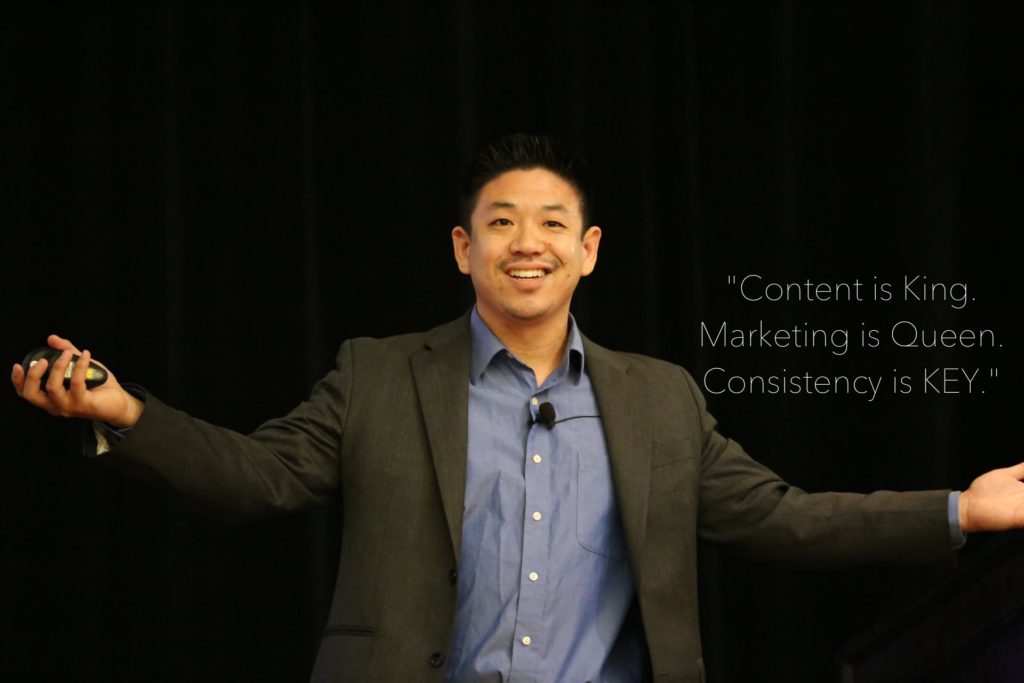
Strong marketing does not exist outside of high quality, audience engaging content. The act of marketing itself, the “most valuable chess piece,” exists as your strongest channel(s) in distributing that content, and more importantly, creating demand for your brand.
Brand.
Resonate with this word for a moment. B-R-A-N-D. Without a consistency, you have no brand. And, without a brand, audiences (new and old) will struggle to identify with your company’s unique value proposition.
“Consistency is key” across all things marketing. Your content must have a consistent brand voice. Your social media posts need to have a consistent brand image. Your marketing to sales funnel needs to have a consistent brand experience. Your actual delivery of products and services must be congruent with the tone and positioning across the consumer’s conversion journey so that they don’t feel like they are in the wrong place when they walk through the front doors.
All these elements add up in spectacular ways to those who are disciplined enough to master consistency; and, can result in some devastating losses to those who fail to establish the requisite systems in keeping consistent.
2. Failing to be CONSUMER Focused.
We’ve covered some of these topics in the past; but, like all great topics of discussion — it’s worth a rehash.
All too often, healthcare marketing efforts come from the clinician’s voice; a narrative from provider-to-provider as if to show-off or brag to each other about how “awesome we are.” Sadly, this is a terrible blunder that happens far more often than we care to share.
Marketing is creating demand. In order to create demand, you need to define who what segments of the available consumer are your target customers. I’d like to suggest in healthcare, there are two primary buyer typologies to be catered too: (A) the “patient,” which may extend to a health-fitness-wellness client; and, (B) top talent, in the form of recruiting, human resources, and talent acquisition/retention concerns.
FOR THE PATIENT: Let’s be honest. Most patients do not care if you have extra credentials or are the best clinician, ever. As healthcare consumers, we EXPECT the care to have a certain level of excellence and ALWAYS want the best. Objectively proving that you are the best doesn’t make you any more marketable than the next option. What WILL make you more marketable is becoming more relatable, accessible, and authentic to your community. Direct-To-Consumer Marketing focuses on a brand narrative to what your prospective patient can expect before, during, and after care. Setting these patient expectations not only sets up the patient for success, it also sets up your providers for positive patient encounters.
FOR THE PROSPECTIVE TEAM MEMBER: In a similar vein, your marketing efforts should be consistently (there it is, again!) making authentic connections with the developing professional, attracting top talent to stay in touch for when opportune moment may arise within the company. Specific to Physical Therapy, we suffer ~16% turnover, annually; the costs of which are fleshed out in the 2018 Physical Therapy Industry Prospectus. This is an incredible financial and operational burden to practices of any size and/or scale. So, in order to cater content to what top talent is looking for, you must first understand their motivation and drives. To this, we’ve got the 2018 survey results in a Talent Acquisition Report — to view this report, just [Click HERE]! You can also check out our classic case study: “Attracting and Keeping Top Talent.”
If you’re interested in reading more, you can also check out these two of our classic blog posts: “The Big 3, Part 3, Marketing” and “5 Website Flaws That Are Killing Your Clinic.”
3. Your Strategy Fails to Incorporate an Ecosystem Approach.
I’m going to say it now, and, I will probably say it again… and, again…. AND, AGAIN.
ONE-OFFS NEVER WORK.
They just don’t work! The number of practice managers, owners, partners, marketing directors, etc. who have complained to me that their digital advertisements failed to bring in any new patients… is nothing shy of staggering.
When you peel back the cause, it becomes painfully apparent that the advertisements were simply one-offs. A boosted blog post here, or, a sponsored video there, or even, an influencer article far over which-where.
The root problem here isn’t the platform or channel of choice. It’s the fact that the behaviors above describe a marketing approach that simply chases tactics around or tries out the newest thing but just one time. What is the latest tool? What is the latest buzz? Who has the most recent automation update? Like a cat following a laser pointer, chasing the shiniest new marketing object rarely leads to anything outside of a financial wash. More often than not, the consequence is your classic short term gain paired with the long term losses suffered from NOT investing in an fully encompassing marketing strategy.
MARKETING FAILS WHEN IT IS UNI-DIMENSIONAL, THE SAME WAY CLINICAL CARE LARGELY FAILS IF A PROVIDER ONLY EVER USES A SINGULAR INTERVENTION FOR ALL PATIENT TYPES.
You need the right provider with the right clinical approach for the right patient at the right time.
Marketing is no different. You want the right message for the right audience for the right action at the right time.
To do this, you MUST have an ecosystem approach. What do we mean by ecosystem? It means, you can’t just rely on one or two primary marketing channels. You DEFINITELY CANNOT rely upon word or mouth or physician referrals — and, just in case you missed it: A recent study showed a 50% drop-off of PCP referrals to Physical Therapists.
So… what comprises a minimally viable marketing ecosystem?
  • A Discovery Channel — Example: A mobile optimized, SEO precise, website; organically searchable within the first few pages of results… ideally, within the top fold or first page.
  • An Attraction Channel — Example: A Facebook business page with high levels of organic engagement; and, a multi-tiered advertising campaigns, targeting ideal buyer personas in parallel.
  • A Conversion Channel — Example: A Facebook messenger bot that bifurcates for opt-ins and for direct calls to a designated clinical reception team, ready to close the sale.
The three above form the foundation of a true ecosystem. Need to read up on marketing? Check out 12 Marketing Articles You NEED To Read.
4. No Defined Budget.
It’s fact: Many healthcare companies do NOT have a defined marketing budget. A lack in defined funds to marketing also yields a lack of defined metrics.
THANKFULLY, it doesn’t require a multi-million dollar marketing and advertising budget to be successful or to even enjoy minimally reasonable ROI to a company’s marketing initiative. It DOES, however, typically require 20-40% of gross revenue for startups, 8-20% of gross revenue for growing entities rising to scale, and 5-8% of gross revenue for companies at scale to meaningfully create marketplace demand across an ecosystem approach [reference/read more…].
Now, does even 5-8% of gross revenue seem a bit high? Maybe… or, maybe it’d seem to be more normal if marketing is seen as the fuel for the vehicle of your business — the way many other industries, in fact, do. All too often, practices struggle for growth without ever investing in growth itself. We wrote up an article on this very topic in early 2016.
But… what about now? How should healthcare and health-tech companies budget out their marketing efforts for 2018?
  • First: Check out this article on “5 Steps To Recharge Your Marketing Strategy” via the APTA Private Practice Section’s Impact Magazine.
  • Second: Commit to a set marketing budget, beyond what you already have set aside as payroll et al for your marketing department. This means digging into your top line and identifying a specific number of dollars you’ll pull from your revenue stream to be dedicated for ads expenditures, public relations, customer relationship management platforms (CRM), Smart Automation Marketing (SAM), etc. 
  • Third: If you are so inclined… schedule a free strategy session with the UpDoc Team! At the very least, you’ll get a set of company recommendations, specific to YOU.
5. Failure To Establish A Tracking System.
The final point of failure that will stunt your company’s growth is failure to track your outcomes. It’s nearly silly to even mention this… except, it isn’t. In all honesty, it wasn’t actually that long ago that the healthcare market demanded for providers to actually track their outcomes. Similarly, it really hasn’t been that much of a window of time within recent digital marketing history that efforts could be reasonably and meaningfully measured.
Again… marketing is an art and science, just as it is for Physical Therapy practice. STILL, we can measure outcomes in a way that is significant to organizational growth and financial return.
Ergo, as in clinical practice, you can’t know if your interventions are working if you don’t measure them. And, you have to TRULY measure them with useful measures. It’s not just about range of motion; which is the marketing equivalent of lead source. You must track the entire conversion journey. HOW are consumers finding you? Becoming attracted to you? Converting as paying customers?
SO… WHAT SPECIFIC TOUCH POINTS SHOULD YOU TRACK?
  • Lead source: How and/or where did they hear of you?
  • Conversion journey: How, and/or, what steps along they way did they take in choosing you?
  • Purchasing behavior: Why did they end up choosing you?
  • Return on brand equity: Would they recommend you to a friend, a colleague, or family?
  • Identifying brand ambassadors: Who will share the amazing experience they’ve had as a result of purchasing your company’s services and/or products?
Some Final Words
I hope that this article and the many posts linked in the content above is helpful to you, no matter where your walk may be. For the many of you reading this as students or developing professionals, these are business competencies you can take along your career path as well as to the practice settings you join. If you are in practice management or have an executive influence within your practice setting, we’d like to encourage you to help elevate the profession and growing into new markets. After all, the Physical Therapy profession boasts a mere 7-9% of the musculoskeletal market. Surely, we can do better. Surely, there is much to do in bringing our legacy to the next level and beyond.

As always, your communiqué is warmly welcome should you have any concerns, questions, comments, or if you have the desire to make your voice heard. AND, OF COURSE… if you wish to chat about building out an ecosystem for your practice, company, or organization — if even to simply rebrand… [Click Here. Let’s Get In Touch]!
Yours In Service,
—Ben Fung, DPT, MBA
Co-Founder, COO, UpDoc MediaCo-Founder, CFO, Recharge|HoCo-CrossFit
ben@updocmedia.com
C: 470-BEN-FUNG
Twitter: @DrBenFung
Snapchat: DrBenFungInstagram: @DrBenFung


Keeping it Eclectic...


No matter your marketing tactics, overarching strategy, number of initiatives, utilized tactics, etc…. it all falls upon the 4Rs. Why? Because, the 4Rs are constants in marketing —AND— typically, the most ignored fundamentals within not just marketing, but good business practice.
No matter the changes in technology, the human element behind purchasing behaviors won’t likely vary much. They may express themselves differently as marketing media continues to evolve. Nevertheless, these 4Rs are absolute must-haves when it comes to truly integrating platforms, technology, tactics, content, sales teams, and funnels… all into a seamless approach that is a killer marketing strategy.

The 4Rs of Every Killer Marketing Strategy

1. Reception

For many companies, the obsession in marketing is lead generation and nurturing. Whether that means running ads, creating lead magnets, or fine tuning an automated email funnel… this first absolutely essential step tends to get the marketer’s prime focus. HOWEVER, the problem then lies: If marketing “gets them to the door,” then… “who gets them in?”
Who is going to close the deal? Typically, this is done by someone in sales. The thing of it is, contemporary sales teams aren’t what they used to be, primarily because contemporary consumers don’t convert in isolated interactions… it’s all fluid, seamless… a true continuum of customer experience.
So, the question remains: Who is your first point of contact? Who receives your leads? How does that first contact feel to the customers/end-user?
This string of questions requires an absolutely precise answer; systematized, scalable, and reproducible across the brand. To test this, just inquire via all your major direct channels (phone, text, email, direct messaging) to various team members and collate the response. Each location and each team member should be conducting the process of reception in more similar ways than divergent. One would actually be surprised if not terrified to know what type of leads are dropped at this first, absolutely crucial step.

2. Retention

Let me ask you this. What is your average Customer Lifetime Value (CLV)? In the case of outpatient physical therapy practice, we can say for sake of easy numbers that a single course or episode of care would be considered our CLV; and, that such a care bring in revenue that is a few shades above $1,000. So, let’s just say $1k = CLV.
A highly, under-addressed element in most industries, and certainly in the practice of Physical Therapy is: CHURN. Churn, and many other terms like it, all describe the percentage of retention a customer holds to across their CLV. For the ease of talking numbers, say an episode of care is 10 visits. So, each visit is worth $100. Well, if a customer to a physical therapist — their patient — only comes in for 8/10 visits, you’ve lost 20% of your CLV due to a 80% retention rate.
THIS. IS. HUGE.
Again, for ease of numbers: Say a clinician sees 10 customers a day, 5 days a week, for 50 weeks of the year. That’s 2,500 patient encounters a year or $250,000 of gross revenue. That’s great…. if that represented 100% retention of CLV. The problem is, that only represents an 80% retention rate, which means: Your company has left $62,500 of revenue unrealized due that 80% retention rate.
What is worse is that is that for every 5 FTE of clinicians, you’re losing 1 FTE of gross revenue production.
AND, if by chance your company has 5 clinics, each with 5 providers… you’re actually leaving an entire clinic’s equivalent of business completely un-captured… all because of poor customer retention.
The lesson here is this: Getting someone to buy, once… that’s not that hard. Getting someone to keep buying… that’s a little harder. Getting them to buy, again??? THAT, is the hard part — and, happens to be the 3rd R: Reactivation.

3. Reactivation

The universe is funny with that 80/20 Rule. It’s been quoted in so many different contexts; from contribution of value to, persistence of problems, and especially, to companies growing based on return customers.
Yes, Return Customers. For so very many businesses, their financial success thrives off of 80% of their business coming from the veritable 20% of their customers. Now, while this may not be a hard-and-true figure to go by, it is the concept that matters. Companies such as Apple, Disney, and Amazon — these brands are industry leaders because they not only retain your full CLV per purchasing episode, they get you for every subsequent order. THAT, is the key to their success.
Now, sure… I’ll be the first to say that the physical therapy business and the technology business, isn’t the same… and, it’s quite different from entertainment… and, certainly, it’s a bit of a different beast than is online sales and managing a worldwide supply chain.
HOWEVER, there are far more similarities in business strategy to appreciate than differences.
In every industry, a business will be successful if leads are warmly nurtured into purchasing behaviors. They will grow in success as they maximize their CLV retention rates. AND, each time a customer needs a job to be done via products or services, branding effects giving consumers a propensity to purchase from previously patronized companies will help those businesses continue to win. Think about how many times you’ve gone back to the same grocery store, or ordered a product from a website, or went to the same gasoline station (Ha! This last sentence is likely to date this blog post in the coming days)… more likely than not, you’ve developed a consistent habit of all of the above, within a certain respect. The same goes for the customers of physical therapy practices. How often do you get repeat customers? How much of you current caseload is comprised of past customers? These numbers matter. These numbers describe a combination of brand equity as well as your reactivation ratio that describes your brand’s ability to incite repeat customers.
There are reasons to their being loyal, repeat buyers to your brand. More importantly, there are captivating stories behind their purchasing behaviors. AND, EVEN MORE IMPORTANTLY, it is your brand’s ability to share the stories of such purchase experiences that closes the loop and brings us to the 4th R: Reviews.
Oh, if you’re interested in learning more in depth about reactivation based sales psychology, check out our webinar for Physical Therapists: How To Sell Anything.

4. Reviews

“Tell your friends!”
For so long and too long, the physical therapy profession has relied upon “word of mouth” and “referral sources.” These are but two lead sources in an infinite variety of market mixes. It gets really scary when people stop talking about you, AND, you only have a handful of referral sources. It’s not just scary, it’s irresponsible and fatal to the health of your business.
But, returning back to the ability to share stories… how DO people share stories these days? Well… not-ironically, they do so through actual technological features on social media platforms… called STORIES! They exist on Instagram, on Snapchat, on Facebook….. and, quite honestly, these ephemeral content postings on digital platforms are likely here to stay. Beyond this, there are more permanent storytellings through podcasts, video, video blogs, written blogs, YouTube channels… and, a lot more.
So, the question is truly: How is your company’s VALUE being shared through THEIR stories?
Are they sharing your digital footprint? Are they leaving formal reviews? Do they engage with your content, either subtly or with overt comments? This is the new way people are “telling their friends.” And, while many practices have overwhelmingly satisfied customers… few actually go the extra step to politely ask customers to share their experience and write a review; making it that much more difficult for prospective buyers to find you and make purchasing decisions.
Finally, testimonials are one of the most powerful ways a happy customer can “review” your brand. Currently, the most engaging type of media is video — the one place where good resources can and should be invested to tell the world of the convincing brand experience you deliver, supported by the review that you receive.

Fundamentally, marketing is creating demand.
We have a million and one tools to do this and just as many channels. To do this as a true strategy, it’s no different than treating a patient — a clinician would best serve to combine the best and most appropriate interventions, rather than only relying on a singular clinical technique.
So, whatever your chosen marketing channels, be sure that you weave in these 4Rs into your strategy so that leads be fully nurtured through purchasing behaviors, so that buying customers stay for the full value of their patronage to your brand… that past customers stay along as regular customers… AND, that your brand champions boldly share their experience with your company and how you bring value to their lives.
If you’re looking for more resources on marketing, you might like to read up on:
  • The Digital Marketing Pre-Launch Checklist
  • 5 Steps To A Captivating Story
  • 5 Essentials of Email Marketing
  • 4 Marketing Metrics You NEED To Measure
  • Nurturing A Competitor’s Call In 10 Steps
  • The Physical Therapy Business & Entrepreneur Accelerator Group
via Dr. Ben Fung, UpDoc Media


Want an approach that enhances your existing evaluation and treatment? No commercial model gives you THE answer. You need an approach that blends the modern with the old school. Live cases, webinars, lectures, Q&A, hundreds of techniques and more! Check out Modern Manual Therapy!

Keeping it Eclectic...


Just like our clinical pearls that work great in the clinic when treating patients, this is a marketing pearl that is a MUST DO for all cash based PT practices!

Find out exactly what to do the next time some SEO marketing company or local magazine asks you to spend $1000+/month or tries to trick you into buying unproven marketing for a 12 month commitment.

Never commit to unproven marketing without doing this first!


2 Main Marketing Strategies:

1.  Ask for a 3 month trial period to tests the marketing to see if it works or not

2.  Find 3-5 companies or health care providers who were in a past issue or publication.  Call them, and see if they received any ROI on their advertising in the magazine/publication.

This is a great strategy that has helped me saved $1000s of dollars on wasted unproven marketing that does not work for a cash based practice.  For more information about my cash based system, my proven marketing strategies, or my 101 series for cash based start up practices, visit http://www.cashbasedphysicaltherapy.org/

Regards,

Ron


PS:  Don't forget to like our facebook page for marketing strategies, business concepts, and more information about cash based physical therapy


Interested in live cases where I apply this approach and integrate it with pain science, manual therapy, repeated motions, IASTM, with emphasis on patient education? Check out Modern Manual Therapy!

Keeping it Eclectic...


We already know I'm a big fan of podcasts. One of my most popular posts is about podcasts and I still update it every few weeks when I discover new ones. Which reminds me, it's been updated and re-posted. Here's the link: http://www.themanualtherapist.com/2016/04/are-you-listeningto-physio-podcasts.html. 

One thing I've noticed after listening to a wide variety of podcasts over the past few years, is that there appears a common thread with some of their marketing and promotional strategy that perhaps PT could learn from. 

Podcast hosts frequently have hosts of other podcasts on their show, which enables the guest to promote themselves and their own show and products. Very often, that guest will reciprocate and have the previous host on their show to do the same. And on it goes. I have myself discovered podcasts and books in this very way. 

Here are just two examples: In December of last year, Scott Iardella (@RdellaTraining) of the Rdella training podcast had on as a guest, Danny Matta (@dannymattapt) of the Doc and Jock podcast. Later that week, The Doc and Jock podcast hosted Scott Iardella and helped him promote his new book, The Edge of Strength. Scott was able to promote his book not only on his own platforms, but others as well, which enabled him to reach an even broader audience--brilliant. 

In November 2015, Mark Divine (@markdivine, @sealfit, @unbeatablemind), former Navy Seal Commander, author, founder of Sealfit.com, and host of the Unbeatable Mind Podcast had on Tom Bilyeu, CEO of Quest Nutrition (@tombilyeu, @insidequest). Just over a month later, Tom had Mark on as a guest on his show, Inside Quest. Even if there was already some overlap between the two tribes, members of each community were exposed not only to the thoughts and ideas of the other, but resources, products, and opportunities that they otherwise might not have known about. 

So, can physical therapy, specifically physical therapy private practices learn from this? Jeff Moore (@jeffmooredpt) seems to think so. In an episode of #PTonICE, Jeff discussed one strategy that involved encouraging multiple small practices in a town to join together for marketing efforts and even things like journal clubs or mentoring sessions to help raise the quality of care delivered by all the providers in the area. 

Jeff's thoughts on this strategy echoes what I heard Chad Madden (@MaddenPT), while a guest on the new PT Lanchpad podcast (@PTlaunchpad), refer to as "the abundance mindset." The abundance mindset basically is one that agrees that there are plenty of customers to go around. Jeff cited the recent Julie Fritz paper that noted only 7% of patients with acute LBP that presented to primary care were being referred for physical therapy. If we want to attract that other 93%, the efforts of just one PT practice in a town may not be enough. Perhaps working together to help promote the profession and educate the public is a good way to do it. 

"How you market anything is how you market everything"-- Paul Gough

Traditionally, private practice PT is often just that--private. We like to keep our methods secret. The internet and especially social media has changed all that. Our profession has people like Jerry Durham (@Jerry_DurhamPT), Paul Gough (@ThePaulGough), Chad Madden, Paul Potter (@paulpotterptcom), and Jarod Carter (@DrJarodCarter), who spend a large chunk of their time promoting physical therapy and providing services to help private practices get better and become more successful. 

As my colleague Eric Jorde (@EricJorde_DPT), says, "raising the level of all physical therapists helps raise the level of physical therapy everywhere." If all the groups in town that a physician refers to are good, the assumption by both the physician and the public might be that a large majority of us are good. And that can only help raise the profile of the value of PT. 

Many of us bemoan the fact that we are surrounded by competition, whether it be hospitals, POPTs, large corporate PT groups, and even other private practices. But using just the back pain referrals as a model, if we are all either succeeding or just getting by on that 7%, imagine what we could do simply by doubling that number. Finding more space and more qualified therapists would become our newest problem, and that's a good problem to have!

The even bigger picture is that it's not just about our practice or business success. It's the public that will benefit the most. The more the public knows about the value of PT and what it can do not only from a traditional rehabilitation model, but also from a health/wellness/performance standpoint, the better for everyone. We can enhance peoples lives in so many ways, and that's what we can sell. 

So maybe each practice doesn't have to be an island. We can help each other to help every-body. 

Thanks for reading,

-Andrew


Interested in live cases where I apply this approach and integrate it with pain science, manual therapy, repeated motions, IASTM, with emphasis on patient education? Check out Modern Manual Therapy!

Keeping it Eclectic...


3 Concepts to Use When Marketing Your Physical Therapy Practice Online

1.  Know what kind of prospective patients there are online and what are they searching for?  Knowing this can help you guide your marketing strategy and specifically design your marketing for each type of prospective patient.  What are people in pain or with injuries searching for online?  What are prospective patients searching for online?


2.  Understand how much it costs to get one new patient.  If you ever watch Shark Tank, they always ask what is your customer acquisition cost.  Which, if you are interested in opening a cash based practice, or even an insurance one, I would highly recommend watching Shark Tank or The Profit.  You can learn a lot of business concepts watching these shows.  You need to calculate this and know exactly how much this is when marketing online after 1-3 months of marketing.  When you calculate this, then you can know how much is worth investing in marketing, how much it costs to get one new patient, and what is your average revenue per new patient.  


3.  You need to have a return on your investment (ROI) with marketing and understand conversion rates.  Here is an example when I invested $1000 in marketing and generated $8000 in revenue in 1 month and what my conversion rates were.  Yes, marketing to the public can work, when done properly.  

Like our facebook page for more information regarding marketing strategies for your cash based private practice.  We really need to learn how to market to the public and really create true value in health care for outpatient private practice physical therapy to survive.  This is why I create my Business 101 and Marketing 101 courses to give PTs the basics and a proven system when opeing a cash based PT practice. For more information about my systems, business set up, and marketing strategies visit cashbasedphysicaltherapy.org . Marketing online is essential when you want to grow your practice and grow to the next level.


Regards,

Ron

Ron Miller, DPT, OCS
Owner of Pursuit Physical Therapy
email:  cashbasedpt@gmail.com
Owner of CashBasedPhysicalTherapy.org
Adjunct Faculty of University of Central Florida

header image credit


Interested in live cases where I apply this approach and integrate it with pain science, manual therapy, repeated motions, IASTM, with emphasis on patient education? Check out Modern Manual Therapy!

Keeping it Eclectic...


What is a Landing Page and Why Should I use this for my PT Practice?


Lets face it, most physical therapists are horrible at marketing and do not know how to market to the public about our services.  Most physical therapy websites just say the same thing:    look at our staff, look at what we do, we do this physical therapy, look at our education, we do this intervention, and it filled with more me, me , and some more me.  This is another problem that I see frequently and recommend to change this on your practice website (remember it is not about you), but I also recommend to stop marketing physical therapy.  Yes, I said it.  Stop marketing physical therapy and start marketing your outcomes and start using landing pages.

What is a landing page?

A landing page is one page (either on your website but hidden from the main page or a whole seperate site and URL) specifically designed for one injury, a niche market, or a target prospective patient.

What is the goal of the landing page?

A specific landing page is for the prospective patient or visitor to receive specific information about the topic of interest and, in our case, it is usually about one type of pain or injury.  For example:  shoulder pain, heel pain, low back pain.  The goal of the landing page is to get that prospective patient to take action.  To sign up for information, to call to schedule an evaluation, or to schedule online.

Why should I use a landing page?

Most people do not know what physical therapy is nor what we actually do.  So marketing physical therapy to the public usually does not work.  But if you market to specific diagnoses, injury, or niche market, than people will click and take action on this and you can put yourself in front of 100% of your ideal prospective patient market.  What do I mean about this?

For example:  say you want to target runners and running injuries.  You decide to sponsor a local 10K and you have a booth with your physical therapy logo, flyers, free information, etc.  It all sounds good but what are you really doing.  You are putting yourself in front of 1000 healthy runners that at some point may or may not get injured, 2 months from now they may call you for an injury, and they may not even stop by your booth, because after the race, they just want the free planet smoothie drink or a free chick fil a sandwich.  You get my point, don't count on maybe, and there is so much work here.  With this example, how many people will be coming in for an evaluation after this race? maybe 0-1-2.  Now what if you can put yourself in front of only injured runners looking for treatment?  What if you hosted a running injury clinic at a local running shoe store and you put yourself in front of 15 injured runners who are coming to hear you talk!  This is a huge opportunity and how many of these injured runners can you get in for an evaluation with a lot less time, money, and work?  maybe 5-7?  See the difference

Your landing page will target a specific injury or niche market, that will put yourself or your landing page, directly in front of people looking for treatment for that specific injury!  This is the key and you can market your outcomes and success stories here too.  Anything to get them to take action.  This strategy will allow you to increase your conversion rates and to get more people to take action and call you for an evaluation.

This is just one concept that private practice owners, especially cash based practice owners need to master when marketing your practice.  It works and will help increase your conversion rates getting more prospective patients in for evaluations.  For more information on marketing strategies, proven blueprints for landing pages, and how to start a cash based PT practice click below or click here.


Don't forget to like our facebook page for free information, marketing ideas, and new business strategies for a cash based physical therapy practice .


Regards,

Ron


Owner of Pursuit Physical Therapy
email:  pursuittherapy@gmail.com
Owner of CashBasedPhysicalTherapy.org
Adjunct Faculty of University of Central Florida

Interested in live cases where I apply this approach and integrate it with pain science, manual therapy, repeated motions, IASTM, with emphasis on patient education? Check out Modern Manual Therapy!

Keeping it Eclectic...


Older Posts Home

Become a TMJ/Headache Specialist

Become a TMJ/Headache Specialist
Temporomandibular Management - Unlimited Access 10.5 CEUs

Eval, Reset, and Stabilize System

Eval, Reset, and Stabilize System
12.5 CEUs - Unlimited Access

Get Certified in BFR Online!

Search for Jobs

Search for Jobs

IASTM Technique 2.0

IASTM Technique 2.0

EDGE Restriction System BFR Cuffs

EDGE Restriction System BFR Cuffs
Best BFR System on the Market!

Knee Rehab Done Right

Google Workspace for EMR

Google Workspace for EMR
Save BIG on EMR!

Modern Manual Therapy Insiders

Modern Manual Therapy Insiders
Mini interactive courses, private chat and social feed, over 700 exclusive videos!

Featured Post

How to Explain SIJ Pain Without Using SIJ, Rotation, or Innominate

One of the most frequently asked questions I get at Modern Manual Therapy courses is, "How do you explain SIJ dysfunction without us...

Total Pageviews

Blog Archive

Resources

  • Dr. E's Private Network
  • Dr. E's Shop
  • Modern Manual Therapy
  • EDGE Rehab and Sport Science
  • Online Seminars

Unlimited CEUs

Unlimited CEUs

CashPT Blueprint

CashPT Blueprint

Copyright © 2025

All written and filmed content on this blog and its channels is meant as instructional and informational. The author and guest authors of this blog are not responsible for any harm or injury that may result.

Erson Religioso III, DPT, all rights reserved
EDGE Rehab and Sport Science and CT-Tool, LLC

Copyright 2015 Modern Manual Therapy Blog - Manual Therapy, Videos, Neurodynamics, Podcasts, Research Reviews | Designed by Veethemes.com