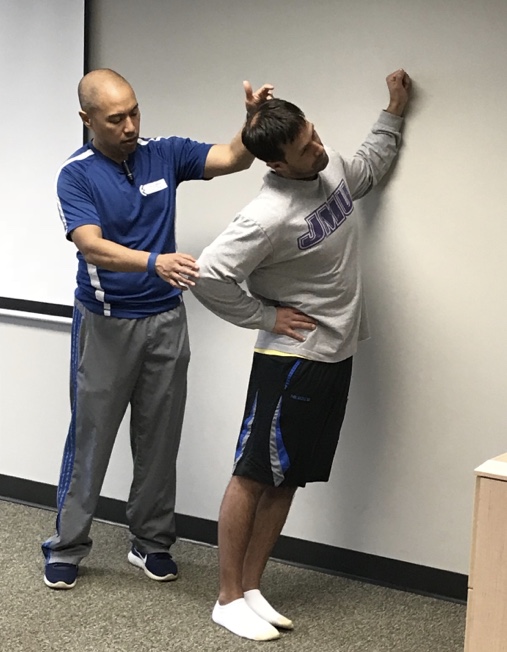
Thanks to Dr. Leon Knight, @theperformancedoc for letting me compile his recent and amazingly hilarious instagram video compilation. Which student have you come across recently? Or more importantly, were YOU one of these students?
Showing posts with label #DPTStudent. Show all posts
Everything should be made as simple as possible, but not simpler -- Albert Einstein
We've all heard of KISS, No, not the rock band that grew to fame in the 80's. I'm talking about the phrase "Keep It Simple, S....(insert your word of choice)" Within our profession, there has been a propensity to make things more complex than necessary Why is that? There are several possible explanations. I heard Greg Lehman (@GregLehman) make an interesting observation while on the Chews Health Podcast (@TPMpodcast) and more recently the NAF Podcast with Adam Meakins (@AdamMeakins): "There are a lot of smart people in the profession. It's hard to get in [to school] and you work really hard and I think there's a desire to do something that's complex because simple makes it seem that anybody can do it."
That does make a lot of sense. However, do patients want what's simple? Ideally, I think so, but I so know that if we each reflect upon our own clinical practice, we'll probably find several examples of a strange balance between the simple and complex.
Early in my career I ran into a situation that illustrates why I think phyios struggle when it comes to keeping things simple. The patient was a middle aged female that would have been every McKenzie MDT instructor's dream demo subject. She had low back pain with radiating pain into the right leg. Symptoms peripheralized with flexion and centralized with extension. I sent her home with prone press-ups as her primary exercise with standing repeated extension for her to do during the work day. I saw her for a second visit and she was already significantly better. We continued with press-ups without any force progression as that was all that was necessary to centralize/abolish symptoms. She demonstrated improved lumbar flexion motion on re-assessment without production of low back or leg symptoms. I had planned to continue and gradually reintroduce flexion in a future treatment as long as it was indicated, but she never came back. When I called two weeks later to follow-up, the discussion that followed was not anticipated.
"You didn't do anything" was the response I received when I inquired as to why she had not followed-up with her appointment. (Remember, this was very early in my career when my patient interaction skills were still quite lacking! But I remember the conversation almost verbatim) "What do you mean?" was my reply.
"I was expecting a massage or something more." So there we go-- lesson one, establish/understand expectations.
"Are you having any back or leg pain now?" I asked. "No." "So, you're better?" "Yes." "Then I don't understand; how is that you say I didn't do anything?" "Because all I did was that simple exercise that I could have done by myself!" And there it is.
"But you didn't come up with it by yourself, did you? You came to me and I determined that was a good movement for you to do. I could do that other stuff, but I didn't think it was going to be as beneficial for you." Silence. And then, "Well, I was expecting something different." I don't remember exactly how the conversation ended, but you get the idea.
While that very well may have been an example of how NOT to perform a follow-up patient interaction, the point there highlights what some physios do fear with regards to simplicity. However, there are times when patients do gravitate towards simple, as in the explanation by physicians for the reason for their back/leg pain as a "pinched nerve." We know that's rarely what actually is happening and the true reason is often more complex.
Simple with exercise is usually good. Most patients will struggle with movements/exercise with too much complexity. Even if it's the "best" exercise, if they do not do it, it's not very effective. However, something as simple as a Farmer's carry is met with skepticism. "What is this supposed to do?" I'll get asked. "Why don't you go walk to the end of the room and back and when you get back you tell me what you feel?" What can I say, I'm a smart-ass.
via Dr. Andrew Rothschild, DPT, FAAOMPT
Lead Instructor: Modern Patient Education
Mentor: Modern Rehab Mastery
@spear_physio
If you want to go beyond the seminar, our next cohort for Modern Rehab Mastery, our one of a kind online mentoring group is starting soon! Sign up here.
Want to learn in person? Attend a #manualtherapyparty! Check out our course calendar below!
March Madness is upon us for NCAA Basketball. And so, in celebration of such “madness,” we’re bringing our own “March Marketing Madness” in this special e-resource series. In this special collection of articles, we’ll be covering:
- Branding
- E-Mail marketing
- How to grow a following
- Metrics to measure in marketing
- How to start a blog
- The formula for creating captivating stories
- Keys to social engagement
- Mission critical business competencies PT practices NEED to have
- And… a bunch more topics and even more articles, linked within the e-series contents.
This special March Marketing Madness e-resource series is available for SUBSCRIBERS, ONLY! Don’t miss out and do not delay!
[CLICK HERE to SIGN UP]
This post… has been a long time coming. It’s needed. It will not be comfortable. And, it shouldn’t be! If you’ve read any of the below posts…
- 3 Positive Culture Shifts PTs NEED To Make
- 3 Business Competencies PTs NEED To Know
- And, this post from March of last year: Bridging The Gap.
You know what I’m about, and, you know for the most part that I nigh annoyingly positive, constructively inclined, and inherently optimistic. Rarely, do I flat out say something needs to stop. Well… today is one of those rare days.
5 Things in Physical Therapy We CANNOT Ignore Anymore
1. The Debt
It isn’t just because there are, for the most part, daily online conversations about the tremendous student debt happening in the field of allied rehab therapy. It’s not just because I get regularly flooded by questions in my many inboxes on the matter of personal finance and career path. The reason we NEED to talk about the debt, isn’t even for the sake of student debt, itself.
I believe it was said best in a major highlight point in the Graham Sessions 2018 conference [click here for the recap] — “The debt we are saddling our students with is unconscionable and threatens the health of our profession.”
There will be no profession, if professionals cannot afford to practice.
This is as much of a problem in the health of supply in new clinicians, as it is in the business practices en masse of our profession. If we have no supply, how can we suffice any demand…. not to mention, our historical desire to raise demand for Physical Therapists beyond the 7-10% marketshare for musculoskeletal health service delivery — a great segue to #2…!
2. The Atrocious Attitude Towards “Marketing”
For far too long, Physical Therapists along with our allied rehab therapy colleagues have taken this curious “step back” in accepting our station as “ancillary services” to the “primary” services, that of physicians. We’ve been happy enough — at the very least, happy enough not to change anything. Still, when it comes to being at the mercy of referring medical offices versus aggressively going after the market — we do a lot of talking, and not much action.
A market, mind you, which is WIDE OPEN. As mentioned, only 7-10% of the general population that medically qualifies to be seen by a Physical Therapist — ever does. AND, of that marketshare, the outpatient sector can boast a conservatively aged industry value estimate of $30 BILLION dollars [see here & here, “classic numbers”].
This attitude problem is furthered with so many practices “proud” of have a “zero marketing budget” or being 100% driven by referrals and word-of-mouth. What happens when referrals stop? What happens when people stop talk about your practice? What happens when the majority of healthcare consumers do what every other consumer group does… and, shifts their shopping behaviors online channels as they’ve ALREADY DONE?!
This “we don’t need to market because the excellence of our care will market for us” needs to go away… FOREVER.
Disney. Amazon. Apple. Google. Starbucks. Target. They are all pretty dang savvy at what they do. Do you see THEM bragging about their “zero marketing dollars spent???” HELL NO! These industry giants don’t measure their marketing success by how much money they DIDN’T SPEND; they measure their marketing success by the Return On Investment (ROI) by scale to which they DID INDEED SPEND! AND, many times… the more they spent, the more they gained!
Marketing isn’t a dirty word. Sales isn’t a dirty world. Public Relations isn’t a dirty word. Community Outreach isn’t a dirty word. Spending isn’t a dirty word.
If any of the words above made you uncomfortable, as if it’s not part of the clinician’s role… then it represent a naive outlook that if we are good enough, people will support us. WRONG! If we share the message of WHY we are the best choice they’ve ever made for their lives and their well being… THEN they will support us — which then leads us to…!
3. Acting As If Someone Else Will Advocate For Us
In the scope of physical therapy, we are a doctoring profession. That means Physical Therapists are doctoring providers; and, Physical Therapist Assistants are extenders of doctors. This isn’t about if we should be; this isn’t about how it came to be; this isn’t about how we should change; this isn’t even about how some of our colleagues missed the “D” in front of their “PT by mere months or handful of credit hours; this is about what is presently the situation for the Physical Therapy profession. And — we need to own this.
HOWEVER, what we are trained to do is ultimately trumped by how we are LEGALLY allowed to practice. It doesn’t matter how great our training gets, how advanced our schooling gets, or how backed by science our methodologies are — if our LICENSE doesn’t reflect those knowledge & skill sets… our hands are tied.
All these political and legislative battles are fought in another playing field — outside of the clinic walls, on top of another veritable treatment plinth. The victors of these battlefields are the true gatekeepers of supply. It is here, we must fight and win.
Speaking of… have you heard of the PT PAC? Any ideas what they do? Honestly, I didn’t while I was in school… I barely understood the significant even three years post grad… and, only recently have I had in depth discussions with the PAC on what they do — and, how simple things like: how APTA membership dues and lobbying dollars come and go in different buckets. Confused? Angry? Feeling like your dues should somehow lead to advocacy dollars for lobbyists? Well….. it’s a different story in this battlefield and we must be AWARE of the weapons if we are to be strategically involved in actionable game plans.
Tragically, this ever present lack of awareness to the importance, logistics, and flow of how advocacy works for our profession is crippling us. It’s beyond ridiculous to think a PROFESSION can care so little to act upon the very barriers and boundaries to which govern its ability to practice. Sadly, so much of this can be attributed to…!
4. The Lack Of Ownership Mindset
In the practice of physical therapy, clinicians are conditioned to be workers, not owners. You heard me, you read that correctly — Workers. And, regardless of if an individual professional is an equity owner or shareholder, it’s not so much about the title as much as it is the MINDSET. Our tendency as clinicians is to think and value only the clinical aspect of our profession — after all, someone else will take care of it, right?
Someone else will do marketing, someone else will cover billing and coding, someone else will do training, someone else will surely take care of the political battles on Capitol Hill… right??? Right? Please??? Somebody?!
This is a huge problem as the clinical practice is but once facet of the bigger picture; a bigger picture that includes things like business administration, marketing, healthcare administration, corporate compliance, human resources, billing, accounting, finance, business development, company culture, legislative and political advocacy, public relations, systems building, etc. etc. etc.
We need to stop thinking as clinicians, and start thinking as a profession.
Further on the ownership mindset: There are these weird and terrible myths we still circulate. Thoughts like it takes 5 years of experience before clinicians should think about opening up a practice. Or, that business is bad & corporations are greedy.
BUSINESS isn’t bad. Bad business, is bad.
If we continue to ignore all the other various facets of professional practice, we will only continue to pigeon hole ourselves as replaceable technicians.
5. Comfort Is The Enemy Of Progress
“Comfort is the enemy of progress” — P.T. Barnum
Competitive advantages don’t come from comfortable situations. Sadly, one of the highlighted “benefits” of the Physical Therapy profession as well as the Rehab Therapy Allied Industry at large… is that it’s comfortable! At WORST: You will always have a comfortable, recession proof, average middle-class American job and lifestyle.
I don’t know about you… but, for me… with the amount of training, sweat, blood, tears… oh, and of course… the aforementioned #1 thing we can no longer ignore… THE DEBT… “average.” is no where near good enough.
Average comfort is not good enough for me, for my profession, for my colleagues, for my stakeholders, for the patients we serve… it’s not good enough for a health-stricken society that NEEDS US to step up and be the doctors they deserve… the doctors we are supposed to be.
Comfort has left our feet, stuck in the mud, because all we’ve done is let rain water gather around us whilst we failed to prepare our crops for the coming seasons. And, while not taking any credit nor due recognition away from those who continue to fight for us, lead us, pioneer, suffer, and otherwise put themselves out there for public critique — we’re not talking about those already sacrificially leading the way on the bleeding edge….. we’re talking about our entire profession en masse. We need to stop being, feeling, and aiming to be comfortable.
We need to get comfortable being UNCOMFORTABLE.
I know, I know… I’m just so positive on a usual day. This is a rather aggressive post for someone like me. Well, sometimes you have to draw a line and take a stand… sometimes, you can’t just promote what you love. SOMETIMES, there are barriers that get in the way. And, as much as I’m known as an advocate for building bridges, sometimes you have to knock down a few barriers first, before you can make meaningful progress in making those connective crossways.
These are five areas we just cannot ignore anymore. And, sure… there are probably way more. Starting here is a good place to begin planting the seeds for other concerns, such as narrowing the gap and tightening the confidence interval in our clinical excellence as a profession. Honestly, it shouldn’t be the case that going to one Physical Therapist while compared to the care of another, becomes a drastically different experience. Sure, stylistic uniqueness should remain; but, the amount of brand damage we receive from such variance between consumer experiences doesn’t help show how unique we are as practitioners. It only communicates to healthcare consumers that they can’t trust the consistency when “going to get physical therapy.” *barf*… #YouGetTheIdea…
#EndRant
Oh, if that bit on attitude towards marketing for you a bit fired up… here’s some light reading material on marketing that you can check out via our exclusive e-series “MARCH MARKETING MADNESS 2018.”
[Click HERE to Sign UP!]
More than three years after becoming a part of the Modern Manual Therapy team, I had the opportunity this past weekend to finally meet Dr. E in person and attend his "Eclectic Approach to Upper and Lower Quarter Assessment and Treatment" at The Virginia Center for Spine & Sports Therapy (my home clinic) in Richmond, VA.
What I like about Erson’s approach is that he synthesizes some of the best attributes and techniques from many schools of thought and applies them in practical and simple manner together with what the evidence is currently showing.
I’ve been a practicing clinician for 12 years, and aside from being residency and fellowship trained, I have taken numerous con-ed courses on all manner of techniques and topics. What I can say after attending this course, is that one, there is always more to learn. And two, I have never been able to apply concepts and techniques from a course as seamlessly and effectively right away as I did with The Eclectic Approach.
If you have the opportunity to take a course from Dr. E, don’t miss out! Also, (shameless plug alert), stay tuned for The Eclectic Approach to Modern Patient Education from yours truly coming soon!
Without further ado, here are my five biggest takeaways from the weekend:
1. Many of the treatment techniques produce change rapidly!!
I have to admit, I was very skeptical at first with the apparent effectiveness of many of the approaches even after I saw them be used in demonstration and then even personally during lab breakouts. My fears were lessened after implementing them multiple times in the clinic and seeing some rather drastic and significant improvements in symptoms and range of motion where previous gains had been achieved slower and through more “work.”
2. If we can make a technique pain-free, why not?
img via http://www.quickmeme.com/meme/3rtl11Erson admitted to past years of bruising people in an effort to “deform fascia” and “break-up” scar tissue. We have probably all been guilty of causing our patients pain through excessive pressure or force because we thought we needed to. The reality, is we know we’re not deforming fascia or breaking up “adhesions” with our hands or putting joints back into place. Do you want to help improve patient adherence? Do you want your patients to enjoy coming to therapy? Your technique does not have to be painful to be effective!
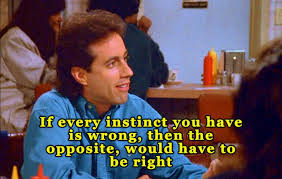
3. The “Costanza” approach
Early in my manual therapy residency training, we were taught that an initial approach to a painful movement or technique would be to go in the opposite directions. For example, if cervical sidebending or lateral glide to the right was painful, ie a “closing” movement, perhaps an opening movement was more appropriate. That sounds logical enough. However, sometimes it’s painful because it’s not used to being loaded and has developed sensitivity and fear-avoidance which creates threat messages that our brain perceives as painful. Only by gradually exposing ourselves (and our patients) to loading strategies may we see more significant and lasting changes in pain and motion and eventually return of function.
How’s your loading strategy currently working with your patients? Are you making progress as expected? Perhaps consider trying the opposite approach.
4. The best strategy is novel and simple
It’s human nature to crave novelty. And when dealing with people in pain, novelty can be very powerful. Remember Einstein’s definition of insanity: doing the same thing over and over again and expecting a different result. What habitual movements, postures, positions has your patient been in? What previous treatments have they had and were they effective?
The advantage of a new movement or gentle manual technique (see above) is that it can often help reduce what David Butler refers to as DIMs (Danger In Me) and enhance feelings of SIMs (Safety In Me). The advantage of simple, whether it be a movement or a manual intervention, is that it further enhances feelings of safety as opposed to those that could be perceived as threat.
5. Educate, educate, educate!
Even the best technique or exercise will ultimately be ineffective if we do not empower the patient towards independence and self-efficacy. Manual therapy opens a window that the patient must keep open. If we are able to produce change in the clinic, that means that ultimately they should be able to keep those improvements in pain or mobility on their own.
While it is true that some patients just want to be “fixed,” often times, we are at fault as well. Let’s be honest- it feels good to be needed, to think we have “magic hands” or that special technique that our patients can’t get anywhere else. The truth is, we’re just guides along the path, albeit, very good guides, but guides nonetheless.
We need to continually make it clear that the positive effects from manual therapy and even some active movements are only short-term and to keep that window open, they need to be consistent with the home treatment loading strategies that we have found work in clinic. Demonstrating effectiveness and value while empowering the patient to be self-efficacious should help improve treatment plan adherence and overall outcomes.
Thanks for reading,
Andrew
Want to attend a #manualtherapyparty? Check out our course calendar here!
Keeping it Eclectic...
Want an approach that enhances your existing evaluation and treatment? No commercial model gives you THE answer. You need an approach that blends the modern with the old school. Live cases, webinars, lectures, Q&A, hundreds of techniques and more! Check out Modern Manual Therapy!
Keeping it Eclectic...
Today’s Fresh Perspectives comes from Caitlyn Crandall. Clinical rotations can be one of the most fun; yet, still… most stressful elements of becoming a licensed clinician. Let’s join her reflections, either as we prepare as students or as we reminisce about the “old days.”
Hey all!
Here are 7 of the most important things I have learned in my first 3 weeks of clinical! Why 7 you ask? Well, there is more, but 7 is my favorite number and there is an entire day of free yoga 600 feet away from my hotel, so 7 it is.
1) Do not be afraid to ask questions and sound slightly stupid. This is huge. You’re not expected to know everything, regardless of what your perfectionist-devil brain tells you.
2) If you’re nervous about doing something (and it will cause no harm if you do it wrong), DO IT. The only way you learn is by stepping outside of your comfort zone! For instance, this past week I did 2 low back evals and next week I have my eyes set on conducting a c-spine eval, even though the thought scares the bejesus out of me. I also did a pool therapy eval this week and observed 2 surgeries (as y’all know..and if you don’t, read my post!).
3) SAY YES TO EVERY SINGLE OPPORTUNITY YOU ARE OFFERED. If I had not instantly said yes to the question of if I wanted to observe surgeries, if I had hesitated for a single minute because I was scared about seeing people’s insides, I may not have observed them. I also got to go to the surgical team meeting with all the attendings on Friday because I jumped on that opportunity right away. I learned so much about how the surgeons think and got to review imaging, upcoming cases, and patients who we are seeing post-op with them. OH, and when the patient who’s ACL reconstruction I observed came up for rehab discussion, I was offered the opportunity to see him for his post-op visit at the hospital before he goes to another PT clinic. Have I ever done a post-op ACL visit? Nope. Am I slightly nervous? Yes. Am I going to study the surgeons protocol so I know what I can do and work with my CI so I don’t totally mess up? You bet I will. But I would’ve never gotten the opportunity, let alone the direct offer, to see him post-op if I had not hopped on that surgical team meeting right away.
4) Remember the little things about patients you see so you can create a conversation about a hobby they have, their job, or their pets. This will help build a rapport with your patients and they will enjoy PT and do better in their rehab because of it! I like to try to remember one thing about a patient so I can ask them about it next time I see them. I do a lot of manual therapy at this clinic, so there’s some time for conversation during a session (yay PROM), and remembering little things makes that conversation much easier and allows you an opportunity to show your patient that you value them as an individual. I honestly did not think I would ever forget things that a patient and I spoke about, but you do when you see so many people! The way I have combatted this is to remember one thing, like I mentioned before, and make a mental note of it. You could also make a little statement in their note about how they mentioned ______ (fill in the blank), and then you have something to look back on before their next visit. Making the patient feel heard and remembered is the bottom line, so just do what you gotta do, without violating any aspect of HIPAA obviously.
5) Ask the other PTs at the clinic about things that they do! There have been many times where I’ve noticed another PT (who is not my CI) do something during one of their treatment sessions or have overheard something they have said in the office and have asked about it. I have gotten phenomenal answers every single time and have learned some stuff that I would not have otherwise. A few PTs in my clinic are specialized in certain areas like neuro, ortho, manual therapy, pool therapy, and pelvic floor. Some have taken advanced courses in different movement screenings, one PT has done a residency, and a few participate in hospital programs for special populations like patients with a SCI or MS. Even ask other professionals in your clinic if it is more than PT! Maybe you have a question about something you saw an OT, SLP, or chiropractor do, so just bring it up (when the time is appropriate obviously), because you are there to learn! Each PT at the clinic, the OTs, and the chiropractor have taught me something so far, and it’s information I would not have known, and knowledge I may not have received if I did not ask! As a student intern, you are like a big sponge and the more water (aka knowledge) you absorb, the bigger you will grow as a clinician and the more you will get out of your rotation.
edit - the original post has 7 things to remember, so it does fit for Top 5 Fridays, but with a bonus 2, thanks!
6) You will learn SO much and time will absolutely fly. This is where you build your base as a clinician. The school stuff helps, yeah, but this is where you really grow. Enjoy it, savor every second, and be grateful as all hell that you have been given an amazing opportunity to be taught by successful clinicians and that they are willing to spend time and energy to help make you into a successful clinician yourself.
7) Take care of yourself! Don’t burn yourself out, don’t work through lunch, and don’t stay up watching Netflix and then go into the clinic on 2 hours of sleep. Do yoga, eat chocolate (my favorite), meditate, take walks, workout, etc. Find whatever works for you and do it on a regular basis, not when s*%$ has already hit the fan. I’ve said it before and I’ll say it again; you can’t pour from an empty cup, you can’t cut wood with a dull saw, and you can’t be the best you can be if you don’t take a little time for yourself! Treat yo’ self, y’all.
Caitlyn Crandall, B.S., SPT, is a third-year Doctor of Physical Therapy Student at Sage Graduate School in Troy, NY. She graduated Magna Cum Laude from Russell Sage College in 2015 with a B.S. in Health Science and will graduate Sage Graduate School with her DPT in 2018. Her previous experience in physical therapy includes part time clinical rotations in outpatient orthopedics, long term care, ICU, pulmonary rehab, and cardiac rehab. She is currently doing her first clinical rotation at a hospital-based outpatient clinic. Her capstone research was on VO2max testing in adult runners and is expected to be published later this year. Her physical therapy interests include acute care, pediatrics, neurological PT, yoga therapy, and hippotherapy. To connect with Caitlyn, please visit her blog SPT Intern Life and her Linked In profile.
Want an approach that enhances your existing evaluation and treatment? No commercial model gives you THE answer. You need an approach that blends the modern with the old school. Live cases, webinars, lectures, Q&A, hundreds of techniques and more! Check out Modern Manual Therapy!
Keeping it Eclectic...
What do mindset, mentors, and Twitter have in common? They are three of the keys to success as highlighted by our latest guest during his interview with Jerry Durham, #freshPT and new #PTbiz owner, Dr. Mitch Babcock, PT of Fitness Tx. (https://fitnesstx.physio/)
Episode 15 is here: https://updocmedia.com/wp-content/uploads/2017/01/Healthcare-DisruPTion-15-Launch-of-Greatness-w-Dr.-Mitch-Babcock.mp3
FitnessTx is about aiding your pursuit of greater health.
Dr Mitch Babcock is a Physical Therapist and CrossFit Level I Trainer with a primary purpose of helping others pursue a greater state of health through fitness. After receiving his bachelor’s degree in exercise science, Mitch went on to receive his Doctorate in physical therapy to better understand the human movement system and help others recover from the injuries & limitations hindering their performance. With personal training experience in CrossFit, as a NPC physique competitor & in endurance events, Mitch continues to test his physical potential daily in order to better help you reach yours.
Thanks as always,
-Andrew
Want an approach that enhances your existing evaluation and treatment? No commercial model gives you THE answer. You need an approach that blends the modern with the old school. Live cases, webinars, lectures, Q&A, hundreds of techniques and more! Check out Modern Manual Therapy!
Keeping it Eclectic...
Download file | Play in new window | Duration: 29:31 | Size: 28.16M
Welcome to episode 14, the first Healthcare DisruPTion podcast of 2017! Its short and sweet and no looking back! In this episode Andrew and Jerry approach 2017 with the continual question “What If?”
We rephrase some old questions and look to formulate new questions to old, ongoing issues in healthcare and physical therapy.
Our challenge to YOU is to commit to new, different and even absurd questions in 2017 to the problems that have plagued you, healthcare and PT!
You can find Andrew and Jerry on Twitter…
@ArothschildPT and @jerry_DurhamPT
They are both on Instagram…..
jerrydurhamPT and arothschildPT ….
And Jerry can be contacted through his website: jerrydurhamPT.com/contact
Want an approach that enhances your existing evaluation and treatment? No commercial model gives you THE answer. You need an approach that blends the modern with the old school. Live cases, webinars, lectures, Q&A, hundreds of techniques and more! Check out Modern Manual Therapy!
Keeping it Eclectic...
Here are five of my best studying strategies that got me through both the DPT as well as the MBA. I graduated both with honors and am sharing with you these five interwoven strategies of how I got that done! Also, I’m giving you a bonus strategy called backloading, a great way of approaching finals weeks and those weeks where lots of test are stacked together and you’re at this dilemma of time management & prioritization.
Good luck & Go ace those things!
Want an approach that enhances your existing evaluation and treatment? No commercial model gives you THE answer. You need an approach that blends the modern with the old school. Live cases, webinars, lectures, Q&A, hundreds of techniques and more! Check out Modern Manual Therapy!
Keeping it Eclectic...
"The capacity to learn is a gift; the ability to learn is a skill; the willingness to learn is a choice"-- Brian Herbert
It's a time of great excitement in my house as my daughter is preparing to begin her institutionalized educational journey with the commencement of Kindergarten. However, her learning, as most children's, has been ongoing since the day she was born. For those of you reading this, hopefully the learning has never stopped.
One way to "hack" the learning process is through podcasts. In the physical therapy arena, there is an ever-growing number of them to choose from, and in an attempt to make it easier, I have organized them by category--traditional PT, #bizPT, those with more of a training/performance angle, and then a few additional ones not necessarily specific to physical therapy, but with a business/entrepreneur/personal development message that I have found very valuable. Links are provided and all are available through iTunes. Enjoy.
Therapy Insiders is the first of several podcasts from UpDoc Media (@UpDocMedia) and is hosted by Dr. Gene Shirokobrod (@therapyinsiders) along with Dr. Erson Religioso of themanualtherapist.com (@The_OMPT), and Dr. Joe Palmer (@JoeDPT) These three provide interviews with top performers and high achievers not only in the field of physical therapy, but in the business world as well. Notable guests include Chad Cook (@chadcookpt), Tim Flynn (@timothywflynn), John Childs (@childsjd). and Heidi Jannenga (@HeidiJanenga), CEO of WebPT, as well as author and speaker, Daniel Pink, of To Sell is Human, and the one and only Gary Vaynerchuk (@GaryVee), digital media marketing entrepreneur, author, and speaker. His podcast will be featured later in the post. You can check out Therapy Insiders here: https://updocmedia.com/series/therapy-insiders/
Karen Litzy’s (@karenlitzyNYC) Healthy, Wealthy, and Smart podcast was actually the very first PT podcast I came across. Karen is a cash-PT business owner in NYC who provides home visits to her clientele. Her podcast also covers a wide variety of subjects but has a particular focus on chronic pain, the cash-based business model, PT advocacy, and more recently, exceptional women breaking down barriers. Karen has interviewed PT luminaries including Lorimer Moseley and Adriaan Louw, and Kelly Starrett, as well as Rachel Balkovec, the first female strength coach in MLB, and the President of the World Congress of Physical Therapy, Emma Stokes. She has also reached broader with interviews including one with social and political activist Gloria Steinem. One of my favorite interviews this past year has been with Erin Jackson (@healthy_lawyer) who was a persistent pelvic pain patient of Sandy Hilton's at Entropy Physiotherapy in Chicago, and was one of two patients featured in this past year's first ever CSM patient panel presented by Jerry Durham.
Hosted by recent Marymount University DPT graduate and former DJ, Jimmy McKay: The PT Pintcast (@PTPintcast), has climbed quickly up the popularity charts. The interviews are conducted over a pint of beer–how could that not be great. This is one “pint” that’s actually safe to drive with
(I came up with that myself). Notable interviewees include @DrBenFung, @Jerry_Durham, and the new President of the APTA, Sharon Dunn (@dunnSdunn2). Even yours truly was featured in episode #14. I like the fact that even when a student, Jimmy was getting out there talking to professionals in the field and asking good questions. Jimmy was also recently involved helping raise funds for a wheelchair for a young man he met while on a trip in Haiti. http://www.ptpintcast.com/podcasts/
"Hit me!"-- That's the opening line from The Senior Rehab Podcast by Dustin Jones (@DustinJonesPT), Dustin is a former sports medicine physio-turned home health PT who likes to make his geriatric patients lift kettlebells. Did I mention he is also an RKC certified kettlebell instructor? Dustin is bringing a fresh attitude and approach to helping his older patients improve mobility, strength, and function, as well as getting over their apprehension of lifting heavy things. But don't let the title fool you- this podcast is not just for home health physios. Outpatient orthopedic therapists will also find clinical pearls that they can employ directly into their own practice. http://www.dustinjonespt.com/blog/category/podcast
The Physio Matters Podcast (@TPM Podcast) is hosted by UK physio Jack Chew (@Chews_Health), the podcast explores all things physiotherapy, from tendinopathy and pain neuroscience, to managing running injuries and the concept of “core stability.” My favorite episodes so far have been the interviews with Greg Lehman (@GregLehman) (session 16), on the relationship between biomechanics and pain; and the two part episode with Mike Stewart (@knowpainMike) (sessions 4 and 5), on pain neuroscience and how to use metaphors when discussing these challenging concepts with patients. http://chewshealth.co.uk/the-physio-matters-podcast/
Stop Chasing Pain is a podcast that's been around for a while but unfortunately, I only recently discovered it. It comes from Perry Nickelston, DC (@stopchasingpain), who's brand and website is of the same name. Perry has a unique personal backstory and has developed his methods for analyzing and treating pain and movement dysfunction through a variety of influences. He's had many great guests over the years including some of the biggest names in strength & conditioning, rehab,and movement including Gray Cook, Charlie Weingroff, Todd Hargrove, Sue Falsone, Eric Cressey, and Andry Vleeming. http://www.stopchasingpain.com/free-articles/
Just when you thought daily early morning Periscope passion was enough from Jeff Moore (@jeffmooredpt), he's brought the #PTonICE format to podcasts.Although he's dropped the ball (in this listener's humble opinion) by not yet adding some kick-ass intro music to the podcast edition, Jeff comes ready to deliver significant value on all things physical therapy. Forgot your cup of coffee? It's no longer needed after 15 minutes with Jeff. I've already proposed "Working Man" by The Who for the intro.
The Untold Physio Stories podcast is one of the newest on the scene and features Dr. Jason Shane and The Manual Therapist himself, Dr. Erson Religioso. One advantage of the podcast is that it is very short, around 10 minutes, so is perfect for shorter commutes to work or drives around town. Another unique aspect is that the two often discuss or have interviews with other physical therapists discussing failures, instead of only the successes. As the saying goes, you often learn more from your failures. "Intelligent people learn from their mistakes. Wise people learn from others' mistakes."
https://updocmedia.com/series/untold-physio-stories/
The Physioedge Podcast , hosted by David Pope (@davidkpope, @davidphysioedge), an Aussie physio, is rumored to be the very first PT-centered podcast. It covers a wide variety of topics from pain neuroscience education, to dry needling, to tendinopathy. I particularly got a lot of value from his two part interview with Mike Stewart (@knowpainmike) on pain science (episodes 035 and 036) as well as his interview with Adam Meakins, aka “The Sports Physio” (@AdamMeakins) on making treating the shoulder complex simple: http://physioedge.com.au/podcasts/
The BJSM poscast (@BJSM_BMJ) covers a wide variety of topics related to physical therapy including low carb diets, evidence-based medicine, K-taping, and various sports-performance related issues regarding injuries and return to activity. Interviews are conducted with experts including Gwendolyn Jull and Shirley Sahrmann. One episode I particularly enjoyed is from May 8–“Why patients and docs make poor decisions”–an interview with Dr. Steven Stovitz of the University of Minnesota. It was an interesting take on application of evidence informed medicine vs. evidence-based medicine. Another notable episode was with Kieren O'Sullivan (@kierenosull) discussing the treatment of persistent low back pain.
http://bjsm.bmj.com/site/podcasts/
The Voice of the Patient podcast is brought to us by Dave Reed (@DReedPT). This podcast is unique in that it allows us to hear directly from patients themselves as they reveal first-hand their experiences with health care. It's a way to uncover views that can better shape us as clinicians. Must-listen episodes include #4 with Dave de Bronkart (@ePatientDave) and #5 with Jerry Durham. Check it out here: https://www.thevoiceofthepatient.org/
Fairly new to the scene, the Naked Physio Natters Podcast was NOT what I expected when I clicked on it (ba-dum-ching)! It is hosted by Paul Lagerman (@nakedphysio), a physical therapist out of New Zealand, the country best known in the States as "that place where 'Lord of the Rings' was filmed." The podcast primarily deals with one of the host's principal interests-- persistent pain. Notable interviewees include Bronnie Thompson (@adiesmufree) and Pete Moore (@paintoolkit2)
The Pain Science and Sensibility podcast is co-hosted by Cory Blikenstaff (@ForwardMotionPT) and Sandy Hilton (@SandyHiltonPT). Much like the journal-club style of PT Inquest, Cory and Sandy focus on one or two recent chronic pain or pain neuroscience research articles and discuss how they each incorporate the information into clinical practice. Episode 6 even included a Mont Python reference- how can you not love that? Pain Science and Sensibility
The Mechanical Care Forum podcast is hosted by Jason Ward (@JasonWardPTMDT) , a private practice owner in Memphis, TN. This podcast has a particular focus on the McKenzie MDT approach, but it also incorporates manual therapy and pain psychology. PTs of all backgrounds are sure to find value. Jason does a great job with his interviews exploring both the personal and professional backgrounds of his guests and their integration of research/evidence into clinical practice. He also gets them to offer up clinical pearls that every clinician can apply right away to their own practice.
http://www.mechanicalcareforum.com/podcast/
The PT Inquest podcast is hosted by Erik Meira (@erikMeira) and J.W. Matheson (@EIPConsult). The podcast covers a variety of topics from sports medicine to chronic pain; ACL rehab and tendinopathy; to research and statistics. It can be regarded like an audio journal club. The first episode I listened to has been my favorite by far, episode #65, on interpreting pain research with guest Neil O’Connell. It is certainly one that likely requires several listenings (is that a word?). You can check it out here: http://ptpodcast.com/podcasts/pt-inquest/
b
Two Knowbodies Talking follows in the footsteps of PT Pintcast by being hosted by two current DPT. The Knowbodies (first of all, brilliant play-on-words), are Eric Dykstra and Will Boyd. Eric is an avid marathon runner and also likes to take part in a little something known as Ironman triathalons. Will is a is a former competitive soccer player who waslaw school bound until realizing he didn't want to sit forever. Notable episodes include interviews with Dr. David Fraser on the gut-brain connection, and Dr. Joseph Brence (@joebrence9) on understanding pain.
Not to be left out is the NAF Physio Podcast with your host, Adam Meakins, (@AdamMeakins), a.k.a. "The Sports Physio." If you're curious, "NAF" stands for "Not Another F@#$%ing" podcast .It's really a shame that Adam is so quiet and reserved when it comes to sharing his opinions on social media. But at least he interviews some interesting and knowledgeable guests including Tom Goom (@Running_Physio), Mick Thacker (@dibbygibby), Tim Gabbett (@TimGabbett), and Greg Lehman (@greglehman)
#BizPT
#HealthcareDisruPTion is co-hosted by me (shameless plug) and stars Jerry Durham (@Jerry_DurhamPT), who should by now, need no further introduction, lest his ego bust out of the many baseball caps he owns. Together, we try to bring the patient/customer back to the center of the healthcare conversation. We also conduct interviews with authors and business thought leaders outside of healthcare and try to extrapolate their approach to the customer experience within healthcare:
The Physical Therapy Business School Podcast is hosted by Paul Gough (@ThePaulGough), a former professional football (soccer) physio-turned successful cash-based private practice business owner in the UK (where healthcare is free). Paul has brought his business, marketing, and mindset acumen across the pond and can be found on multiple platforms including his PT Profit Academy, on YouTube with "The New Wave PT show," and now expands the sharing of his knowledge and advice in your ears with this podcast.
The Hunt for Greatness with Greg Todd. Hey, isn't that the guy from Periscope who wears all the super-hero muscle shirts? It sure is, but now in podcast form. Greg is a private practice owner and multi-business consultant who's goal is to improve the quality of clinic owners and physical therapist entrepreneurs. Similar to Untold Physio Stories, this podcast is very brief, often 7-10 minutes long, and contains actionable content for both personal and professional growth as a student, clincian, business owner, or aspiring entrepreneur.
The Cash-Based Podcast with Dr. Jarod Carter (@DrJarodCarter). This was, I think, the second PT podcast I came across. Although the main target audience is cash-based PT practice owners or PTs looking to go into private practice following the cash-based or out-of-network model, there are numerous takeaways for all clinicians. . Topics covered that I found valuable include marketing strategies and niche development. One episode I found particularly valuable was episode #38 where Jarod discusses the book "Everything is Marketing" by Fred Joyal, which I subsequently bought and read.
http://www.drjarodcarter.com/category/podcast/
http://ptlaunchpad.com/
Training/Performance
The #Ask Mike Reinold Show is hosted by Mike Reinold Mike is one of the better known physical therapists out there, especially in the sports and performance world, especially when it comes to treatment of the athlete's shoulder. On the show, Mike and his team, including Lenny Macrina (@LenMacPT) and Dave Tilley (@SHIFT_MvmtSci) at Champion Physical Therapy and Performance in Boston, MA. answer audience questions regarding sports rehab, fitness, and business.
For those interested in more of the strength-training/performance angle, check out The Rdella Training podcast, hosted by Scott Iardella, (@RdellaTraining), a physical therapist and former body-builder. Scott has a special interest in kettlebell training and Olympic lifting and has a great personal story as someone who recovered from a herniated disc at a young age and found the way to self-treatment and improvement through an active movement and strength training approach. An avid reader, Scott has hosted top performers in the rehab, strength, and fitness community including Dr. Squat himself, Dr. Fred Hattfield, Dan John, Mike Robertson, Kelly Starrett, and Gray Cook. http://rdellatraining.com/tag/podcast
The Movement Fix podcast is hosted by Dr. Ryan DeBell, DC. Ryan has an interest not only in rehab, but also in mobility, strength and performance, and his content and interviews provide a ton of useful information on all three. Notable guests on the podcast include our own Dr. Erson Religiouso, Authoer of one of my favorite books, "A Guide to Better Movement," Todd Hargrove, Dr. Quinn Henoch of Clinical Athlete, Dr. Stuart McGill, and Mike Reinhold. themovementfix podcast
Another podcast for those interested not only in performance and mobility, but also in a cash-based business or even alternative programming for the clinic you work in, The Dock and Jock Podcast features Dr. Danny Matta (@dannymattapt) of MobilityWOD and owner of The Athletes Potential, and Coach Joe of Joe's Barbell. Their motto, "if you have a body, you're an athlete" resonates throughout their discussions and interviews on human performance, mobility, strength training, and business development. http://docandjock.com/episodes/
The Leo Training Podcast is hosted by former rower and strength coach Joe DeLeo. With his background in both endurance and strength training (especially with kettlebells), Joe brings a unique perspective to a crowded arena. Relatively new on the podcast scene, Joe has already had some great guests including Allan Phillips (@alphil4305), triathelete coach and StrongFirst SFG instructor, Stu McGill, renown spine biomechanist, and Master SFG and all-around strength badass, Karen Smith (@KarenSmithMSFG) http://leotraining.io/podcast-2/
Here are a few other podcasts, not directly related to physical therapy but I have gained a lot of value from both personally and professionally
The Inside Quest Podcast is from one of the founders of Quest Nutrition, Tom Bilyeu (@TomBilyeu)). Tom has an enormous passion for leadership and personal growth. Weekly guests have included the likes of Tim Ferriss, Tony Robbins, double lower-limb amputee Olympic hopeful sprinter Blake Leeper, Gabrielle Reece, and Carol Dwek, author of the highly influential book, Mindset. http://www.insidequest.com/tag/podcast/
The James Altucher Show is hosted by James Altucher (@jaltucher), businessman, entrepreneur, and author of the best-selling book Choose Yourself. What's great about James' show is that he is able to pry out of his guests very practical information that most listeners can apply right away to either their current or future businesses. Some of my favorite episodes include interviews with Gary Vaynerchuk (@garyvee), Adam Grant, (@AdamMGrant), author of Originals, and learning and memory expert Jim Kwik, (@jimkwik).
http://www.jamesaltucher.com/category/the-james-altucher-show/
The EntreLeadership Podcast is from the group of renown financial and business adviser, Dave Ramsey, The host and the guests discuss various aspects of leadership, business, marketing, and customer service. Some of my favorite guests include Seth Godin, Simon Sinek, Jon Gordon, and Jim Collins, author of "Built to Last," "Good To Great," and "How the Mighty Fall.". https://www.entreleadership.com/posts.podcast
The #AskGaryVee show with Gary Vaynerchuck (any intro needed?) is available either in video or audio format. Gary, with his usual energy and flair, answers business/marketing/entrepreneurship questions from fans and sometimes conduct interviews other successful business-people including Seth Godin. A must-listen to episode in my opinion is Gary's interview by Stephanie Ruhle. You can find it here https://www.youtube.com/playlist?list=PLfA33-E9P7FC0AoARnMLvgFgESJe4_Ngs or here:
http://www.garyvaynerchuk.com/the-askgaryvee-show-podcast/
The Tim Ferriss podcast from author, entrepreneur, investor, and self-experimenter Tim Ferriss, consists of interviews with highly successful individuals where Tim tries to deconstruct the behaviors, attitudes, habits, and strategies that helped them become who they are. Some of my favorite episodes include interviews with Arnold Schwarzenegger, Seth Godin, Pavel Tsoutsoline, Tony Robbins, and Ryan Holiday
http://fourhourworkweek.com/podcast/
The Unbeatable Mind Podcast is from former Navy Seal Commander and now author/entrepreneur/businessman Mark Divine. Commander Divine discusses topics such as mindset exercise and nutrition, and high performance, both mentally and physically. Interview guests have included CEO of Quest Nutrition, Tom Bilyeu, author and marketer Ryan Holiday, former governor pro wrestler, and actor, Jesse Ventura, and punter Steve Weatherford, voted "the fittest man in in the NFL."
https://itunes.apple.com/us/podcast/unbeatable-mind-podcast-mark/id955637330?mt=2
The Rich Roll Podcast from vegan ultra-marathoner, author, and speaker Rich Roll is one that I've just started getting into. Similar to Inside Quest and Tim Ferriss, Rich interviews high achievers from multiple arenas in an effort to discover the strategies we can use to unlock our best selves. Notable guests include the "Iceman" Wim Hof, The Huffington Post and sleep advocate Arianna Huffington, author Ryan Holiday, and entrepreneur extraordinaire, Russell Simmons.
https://www.richroll.com/category/podcast/
Eat, Move, and Live Better is a podcast brought to us by John Berardi and the team at Precision Nutrition (@InsidePN). The podcast is most often audio versions of certain blog posts with the occasional interview or recorded presentation thrown in. For those interested in health and wellness either for themselves or their clients, this is for you. In a very crowded nutritional information space, PN, in my opinion, has emerged as a much-needed voice of reason. Check it out here:
https://itunes.apple.com/us/podcast/eat-move-and-live-better/id982915593?mt=2
As always, thanks for reading.
-Andrew

Interested in live cases where I apply this approach and integrate it with pain science, manual therapy, repeated motions, IASTM, with emphasis on patient education? Check out Modern Manual Therapy!
Keeping it Eclectic...