Modern Manual Therapy Blog - Manual Therapy, Videos, Neurodynamics, Podcasts, Research Reviews: knee
Showing posts with label knee. Show all posts
Untold Physio Stories - Do You Train Recovery? - themanualtherapist.com

Erson shares a recent case - young female distance runner, at the top of her age group with severe knee pain. After 50% improvement with traditional strengthening, ankle and hip mobility training, modifying strike, getting new footwear, the patient discovered something else that made her able to run pain free.

Untold Physio Stories is part of the PT Podcast Network, find more amazing podcasts and new favorites here! 


Untold Physio Stories is sponsored by


⁠Comprehend PT⁠- Leave Comprehend PT running in the background or record audio when you have time. The AI based SOAP note generator does the rest! No need for accuracy or exact wording! It's a game changer and will give you more time with your patients! Use code MMT50 to save 50% off your first month. Free trial available at sign up!⁠⁠


The Eclectic Approach Network⁠⁠ - Check out Dr. E's all new private, non tracking and ad free network for rehab pros! It's free to join, has chat, feed, and all the features of other social networks without the creeping tracking.


Check out ⁠⁠EDGE Mobility System⁠⁠'s Best Sellers - Something for every PT, OT, DC, MT, ATC or Fitness Minded Individual https://edgemobilitysystem.com


 Keeping it Eclectic...

Untold Physio Stories - Getting Rid of Knee Tightness - theManualTherapist.com


Erson goes old school with knee and neurodynamic testing for a patient with chronic knee pain and complaints of tightness. This includes a prone knee bend/femoral nerve testing and some lumbar mobilizations. Old school and something he used to do on many patients but literally had not done in years.

 
Untold Physio Stories is sponsored by

Helix Pain Creams - I use Helix Creams in my practice and patients love them! Perfect in combination with joint mobs, IASTM and soft tissue work. Get your sample and start an additional revenue stream for your practice. Click here to get started.

Check out EDGE Mobility System's Best Sellers - Something for every PT, OT, DC, MT, ATC or Fitness Minded Individual

My PT Insurance - Insurance just got easier. check out the self employed and employed plans. Easy sign up and coverage that follows you wherever you practice in the United States. Save $20 if you sign up using our link.

Keeping it Eclectic...

Best Practices in PT for Hip and Knee OA Includes Dietary Interventions - themanualtherapist.com


Best Practices for Hip and Knee OA Includes Dietary Interventions

By Dr. Sean M. Wells, DPT, PT, OCS, CNPT, ATC/L, CSCS, NSCA-CPT, Cert-DN

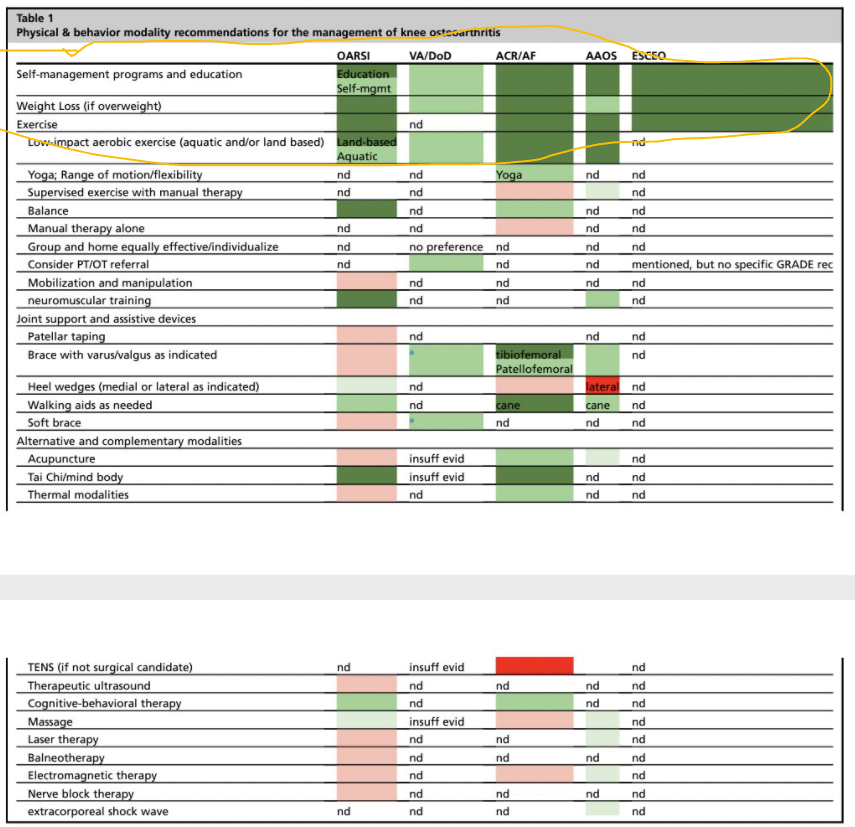
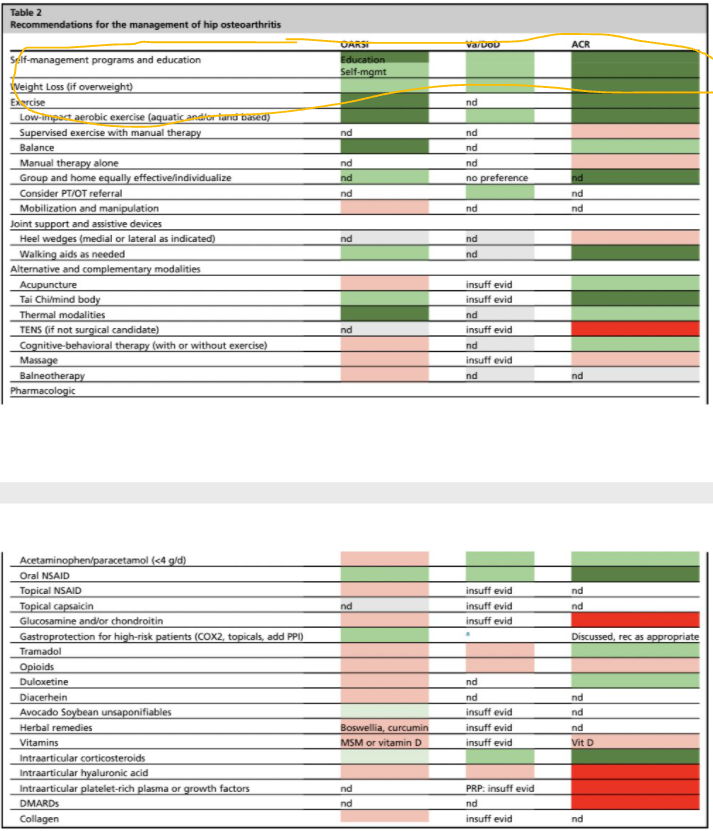
A few months back a major article was published regarding osteoarthritis treatment guidelines from 6 major professional organizations. Physical therapists (PTs), athletic trainers (ATs), occupational therapists (OTs), and Physicians use these professional guidelines to help direct our care. As many of us know, OA  can lead to great loss of function, increased pain, and higher expenses. As such, having the most current and best evidence is vitally important to helping our patients move better, have less pain, and reduce costs.

For years the mainstay treatment in physical therapy has been exercise and manual therapy. Obviously these treatments depend on the specific joint, as many DPTs often use aquatic therapy to help with hip osteoarthritis. Lately the utilization of dry needling has helped patients with knee OA. The use of other therapies like non-steroidal anti-inflammatory drugs (NSAIDs) and corticosteroid injections have been questioned more, although their utilization still exists.

Looking at this new publication it's clear that physical therapists need to be engaging their patients with hip and knee osteoarthritis in the discussion of weight loss. The professional organizations included in this article's analysis includes the American Academy of Orthopedic Surgeons, the Veterans Affairs / Department of Defense,The American College of Rheumatology, and the European Society for Clinical and Economic Aspects of OA.  Take a look at these two tables and see what the authors’ recommendations are for knee and hip OA, particularly the ones encircled:

Clearly the best practices for hip and knee OA include education around weight loss. Such guidance is also consistent with the JOSPT Clinical Practice Guidelines for hip OA. Most data show that in order to achieve weight loss, patients need to focus on dietary changes. Dietary modifications contribute to 60-80%  of weight loss, despite PTs and fitness gurus thinking that exercise contributes the most. Much of the benefits of weight loss for clients with OA comes not just in the mechanical unloading of the joints but also the reduction in inflammation and improved metabolic functioning. 

It's apparent, from this research, that exercise is also important for hip and knee OA – but perhaps we need to talk more about the fork than the barbell?

If you like what you see here then know there is more in our 3 board-approved continuing education courses on Nutrition specific for Physical Therapists. Enroll today in our new bundled course offering and save 20%, a value of $60!


Want to learn in person? Attend a #manualtherapyparty! Check out our course calendar below!

Learn more online - new online discussion group included!


Want an approach that enhances your existing evaluation and treatment? No commercial model gives you THE answer. You need an approach that blends the modern with the old school. 
  • NEW - Online Discussion Group
  • Live cases
  • webinars
  • lecture
  • Live Q&A
  • over 600 videos - hundreds of techniques and more! 
  • Check out MMT Insiders
Keeping it Eclectic...

Untold Physio Stories - Mitigating Passive Stretching - themanualtherapist.com


Sometimes you're better off doing things yourself. While Modern Manual Therapy emphasizes self treatment and Erson teaches all kinds of pain modulation techniques, a recent cases needed a little extra push. This got him beyond sharp pain and severe ROM limits to get ready for surgery after a fall and fracture.


Untold Physio Stories is sponsored by


Helix Pain Creams - I use Helix Creams in my practice and patients love them! Perfect in combination with joint mobs, IASTM and soft tissue work. Use code MMT2 to get your sample and get an additional revenue stream for your practice. Click here to get started.


Check out EDGE Mobility System's Best Sellers - Something for every PT, OT, DC, MT, ATC or Fitness Minded Individual


My PT Insurance - Insurance just got easier. check out the self employed and employed plans. Easy sign up and coverage that follows you wherever you practice in the United States. Save $20 if you sign up using our link.


Keeping it Eclectic...


[RESEARCH] Risk of Running Injuries - themanualtherapist.com


Risk of Running Injuries


Desai et al. (2021) investigated the cumulative incidence proportion and the most common anatomical locations of running-related injuries in recreational runners and associations between running-related injuries with previous injury.

Running experience.
  • Weekly running distance.
  • Age.
  • Gender.
  • Body mass index (BMI).

Methods:
  • 224 recreational runners with an average of 15km weekly running distance for the past 12 months.
  • 89 women.
  • 135 men.

Pain information was reported weekly for one year and all running-related injuries with time-loss or requiring medical consultation were recorded.

Results:
The one-year cumulative incidence proportion of running-related injuries was 46%.

The most common injuries involved:
  • Knees (20 of 75, 27%).
  • Achilles tendon/calf (19 of 75, 25%).

Previous injury was associated with a higher injury rate, while the other variables had no statistically significant association with injury.

✅✅

Conclusion

There were 75 running-related injuries during the one-year surveillance period for a cumulative incidence proportion of 46%. Recreational runners with a previous injury were twice as likely to sustain a running-related injury than runners with no previous injury.

WANT MORE RESEARCH?
Stay ahead of the curve!

🔻Rapid Review Members Get🔻

  • 3 articles every week, you should be reading
  • Key Points & Main Takeaways
  • Read in less than 5 minutes
  • Sent direct to your inbox
  • Access to full-text
  • Only $1/week

Link in Highlights 
SOURCES:

Desai et al. 2021. Recreational Runners With a History of Injury Twice as Likely to Sustain a Running-Related Injury Than Runners With No History of Injury: A One-Year Prospective Cohort Study
J Orthop Sports Phys Ther, Epub 25 Dec 2020. doi:10.2519/jospt.2021.9673

Dalton Urrutia, MSc PT

Dalton is a Physical Therapist from Oregon, currently living and running the performance physiotherapy clinic he founded in London for Grapplers and Strength & Conditioning athletes. Dalton runs the popular instagram account @physicaltherapyresearch, where he posts easy summaries of current and relevant research on health, fitness, and rehab topics. 
Want to learn more or contact him?
Reach out online:
@Grapplersperformance

Want to learn in person? Attend a #manualtherapyparty! Check out our course calendar below!

Learn more online - new online discussion group included!


Want an approach that enhances your existing evaluation and treatment? No commercial model gives you THE answer. You need an approach that blends the modern with the old school. 
  • NEW - Online Discussion Group
  • Live cases
  • webinars
  • lecture
  • Live Q&A
  • over 600 videos - hundreds of techniques and more! 
  • Check out MMT Insiders
Keeping it Eclectic...

[RESEARCH] Early Surgery or Exercise and Education for Meniscal Tears in Young Adults - themanualtherapist.com

‍‍‍‍
 ‍‍In a recently published parallel-group randomized controlled trial, 121 young adults (18-40 years of age) with MRI–verified meniscal tears eligible for surgery were randomly assigned to surgery (partial meniscectomy or meniscal repair) or 12-week supervised exercise therapy and education with the option of surgery later if needed.
‍‍‍‍‍‍‍‍ ‍‍‍‍‍‍
KEY FINDINGS
  • In total, 107 participants (88%) completed the 12-month follow-up, 16 participants (26%) from the exercise group crossed over to surgery, and 8 (13%) from the surgery group did not undergo surgery.
  • There was no statistically significant difference in change between groups from baseline to 12 months in KOOS4 scores (19.2 vs. 16.4 in the surgery vs. exercise groups).
  • There was also no difference in serious adverse events between groups (four vs. seven in the surgery and exercise groups, respectively; P=0.40).
‍‍‍‍‍‍ ‍‍‍‍‍‍
CLINICAL IMPLICATIONS
  • The results of this study suggests that among young, active adults with meniscal tears, a strategy of early meniscal surgery is not superior to a strategy of exercise and education with the option of later surgery.
  • Both groups experienced clinically relevant improvements in pain, function, and quality of life at 12 months, and one of four from the exercise group eventually had surgery.


‍‍‍‍‍‍ ‍‍‍‍‍‍‍
📕 REFERENCE
Skou et la., 2022. Early surgery or exercise and education for meniscal tears in young adults. NEJM Évidence 1(2).

Via infophysiotherapy on instagram
Want to learn in person? Attend a #manualtherapyparty! Check out our course calendar below!

Learn more online - new online discussion group included!


Want an approach that enhances your existing evaluation and treatment? No commercial model gives you THE answer. You need an approach that blends the modern with the old school. 
  • NEW - Online Discussion Group
  • Live cases
  • webinars
  • lecture
  • Live Q&A
  • over 600 videos - hundreds of techniques and more! 
  • Check out MMT Insiders
Keeping it Eclectic...