Showing posts with label elbow. Show all posts
Showing posts with label elbow. Show all posts

Chronic Lateral Epicondylalgia often has neurodynamic dysfunction. The radial nerve may have some sensitivity going on due to an abnormal impulse generating site.

If I would have known all the great uses for EDGE Mobility Bands, I would have initially named them EDGE Versatility Bands!

It never fails to amaze me, after being in practice for 16 years how incompetent others in our profession can be. On my birthday, I met some parents of a young and very talented gymnast at my daughter's gymnastics meet.

Even though I am taking a break from my practice due to the arrival of my new little one, I am still seeing concierge patients as time and sleep quality allows. Here is a case I have been working on in the past two weeks.

If you missed part 1 of this post, 5 Common Patterns in Lateral Epicondylalgia, read that first, and move on to this post.

If you regularly read this blog, and/or follow many of the great clinicians online that I do, I hope you're not just treating the elbow for lateral epicondylalgia.

Anyone who visits for a little mentoring always gets the offer of an evaluation and treat. Last week, Jas said he has been missing left elbow flexion for quite a while now.

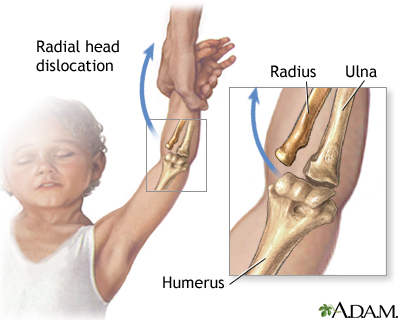
Here is a simple technique you can try on a little one complaining of elbow pain, and unable to lift there arm after seemingly no trauma.

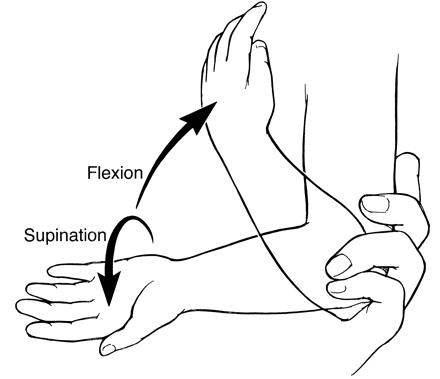
Her goals were to increased function of her left UE and hand, which is her non-dominant side. I had not seen an adult with CP and used OMPT for pure ROM/function purposes for the hand/arm solely, and it coincided nicely with this treatment I posted earlier.
She had ~ 20 degrees of supination and was lacking 35 degrees of elbow extension. I performed IASTM and functional release around the bony contours of her radius for 2-3 visits, which greatly increased her hand mobility and coordination. She also noticed significant decrease in her upper trap "tension" that she did not c/o about on the evaluation, but stated her DC noted during a monthly maintenance visit.
I was not making lasting improvements in her elbow extension and forearm supination, and I suspected it was more of a tone issue. On her last visit, I started working on her lateral upper arm, and found her biceps was very restricted, not parallel, but perpendicular to orientation of the muscle. I started some functional release with light lateral to medial pressure to improve transverse play (penpendicular to the fibers). The functional movement chosen was repeated elbow extension. This not only improved her elbow extension, but almost completely restored her supination from 20 degrees to about 75 degrees; this was after only 5-7 minutes of the treatment!
I had previously been performing IASTM along the anterior and posterior radius and functional release to her pronator teres, along with JM to the proximal and distal RU joints without much luck improving her supination. The mechanism behind this improvement is most likely a loss of biceps "folding" as it is a secondary supinator, with it being restricted, it was blocking elbow extension and forearm supination.


A former patient called me a while back to make an appointment for her elbow. She had to cancel the appointment because her doctor suggested she go somewhere else. One PT had her wearing a splint and resting (for SIX MONTHS). He just started some strengthening exercises. Another told her to perform repeated end range loading into elbow extension. The explanation wasn't given why, and the patient didn't believe the exercise to be appropriate, despite it being indicated for her condition. She even consulted a hand/wrist surgeon who basically told her to come back when she wanted an injection.
Six months ago, the patient lifted very heavy groceries and carried them with both elbows extended. Her right elbow around the epicondyle became painful and since then has developed into paraesthesia radiating into her hand in the first two digits posteriorly. Symptoms are worse with any use of her right arm and better with rest.
Objectively, I found moderate restrictions along her anterior radial bony contours, lateral right upper arm junctional area between her biceps, triceps, and anterior deltoid and biceps, and minimally along her common extensors, which she had been stretching for months. She had full ROM in all planes for forearm and wrist, and elbow flexion. Elbow extension was limited at least 5 degrees with a springy and painful end range, indicating capsular infold or derangement. Upper limb neurodynamic test was limited with radial nerve bias. Resisted wrist extension and grasping were painful. Mulligan humeroradial lateral glide was negative for abolishing pain with functional testing. Since she had history of TOS like complaints, I also found right 1st rib dysfunction, restrictions in right cervical paraspinals, and scalenes.
Treatment: TASTM to anterior radial bony contours and lateral right upper arm junctional area. Thrust manipulation (Mill's) to right elbow to improve springy end feel. Neurodynamic tensioners to radial nerve were actually near WNL for ROM and did not reproduce pain after the TASTM and manipulation. This was given for a HEP along with repeated end range loading to reduce her elbow derangement into extension.
Discussion: Her lack of elbow extension, which the patient reports having for years, most likely caused some irritation from the end range loading. After months inflammatory soup around the area, the radial nerve became entrapped and is now causing some paraesthesia. Some simple treatment to the neural container along with restoration of her elbow extension should do the trick.
I only saw her one visit so far, but progressed more with her in one visit than she had in six months. She was very thankful and even emailed me she was feeling much better a few days ago. Her second and third follow ups are this week and I have no doubt she will be a six to eight visit case at the most. I will most likely continue with the first set of treatments and start with her cervical spine and 1st rib work. Will update this post when her treatment is complete if all goes well!
UPDATE 8-23-11
The patient returned for her first follow up after evaluation and was very pleased. She stated she was 90% better after the first visit. She also stated it wasn't 6 months she was seeing other practitioners, it was 7-9 months! Her right elbow extension now had -10 (hyperextension) with a bony end feel. Radial nerve was still minimally restricted with neurodynamic testing. She had some ecchymosis on her right lateral upper arm junctional area, but that area and anterior radial bony contours both improved for fascial mobility. I would estimate 2-3 more visits for a bit more tissue work, progression on eccentric loading, then a graded return to function on her own.