Modern Manual Therapy Blog - Manual Therapy, Videos, Neurodynamics, Podcasts, Research Reviews: The Eclectic Approach
Showing posts with label The Eclectic Approach. Show all posts
[RESEARCH] Collagen Supplementation for Joint Pain and Arthritis: Does it Really Work? - themanualtherapist.com


Collagen Supplementation for Joint Pain and Arthritis: Does it Really Work?

By Dr. Sean M.Wells, DPT, PT, OCS, ATC/L, CSCS, NSCA-CPT, CNPT, Cert-DN

Recently I was presenting at the annual conference of Athletic Trainers' Association of Florida (ATAF) and I was overwhelmed by one consistent question: why didn't you talk about collagen supplementation? My talk was specifically on orthopedics for older adults and naturally I focused on osteoarthritis (OA) and how important exercise and diet are for that condition. I did touch on some supplementation, but I left off collagen because my last examination of this supplement, using one of my favorite websites Examine.com, yielded mediocre results. However the participants at the sports medicine conference piqued my interest and convinced me that perhaps I had missed something -- almost every single one of these participants had some form of joint pain or stiffness and felt significantly better after taking collagen daily. So, back to the literature, and asking some of my clients, I went!

What is Collagen?

Collagen is a protein found in the body that provides structure and support to various tissues, including joints, bones, tendons, and ligaments. It may play a role in maintaining joint health and may have potential benefits for individuals with joint pain. A few small-scale studies have shown positive results in reducing joint pain and improving joint function when individuals with osteoarthritis took collagen supplements. These studies often used specific collagen formulations, such as collagen peptides or hydrolyzed collagen, which are broken down into smaller peptides for better absorption by the body. However, it's important to note that the findings of these studies are not yet conclusive, and more robust research is necessary.

The Research

It's worth mentioning that joint pain can have various causes, and collagen supplementation may not be effective for everyone. Factors like age, underlying health conditions, overall diet, and lifestyle habits can also influence joint health. For instance, a meta-analysis on collagen supplementation for OA showed improvements in the WOMAC, a functional score for knee arthritis, but it didn't yield significant results for knee pain. Meanwhile, another review article looking at collagen supplementation for joint pain, muscle protein synthesis, and body composition found that collagen did significantly reduce joint pain (it had effect on the other metrics). Here's a nice table listed in the article:
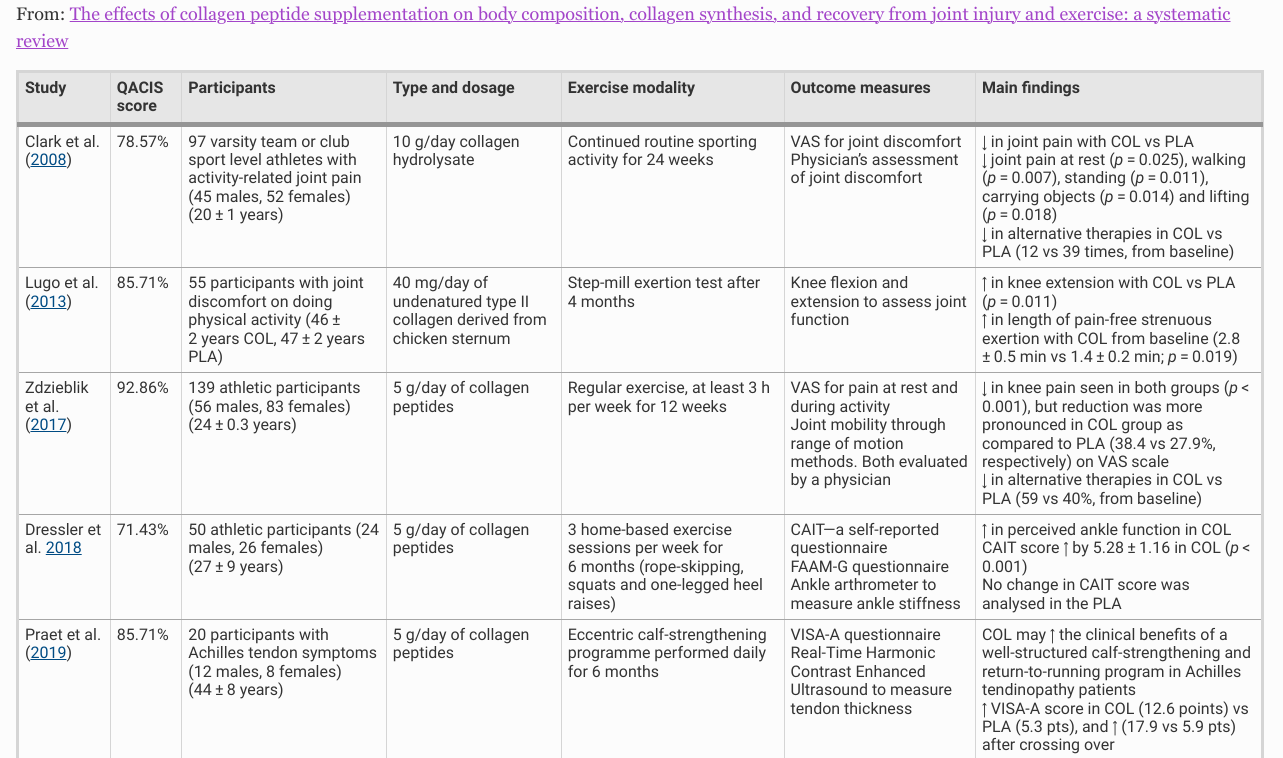
The joint pain included in the review included knee pain and Achilles tendinopathy, all predominately in an athletic population. Another glaring observation is several of these studies included physical therapy and exercise prescriptions with the supplementation (Yay! Nutrition and Physical Therapy), which can also alter the results and effects of collagen as well. It's important to see the doses varied in the studies from 5, 10, to 40 grams per day; moreover, the collagen can come in varying form from peptides, hydrolyzed proteins, to denatured collagen.  Having such variability in the type of collagen also likely explains the variability in responses and data.

Dosing

So, roughly how much and what type of collagen should a client take? Well, many studies have used dosages ranging from 8 to 12 grams of collagen peptides or hydrolyzed collagen per day for joint-related benefits. Research suggests that type II collagen supplementation may help reduce joint pain and improve joint function in individuals with arthritis, particularly osteoarthritis. It is believed to work by helping to restore and support cartilage health, potentially reducing inflammation and promoting joint mobility. It's important to note that collagen supplements are available in various forms, such as powders, capsules, and liquids, and their concentration of collagen can vary. Therefore, it's crucial to follow the manufacturer's instructions and consult with a healthcare professional to determine the appropriate dosage for your specific needs.

It's also worth mentioning that collagen supplements are often combined with other ingredients, such as vitamins, minerals, or herbal extracts, which may influence their effectiveness. If you decide to try collagen supplementation for joint pain, it's a good idea to choose a reputable brand and look for products that have been tested for quality and safety. I suggest using Labdoor.com to help you or your client find a high-quality collagen supplement, if and when appropriate.

Summary

In the end, perhaps the participants at the ATAF conference were right -- there is something to say about collagen and joint pain. Not every study is exact and more research needs to be done on what dose, what age, what condition, and what exercises should be done with the collagen -- but that's why we  practice physical therapy! Love to hear your thoughts and maybe some of your clients' responses to collagen. 



If you like what you see here then know there is more in our 3 board-approved continuing education courses on Nutrition specific for Physical Therapists. Enroll today in our new bundled course offering and save 20%, a value of $60! Earn CEUs in most states for PTs!


Want to learn in person? Attend a #manualtherapyparty! Check out our course calendar below!

Learn more online - new online discussion group included!


Want an approach that enhances your existing evaluation and treatment? No commercial model gives you THE answer. You need an approach that blends the modern with the old school. 
  • NEW - Online Discussion Group
  • Live cases
  • webinars
  • lecture
  • Live Q&A
  • over 600 videos - hundreds of techniques and more! 
  • Check out MMT Insiders
Keeping it Eclectic...

Preventing Muscle Mass Loss - themanualtherapist.com


By Dr. Sean Wells, DPT, PT, OCS, ATC/L, CSCS, NSCA-CPT, CNPT, Cert-DN

As physical therapists (PTs) we do our best to optimize our older clients' strength, balance, and functioning. Obviously, our mainstay interventions focus on exercises, balance training, and adaptive equipment. In our courses, we highlight the importance of Vitamin D status and protein consumption for older adults, to improve balance, strength, and prevent sarcopenia. A recent study in Nature Aging highlights yet another potential dietary component that impacts muscle function: ceramides.

Ceramides, a sphingolipid, which is a type of fat, has been shown to reduce muscle mass and functional capacity in rodents. Moreover, it has been shown that offering ceramide-inhibiting medication effectively reverses sarcopenia, which is very promising for human studies. In the current study the authors examined older adults with a genetic variant to inhibit ceramides. The results showed these adults with the variant had significantly better grip strength, walking distance, and sit to stand function: all metrics that Doctors of Physical Therapy (DPT) routinely measure. The next big step for these researchers is understanding how to yield these results via medication and/or dietary changes.

Fortunately, other authors have highlighted how PTs and other clinicians can advise their patients on how to naturally reduce ceramides in their diet. In the FRUVEDomic pilot study, authors demonstrated that a diet low in fruits and vegetables, and high in saturated fat, facilitated an increase in hepatic ceramide production. The researchers concluded that even transitioning patients from a standard Western diet to even the US Dietary Guidelines would yield positive responses for aging. Imagine the impact on aging and physical functioning if we took the diet to a bit more extreme, such as the true Mediterranean or predominant plant-based diet? More research is needed, but PTs need to be aware that fruit and vegetable consumption is important for many health outcomes, and screening tools are available and easy to use. We discuss this and more in our courses!

If you like what you see here then know there is more in our 3 board-approved continuing education courses on Nutrition specific for Physical Therapists. Enroll today in our new bundled course offering and save 20%, a value of $60!


Want to learn in person? Attend a #manualtherapyparty! Check out our course calendar below!

Learn more online - new online discussion group included!


Want an approach that enhances your existing evaluation and treatment? No commercial model gives you THE answer. You need an approach that blends the modern with the old school. 
  • NEW - Online Discussion Group
  • Live cases
  • webinars
  • lecture
  • Live Q&A
  • over 600 videos - hundreds of techniques and more! 
  • Check out MMT Insiders
Keeping it Eclectic...

Exercise Affects the Gut Microbiome - theManualTherapist.com


By Dr. Sean M. Wells, PT, DPT, OCS, ATC/L, CSCS, CNPT, Cert-DN

At Nutritional PT we talk a lot about how food can impact the gut microbiome. But as Doctors of Physical Therapy (DPT), did you know that exercise has been shown to influence the gut microbiome? Studies have found that regular physical activity can increase the diversity and abundance of beneficial gut microbes, such as Bifidobacterium and Akkermansia, while reducing the abundance of potentially harmful microbes, such as Clostridium and Bacteroides.

New Research

A recent study demonstrated that alpha diversity increased among normal-weight and overweight adult individuals with moderate increases in physical exercise durations. Compositional alterations were primarily observed among normal-weight individuals. These findings indicate that even small increases in PA duration by overweight individuals can improve beneficial microbe abundance and diversity in the intestines, which has huge implications for PTs working with overweight adults.

Alpha diversity refers to the diversity of microbial species within a single sample or individual. It is a measure of how many different types of microbes are present within a given community and how evenly they are distributed. Alpha diversity can be quantified using various indices, such as the Shannon index, which takes into account both the number of species and their relative abundance.

Compositional alteration, on the other hand, refers to changes in the overall composition of the gut microbiome between different individuals or groups of individuals. This can be assessed by comparing the relative abundance of different microbial taxa across samples or groups. Compositional alterations can be due to various factors, such as changes in diet, medication use, or disease status.

Summary

In summary, alpha diversity measures the diversity of microbial species within a single sample, while compositional alteration measures the overall changes in microbial composition across different samples or groups. Both measures can provide important insights into the health and function of the gut microbiome, as seen in the above study.

The exact mechanisms by which exercise influences the gut microbiome are not yet fully understood, but it is believed that exercise-induced changes in the gut environment, such as changes in pH and oxygen levels, may play a role. Additionally, exercise has been shown to reduce inflammation, which may also have a positive effect on the gut microbiome.

It is important to note that the specific effects of exercise on the gut microbiome may vary depending on factors such as the type, intensity, and duration of exercise, as well as an individual's diet and overall health status.

If you like what you see here then know there is more in our 3 board-approved continuing education courses on Nutrition specific for Physical Therapists. Enroll today in our new bundled course offering and save 20%, a value of $60!


Want to learn in person? Attend a #manualtherapyparty! Check out our course calendar below!

Learn more online - new online discussion group included!


Want an approach that enhances your existing evaluation and treatment? No commercial model gives you THE answer. You need an approach that blends the modern with the old school. 
  • NEW - Online Discussion Group
  • Live cases
  • webinars
  • lecture
  • Live Q&A
  • over 600 videos - hundreds of techniques and more! 
  • Check out MMT Insiders
Keeping it Eclectic...

Untold Physio Stories Podcast: Why Specialists Must First Be Generalists - themanualtherapist.com


This episode, Dr. E is joined by Dr. Katie O'Bright of Redefined Health Education. Katie shares her story and how she came to realize the importance of PT Primary Care. Get Katie's amazing new Primary Care PT course here. Use promo code PCPTpresale to get $50 off until April 7th! Sale has been extended! I'm psyched for this course and you should be too!


Check out primary care PT and imaging CEU courses here!
Connect with Dr. Katie O'Bright @redefinehealthed on Linkedin, Instagram & Facebook and @redefineconed on Twitter

Untold Physio Stories is sponsored by

Helix Pain Creams - I use Helix Creams in my practice and patients love them! Perfect in combination with joint mobs, IASTM and soft tissue work. Get your sample and start an additional revenue stream for your practice. Click here to get started. 

Check out EDGE Mobility System's Best Sellers - Something for every PT, OT, DC, MT, ATC or Fitness Minded Individual 

Curv Health - Start your own Virtual Clinic Side Hustle for FREE! Create your profile in 3 minutes, set your rates, and Curv will handle the rest! From scheduling to payments, messaging, charting, and a full exercise library that allow for patient/clinician tracking, it's never been easier! Click to join Dr. E's new Virtual Clinic Collective to help promote best online practices

Keeping it Eclectic...

Plant-Based Diet: Weight Loss and Arthritis Hope? - themanualtherapist.com


By Dr. Sean Wells, DPT, PT, OCS, ATC/L, CSCS, NSCA-CPT, CNPT, Cert-DN

A recent study published in Obesity Science and Practice shows promise for patients wanting to lose weight, improve their metabolic status, and possibly reduce arthritis symptoms: all with dietary changes. The researchers examined 244 overweight individuals for 16 weeks. The subjects were randomly assigned to either a low fat plant-based diet or a control group that made no dietary changes. Both groups looked identical at the beginning of the study with similar body composition measures, insulin metrics, and self-reported advanced-glycation end-products consumption (AGEs). 

After the 16 week intervention, the subjects in the plant-based group noted a significant reduction in body mass of 14 lbs compared to the 1 lb weight loss in the control group. Researchers noted that the plant-based group saw a significant reduction in fat mass, notably visceral fat. Another major finding from the study was that AGEs were reduced by 79% in the plant-based group, while they only went down 15% in the control group.

This study is significant to physical therapy practice in that several of our clinical practice guidelines (CPGs) encourage physical therapists (PTs) to discuss weight loss to improve several common conditions. One such condition would be hip osteoarthritis (OA), which patients commonly present with hip pain and obesity. Obesity increases systemic inflammation due to metabolic factors and inflammatory compounds released by fat cells. Moreover, obesity does increase and alters the loading of the hips and other joints, which may also contribute further to arthritis. Reducing body fat, as seen in this specific study using a plant-based diet, would significantly help patients with hip OA.

Moreover, patients with OA also see significant increases in joint pain, inflammation, and stiffness when consuming foods high in AGEs. AGEs are linked with interrupting joint collagen synthesis, inflammation, and metabolic dysfunction. These compounds are formed during cooking, typically with meat over high heat and with sugar (think barbeque ribs as the worse). Reducing foods, particularly meat, that contribute to AGE intake will further help reduce inflammation and pain for patients with arthritis. A plant-based diet, which predominantly focuses on reducing animal products and processed foods, would be an ideal diet to reduce AGEs in our PT patients. If you don’t think the effects are that strong, check out this graph:

Interestingly the findings from this study seem amazing but are not surprising to me and the PTs that work with me. For years we have seen the positive benefits of a plant-based diet for our patients with arthritic, cardiac, and diabetic conditions. We have seen patients lose weight, get stronger with our exercises, and reduce their joint pain and inflammation. We hope that this study opens your eyes to including nutrition counseling (or referral) in your physical therapy toolbox!

If you like what you see here then know there is more in our 3 board-approved continuing education courses on Nutrition specific for Physical Therapists. Enroll today in our new bundled course offering and save 20%, a value of $60!


Want to learn in person? Attend a #manualtherapyparty! Check out our course calendar below!

Learn more online - new online discussion group included!


Want an approach that enhances your existing evaluation and treatment? No commercial model gives you THE answer. You need an approach that blends the modern with the old school. 
  • NEW - Online Discussion Group
  • Live cases
  • webinars
  • lecture
  • Live Q&A
  • over 600 videos - hundreds of techniques and more! 
  • Check out MMT Insiders
Keeping it Eclectic...

Rhodiola Rosea: A Physical Therapist’s Tool or Gimmick? - themanualtherapist.com


Rhodiola Rosea: A Physical Therapist’s Tool or Gimmick?

By Dr. Sean M. Wells, DPT, PT, OCS, CNPT, ATC/L, CSCS, NSCA-CPT, Cert-DN

Many patients in my practice come to me asking how they can get more energy for their daily activities. Of course, being a holistic physical therapist I talk with them about sleep hygiene, scheduling, daily aerobic exercise, and nutrition. While many of these interventions help significantly, some of my patients with autoimmune disorders often still struggle with energy and fatigue. I also have a subset of patients in my practice that simply just want more performance for their daily activities as well as for sports. Both of these groups of patients are willing to try almost any dietary supplement, which can be both good and bad: The willingness to try new things is good but many supplements are not regulated and can interact with drugs or cause severe Adverse Events.  

Recently I was listening to the Huberman Podcast and Dr Layne Norton was discussing the use of rhodiola rosea. I had heard of this plant before but my last literature review did not yield much to support its use. However, now it appears there is additional literature to support its utilization. Let’s take a look at what this supplement is, how it’s used, and what implications does it have for physical therapy (PT) practice.

Rhodiola rosea is in the crassulaceae family of plants, known for stonecrop and other similar flowering succulents. These plants commonly grow in northern territories like the arctic circle and northern Asia. As such, cultures living in these areas such as Scandinavia and China have been using this plant for many years to address stress and fatigue in the harsh environment.  Traditional Chinese medicine practitioners call it hóng jǐng tiān, but Westerns also call it Golden Root, Rose Root, and Orpin Rose. It is commonly labeled as an “adaptogen,” which is a term for a plant, herb, or mushroom that can help your body with stress, anxiety, and fatigue. The term adaptogen is trendy now in the United States but it has been around for decades with Russian and Chinese producers pushing products like ginseng and Ashwagandha. Other sellers of rhodiola utilize the term nootropic, which is a substance that improves focus, clarity of thought, and reduces stress to improve cognitive performance. Regardless of the term used, rhodiola rosea contains up to 140 different compounds, with this study citing these as the most common active compounds: monoterpene alcohols, cyanogenic glycosides, aryl glycosides, phenylethanoids, phenylpropanoids and their glycosides, flavonoids, flavonlignans, proanthocyanidins and gallic acid derivatives. Rosavins and salidrosides are the two predominant substrates in rhodiola rosea used in studies and supplements. Such compounds have been suggested to physiologically alter the HPA-axis and other pathways via corticotropin-releasing  hormone (CRH), cortisol, nitric oxide, pro-inflammatory cytokines, free radicals, stress-activated protein kinase (SAPK) and heat shock proteins.  

Such physiological responses are why rhodiola rosea has been used both traditionally and in trials to treat fatigue, anxiety, and depression. A recent systematic review analyzed 39 randomized control trials of rhodiola rosea used to treat anxiety, depression, or mood. The authors found a total of 5 RCTs that met inclusion criteria. One trial showed significant improvement in anxiety, another yielded significant results for treatment of mild to moderate depression, while another study did not yield a positive treatment response for major depression. It seems rhodiola may be beneficial in the treatment of mild to moderate depression, but not major depressive disorders. The 2015 Mao et al study showed that rhodiola rosea  offered clinically  meaningful  odds  ratios that indicated that patients taking R. rosea had 1.4 times the  odds  of  improvement,  and  patients  on  sertraline  had  1.9  times  the  odds  of  improvement,  by  week  12  of  treatment  versus those taking placebo. Other research has shown that Rhodiola rosea acts as a MAO-A and MAO-B inhibitor, showing evidence about  the herb’s antidepressant and cognitive enhancing properties. As such, it would seem that rhodiola may have a use in the treatment of anxiety and/or mild/moderate depression, but further data is needed to truly strengthen these findings.

Two other studies analyzed in the systematic review looked at rhodiola rosea use in individuals with burnout or mental fatigue. The first study yielded patients having significant improvements on a standardized burnout scale while on a rhodiola when compared to placebo. The other study looked at  17–19 year old students during the course of a stressful examination period. Rhodiola offered  statistically   significant   improvements   in  self-reported  mental  fatigue and  statistically  significant  improvements  in  general  well-being when compared to placebo. It should be noted no performance gains in regards to speed or accuracy of test-taking were improved.

In terms of fitness and muscle performance the data is more varied and of poorer quality. The Hung, Perry, and Ernst 2016 systematic review looked at some of the trials before 2009. This review cited that two trails with small sample sizes (n = 15 and 12) found rhodiola did not improve blood oxygenation after induced hypoxia and skeletal muscle phosphocreatine recovery after exhaustive exercise, respectively. Another study in the review found significant increases in time to exhaustion (increase of 3% on peak VO2 on a cycle ergometer) with 200mg/day rhodiola use. The authors suggested the improvement may be related to the mental improvements related to fatigue, not to metabolic changes. Two other trials in the review yielded a mean C-reactive protein (CRP) level improvement. 

A few trials have looked at rhodiola since 2009, with this study finding 1500 mg/day of rhodiola having a small improvement in bench press velocity but not endurance. The sample size in this study was very small and the dosage much higher than other studies (most other studies used ~100-680 mg of rhodiola rosea/day). Another trial of 14 trained male athletes yielded improvements in immediate lactate and creatine kinase enzymes, but no improvements in VO2max or other performance measures. The authors state that rhodiola did improve fatty acid metabolism, which deviates from the above cycle ergometer study that found a VO2 improvement. Again, it was another study with a small sample size and it also had a wide range of “trained” participants from 20-35 years who performed either triathlons, roller skating, and/or track/field. Such variability in sport and a small sample size makes it tough to interpret actual results.

So how do these findings translate in the world of sport and physical therapy? In brief, the sport physio needs to be skeptical of the actual performance benefits of rhodiola rosea. While the supplement appears to be safe, with only 3 mild adverse events (headache and hypersalivation) in 8 trials, the benefits to sports performance may not be present. However, in the world of precision or individualized medicine, a patient or athlete may want to trial rhodiola rosea in their training regime and see if they see actual performance benefits. In this case, most studies used rhodiola on a chronic basis taking on average 300-600 mg of extract per day. If clients are to use rhodiola, I would recommend using a reputable supplement company that is GMP certified, NSF certified, and 3 party independently tested. Obviously supplements are not regulated, and some authors have cited issues with quality control and environmental issues related to rhodiola rosea – caveat emptor.

General PTs and PTs that work with patients that have chronic pain, autoimmune disorders, or other neurocognitive issues with mental fatigue may also want to examine rhodiola use for their clients. Patients with chronic pain often present with mild to moderate depression and anxiety; utilizing rhodiola, in combination with other common physical therapy interventions, may improve a patient’s condition more rapidly than without supplementation. Have we seen a trial regarding this yet? Unfortunately, no, but perhaps this could be an awesome DPT student’s study! Clients with autoimmune and other neurocognitive conditions may see improvements in mental fatigue and resiliency. Such improvements may be the difference between getting out of bed, off the couch, or engaging in social activities – all positive interactions.

In the end, rhodiola rosea offers some promising impacts to our clients, and perhaps this is why traditional medicine practitioners used it; however, I caution PTs that the benefits of this adaptogen may not be as strong for some (athletes) as for others (those with depression).


If you like what you see here then know there is more in our 3 board-approved continuing education courses on Nutrition specific for Physical Therapists. Enroll today in our new bundled course offering and save 20%, a value of $60!

 Want to learn in person? Attend a #manualtherapyparty! Check out our course calendar below!


Learn more online - new online discussion group included!


Want an approach that enhances your existing evaluation and treatment? No commercial model gives you THE answer. You need an approach that blends the modern with the old school. 
  • NEW - Online Discussion Group
  • Live cases
  • webinars
  • lecture
  • Live Q&A
  • over 600 videos - hundreds of techniques and more! 
  • Check out MMT Insiders
Keeping it Eclectic...

Best Practices in PT for Hip and Knee OA Includes Dietary Interventions - themanualtherapist.com


Best Practices for Hip and Knee OA Includes Dietary Interventions

By Dr. Sean M. Wells, DPT, PT, OCS, CNPT, ATC/L, CSCS, NSCA-CPT, Cert-DN

A few months back a major article was published regarding osteoarthritis treatment guidelines from 6 major professional organizations. Physical therapists (PTs), athletic trainers (ATs), occupational therapists (OTs), and Physicians use these professional guidelines to help direct our care. As many of us know, OA  can lead to great loss of function, increased pain, and higher expenses. As such, having the most current and best evidence is vitally important to helping our patients move better, have less pain, and reduce costs.

For years the mainstay treatment in physical therapy has been exercise and manual therapy. Obviously these treatments depend on the specific joint, as many DPTs often use aquatic therapy to help with hip osteoarthritis. Lately the utilization of dry needling has helped patients with knee OA. The use of other therapies like non-steroidal anti-inflammatory drugs (NSAIDs) and corticosteroid injections have been questioned more, although their utilization still exists.

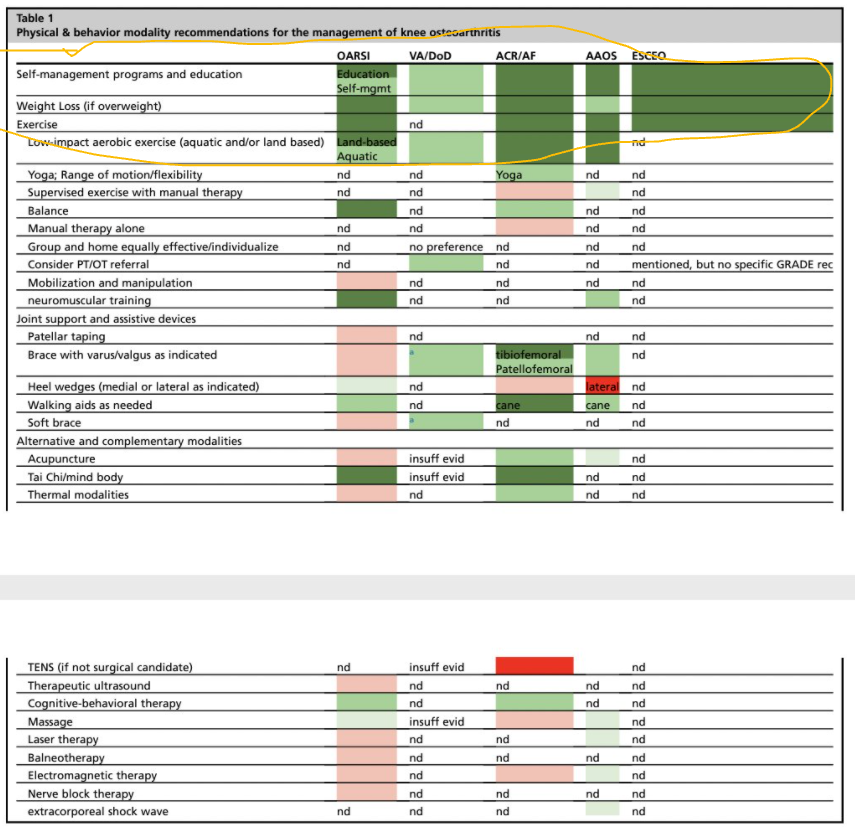
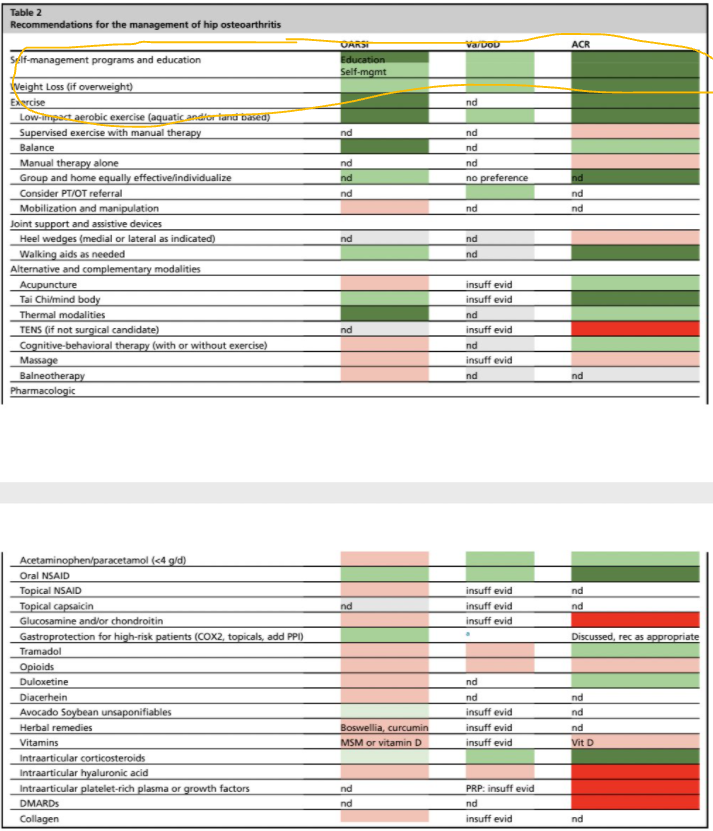
Looking at this new publication it's clear that physical therapists need to be engaging their patients with hip and knee osteoarthritis in the discussion of weight loss. The professional organizations included in this article's analysis includes the American Academy of Orthopedic Surgeons, the Veterans Affairs / Department of Defense,The American College of Rheumatology, and the European Society for Clinical and Economic Aspects of OA.  Take a look at these two tables and see what the authors’ recommendations are for knee and hip OA, particularly the ones encircled:

Clearly the best practices for hip and knee OA include education around weight loss. Such guidance is also consistent with the JOSPT Clinical Practice Guidelines for hip OA. Most data show that in order to achieve weight loss, patients need to focus on dietary changes. Dietary modifications contribute to 60-80%  of weight loss, despite PTs and fitness gurus thinking that exercise contributes the most. Much of the benefits of weight loss for clients with OA comes not just in the mechanical unloading of the joints but also the reduction in inflammation and improved metabolic functioning. 

It's apparent, from this research, that exercise is also important for hip and knee OA – but perhaps we need to talk more about the fork than the barbell?

If you like what you see here then know there is more in our 3 board-approved continuing education courses on Nutrition specific for Physical Therapists. Enroll today in our new bundled course offering and save 20%, a value of $60!


Want to learn in person? Attend a #manualtherapyparty! Check out our course calendar below!

Learn more online - new online discussion group included!


Want an approach that enhances your existing evaluation and treatment? No commercial model gives you THE answer. You need an approach that blends the modern with the old school. 
  • NEW - Online Discussion Group
  • Live cases
  • webinars
  • lecture
  • Live Q&A
  • over 600 videos - hundreds of techniques and more! 
  • Check out MMT Insiders
Keeping it Eclectic...

Nutritional Sweeteners Affect the Gut Biome - themanualtherapist.com


By Dr. Sean M. Wells, DPT, PT, OCS, CNPT, ATC/L, CSCS, NSCA-CPT, Cert-DN

Artificial sweeteners: good, bad, or simply not understood? For years they were touted to be the pinnacle replacement of the calorie-rich and nutrient poor table sugar. Things seemed too sweet to be true, when some artificial sweeteners, often called non-nutritional sweeteners, were linked with cancer. Fortunately science and common sense prevailed showing no risk of cancer to humans; however, researchers have been tracking some intriguing findings of what artificial sweeteners may do to the gut. 

A recent study published in the journal Cell showed that non nutritional sweeteners, like saccharin and sucralose, alter the gut microbiome. We have known for years that there may be some interaction with the gut microbiome, we're just not sure to what extent. With this current publication, clinicians can have a better understanding of how much and which sweeteners affect the gum microbiome the most.

Ultimately, what this means for physical therapy practice is that we should be more aware of gut microbiome changes with patients that have used large doses of non-nutritional sweeteners, or those that have chronically used them. What clinical manifestations may present with chronic use of such sweeteners? It still remains to be seen. However, physical therapists should be vigilant and look out for patients with gut issues that have used such non nutritional sweeteners for years or in large doses.


If you like what you see here then know there is more in our 3 board-approved continuing education courses on Nutrition specific for Physical Therapists. Enroll today in our new bundled course offering and save 20%, a value of $60!

post originally found here


Want to learn in person? Attend a #manualtherapyparty! Check out our course calendar below!

Learn more online - new online discussion group included!


Want an approach that enhances your existing evaluation and treatment? No commercial model gives you THE answer. You need an approach that blends the modern with the old school. 
  • NEW - Online Discussion Group
  • Live cases
  • webinars
  • lecture
  • Live Q&A
  • over 600 videos - hundreds of techniques and more! 
  • Check out MMT Insiders
Keeping it Eclectic...