Modern Manual Therapy Blog - Manual Therapy, Videos, Neurodynamics, Podcasts, Research Reviews: Jarod Hall
Showing posts with label Jarod Hall. Show all posts

Twenty years into practice and we know less about manual therapy than when I started studying it 22 years ago! How is this possible? We know it works, it works rapidly, and occasionally works longer than most short term effect studies. Thanks to @drjarodhalldpt and @physiotutors on instagram for the great graphics!

Find out more here: Unraveling the Mechanisms of Manual Therapy: Modeling an Approach and click on the course calendar to attend a Modern Manual Therapy course below! Manual therapy works, just not for the reason why you are traditionally taught. 


Want to learn in person? Attend a #manualtherapyparty! Check out our course calendar below!

Learn more online!


Want an approach that enhances your existing evaluation and treatment? No commercial model gives you THE answer. You need an approach that blends the modern with the old school. Live cases, webinars, lectures, Q&A, hundreds of techniques and more! Check out Modern Manual Therapy!

Keeping it Eclectic...


Tired of seeing all the ads, polls, fake news and unwanted opinions on facebook? Do you just want to have a better quality feed that is relevant to what you want to know? Try instagram instead, I tend to keep instagram to professional use, and leave facebook for personal use.

There are a TON of amazing instagram influencers out there, and here are 5 that I check out regularly in no particular order.


Jarod's feed is chock full of messages similar you get with The Eclectic Approach and MMT. Eliminate pathoanatomical explanations, patient education and positive interaction come first. He's also not afraid to debate the old school thinkers out there.


It's great to hear similar messages from different people (tends to strengthen the belief in the message). Anthony Teoli MScPT posts regularly with a similar modern view on assessment, treatment, and patient education. Follow him and you'll get infographics, regular research reviews and more.

💥TENNIS ELBOW REHAB💥 ——— Tennis elbow (lateral epicondylitis) typically involves pain in the region of the lateral elbow where the common tendon for a number of the wrist extensor muscles attaches. Like other tendon issues, resistance training appears to be helpful in many cases for both reducing painful symptoms and improving the work capacity of the tendon. Here are several strategies that you can try if you are currently experiencing pain in this region. . 1️⃣Radial Nerve Mobilization: The radial nerve runs through the extensor compartment of the forearm and may be associated with tennis elbow type pain. The specific movement shown here will put the radial nerve on tension and can be a useful technique for decreasing any nerve sensitivity in the region. . 2️⃣Wrist Extensor Isometrics: Position the arm so that only the wrist and hand are hanging off of the support surface. From here, hold a weight that is challenging and shoot for 4-5 reps of 30-45 seconds. Moderate discomfort is okay while performing exercises that load the tendon. Start with this exercise if your symptoms are more severe in nature and progress to the next one when they dissipate a bit. . 3️⃣Wrist Extensor (Heavy-Slow) Curls: Move through the full range of motion, which will work the wrist extensors both concentrically and eccentrically. Shoot for 3-4 sets of 6-12 repetitions. . 4️⃣Arm Curls with Wrist Extensor Emphasis: In this arm curl variation, hold the bar so that the palms are pointed down. When the bar is in the start position, move the wrist into flexion. As the elbows bend and the bar raises, squeeze the wrist extensors so that the wrist is in full extension at the top of the movement. Slowly control the bar and move the wrist in the opposite direction on the way back down. . Give these a try and let me know if you have any questions. . #RehabScience
A post shared by Dr. Tom Walters, DPT, OCS (@rehabscience) on


Dr. Tom Walters, DPT has almost 200k followers on instagram for a reason, his feed is awesome and informative. As both a PT and a kinesiology professor, his feed sometimes has anatomy reviews/movies as well as movement analysis breakdowns that only someone with his resources can provide. He also has awesome EB posts like the tennis elbow one above.

4) Dr.NicolePT

Dr. Nicole Surdyka, DPT has tons of informative quick videos on her feed. Her experience with D1 Soccer and being a CSCS gives her feed everything from kettlebells, to dynamic warmups, tendinopathy rehab and more.

It's here!!!! Pick up the, "How to Prime the Brain for Neuroplasticity" eBook (link in bio). . For the brain to be in the BEST state for neuroplasticity we FIRST need to restore the general health of its' neurons and microglia. Consider this like prehab for the brain. . 🤔So, how can YOU do this? Well, let's dive into the big 3: . 🍍DIET: Did you know that gut is often called the 2nd brain? Yup! Gut health is HUGE in recovery, especially for those with inflammation as a component of continued symptoms. We can reduce inflammation and increase gut health with diet. . 🌜SLEEP: Essential for us all of us, but often affected after concussion. Sleep is when the brain rids itself of waste and toxins. I'll show you a few techniques to help you catch some quality Zzz's. . 🌿CALMING THE AUTONOMIC NERVOUS SYSTEM: The autonomic nervous system is meant to keep us safe. In concussion recovery we often see folks struggling with sympathetic dominance, meaning the brain didn't get the memo that you are SAFE. This can make it difficult to heal, learn, and connect. Shifting the nervous system into the parasympathetic state creates an environment for optimal recovery... and I got you covered. . 🧠eBook will include: •WHY diet, sleep and the nervous system are important •HOW they can be used to optimize neuroplasticity for YOU •3 parasympathetic activating techniques •3 sleep restoration techniques •3 Printables: Sleep hygiene checklist and Anti-inflammatory diet checklists . 🔹️🔹️Take home point: This is an EXCITING time in neurorehabilitation. Learn how to prime YOUR brain for healing through neuroplasticity by picking up your FREE mini eBook today! . . Follow👉 @mollyparkerpt 😍Like it? Share away!
A post shared by Physical Therapy + Concussion (@mollyparkerpt) on

It took just part of a podcast with Jess Schwartz for hosts, Gene, Joe, and myself to realize, we had a LOT to learn about concussion rehab. I like to follow both people with similar messages to myself, and of course those who have expertise in part of a field I do not. I stumbled upon Molly's feed in instagram's search and saw that she had great information.

If you didn't make the feed, don't worry! These are just 5 (again in no order) of the PTs I follow and I wanted to have a good diversity with different types of posts from videos, to infographics, and research based posts.

Want to learn in person? Attend a #manualtherapyparty! Check out our course calendar below!

Learn more online!


Want an approach that enhances your existing evaluation and treatment? No commercial model gives you THE answer. You need an approach that blends the modern with the old school. Live cases, webinars, lectures, Q&A, hundreds of techniques and more! Check out Modern Manual Therapy!

Keeping it Eclectic...


When the history is over, many therapists rush on to what they think is the real "meat" of of the exam. It's not, the initial interaction sets the stage for the entire encounter. Don't assume the patient understood everything you explained, if you explained anything at all. Sometimes my history is 30-40 minutes depending on how much education or de-education I feel is needed.

Thanks to Dr. Jarod Hall for this great infographic on Questions to Ask After Every Evaluation


Check out Jarod and Jim's amazing patient educational resource, Sticks and Stones below! It's indispensable if you're looking to level up your patient education with additional analogies.


Keeping it Eclectic...


5 Of Our Favorite Stories From Sticks and Stones

Think about the last time you cut your finger or stubbed your toe. These experiences have a very specific context which conjures up associated emotions and feelings. When you cut your finger, you likely remember the object that caused the cut: a knife, a piece of paper, a sharp piece of metal. You may recall a particular smell in the room or even the background noise of the environment. You may recall the time of day, the weather, whether you’d cut that finger before, the amount of blood, the degree of pain you felt and more. Finally, you remember the outcome.

Did this event affect your life in any way? All experiences - even seemingly small ones - are a sum total of your senses, thoughts, past experiences, expectations, beliefs and more. Each experience is intimately connected to the emotion and context of your actions. If you’re a construction worker, you may experience cuts on your hands each day, which may diminish the importance of a single event.

If you’re a violinist, a cut to your finger may be a rare and frightening experience - one that could affect your stage performance and limit your ability to do your job. The moral of the story is: context matters! The same event is perceived differently by each person, and even differently by the same person in different points in their life.

The ability to quickly assign meaning and purpose to experiences is crucial for making snap judgments in a situation. However, there’s a downside to this unconscious feedback loop from action to reaction. When someone makes a quick judgment, they must create a story about the event based on their past experiences and current expectations. The individual details of the experience are often lost through a series of generalizations. Over time, this can desensitize or over-sensitize someone’s response to an event.

Explaining the complexity of these experiences to those in pain can be quite difficult. The words we choose and how we use them have an immeasurable impact on a patient. Thought viruses have the potential to worsen a patient’s prognosis, and the opposite is also known to be true. Learning to educate patients through positive affirmations or through friendly and understandable language can positively impact a patient’s outcome. Think of this much like a thought vaccine or thought remedy.

Using disc herniation example, instead of discussing the imaging findings in depth, a better approach would be to educate the patient on the strength of their spine and the poor correlation between pain and disc herniations shown on imaging. You may follow up with analogies or stories that paint a positive picture in regards to healing and that describe pain in terms of an alarm that is sensitive rather than a direct correlate of tissue damage.

As clinicians, it is so important to understand the power of your words! Below, we have extracted a few of our favorite analogies and stories to demonstrate the complexity of pain, graded exposure, context, and the complexity of the human system from the book “Sticks & Stones.”

Story #1:

Each Human is a Unique Ecosystem


Humans are complex beings made up of multiple systems. There’s the nervous system, skeletal system, muscular system, endocrine system, immune system, gastrointestinal system and many more. In the past, each of these systems has been viewed separately from one another;
each system was put into its own silo and treated as if it were completely independent of the others. However, the truth is, all of these systems work in tandem every moment of every day to maintain homeostasis. Homeostasis can be defined as the stable condition of an organism and its internal environment, the maintenance or regulation of stable conditions or simply, as the balance of bodily functions.

Because of this constant interplay between every aspect of self, human beings are much like a complex ecosystem in which all parts depend on one another to create a harmonious symbiotic relationship. In the example of an ecosystem, it’s evident that changes to that ecosystem can create disharmony.

In nature, if there isn’t enough rain in an ecosystem, the plants would die off and those creatures that depend on the plants would struggle. Conversely, if there’s too much rain, all of the soil could wash away, taking the vegetation with it. If the insects are driven away or die, the plants can’t be pollinated and vegetation would cease to reproduce. If there are too many insects, they may eat all the vegetation, causing animals to struggle for survival. If a manufacturing plant is built next to the ecosystem, it may impact the water or food supply. The traffic and sounds of the
manufacturing plant may cause great stress to all the organisms living in the ecosystem, affecting its overall health. The list of possible stressors and ways an ecosystem can become out of balance is endless. Similarly, every system in the human body plays a role in helping to combat stressors and maintain homeostasis. Issues such as pain, injury and sickness often emerge when there are too many stressors placed on one or several systems. This overload of stressors forces the body out of equilibrium. These stressors can fall into separate but equally important physical, psychological and emotional categories.

However, just like most ecosystems, humans are wonderfully resilient and it usually takes more than one of these scenarios to drive the system out of homeostatic balance. Often, addressing just one or two of the stressors leading to dysregulation can have a dramatic and positive effect on the health of the entire ecosystem. Each time a stressor is managed, the ecosystem - as well as the human body - gains strength, allowing for an easier return to homeostasis.

Story #2:

A Stroll Through the Forest


Imagine you’re walking through a beautiful forest with a dear friend. It’s a sunny day and the perfect temperature for a hike. There’s a cool breeze, and you can smell the crisp scent of the evergreens. Your friend is walking behind you and the two of you are engaged in great conversation. Suddenly, you feel something poke the back of your arm. Thinking your friend tugged at your sleeve, you look back to see a trickle of blood - you snagged yourself on a thorny vine. “That kinda hurt,” you think to yourself, “but a vine isn’t dangerous - no harm, no foul.” You wipe the blood away and continue hiking.

Now imagine that you’re walking alone through the woods at dusk. It’s a cold and foggy evening, and the sun’s setting quickly. You’ve taken a wrong turn and can’t remember which direction leads back to your car. Earlier that day, your friend warned you not to go hiking after dark in these woods, reminding you that one of the most poisonous spiders in the country builds its web between the trees after sundown. If one of these spiders bites you, it could mean grave danger.

Suddenly, you feel a prick on the back of your arm. The prick increases to a sharp stab, and now you feel a burning sensation. “Oh no, it’s one of those spiders,” you think to yourself, “I’m done for!” You run into the woods, quickly stopping to check the damage the spider’s done your arm. Relieved (and a little embarrassed), you see it’s nothing more than a thorn from a vine.

This story demonstrates how context, beliefs and prior experience always play a role in influencing how much or how little pain someone experiences. Next time you’re experiencing pain, think about some of your common beliefs surrounding your pain.

Story #3:

Hot Tub Time Machine


Think about the sensation of dipping into a 104-degree hot tub. The feeling is an overwhelming discomfort, as if all of your nerve endings woke up at once to welcome the hot water. Typically, you fight through the temporary discomfort because you know your body will quickly adapt
to the temperature. Before long, your skin is no longer in pain, and you’re in a relaxing oasis of bubbles and jets, the discomfort a mere afterthought. So what happened? The water is still the same temperature. Your core temperature is still rising. Yet those feelings of discomfort diminished even though nothing about your experience with the water changed. Why was getting into the hot tub only temporarily painful?

There’s a multitude of complex biological processes that could have occurred within the nervous system to cause this change. Regardless of the exact combination, it’s evident that you experienced pain from a stimulus that didn’t cause you harm; there was simply the potential for harm, had the temperature been hotter. Erring on the side of caution, your brain gave you a warning alarm of pain until it concluded that there was no longer an imminent threat.

Story #4:

Kink in the Garden Hose


*story is actually written about co-author Jim Heafner PT, DPT, OCS and his younger brother John.

Two brothers are sent outside by their parents to do chores, one of which is to water the garden. While the brothers love being outside, they don’t have the attention span to stay focused on their chores. The older brother gets distracted by playing a trick on his younger brother. While the younger brother waters the garden, the older brother sneaks over to the hose and slowly bends it in half, the water pressure dropping to a small trickle. As the younger brother raises the nozzle to his face to inspect it—WHOOSH—the older brother releases the kink and the water blasts the younger brother in the face.

In this analogy, the nervous system functions similarly to the garden hose. Just as the garden hose delivers water, our nerves are responsible for feeding the muscles, joints, skin and other soft tissue. If the garden hose becomes kinked or compressed, the amount of water flowing through the hose is reduced. Your nerves respond in a similar fashion. If nerve pressure or irritation rises to a certain level, blood flow to the nerve and electricity through the nerve, known as the axoplasmic flow, is interrupted. This alters the amount of nutrition through the nerve and leads to an aggravated state. The nerve’s response to reduced nutrition can be a vague array of symptoms, mostly commonly described as numbness, burning, heaviness or tingling.

To improve nerve nutrition, you must improve the flow of electricity and blood in the nerve. This is accomplished through gentle and specific movements and exercises. Fortunately, just as the garden hose returns to full function when the kink is released, nerves also respond favorably to the decreased compression and increased movement.

Story #5:

Muscle Memory and Your Internal GPS


From professional athletes to musical entertainers and beyond, these high-energy performers execute complex motions with relative grace and ease. Whether it’s LeBron James dribbling down the court or Bruno Mars dancing on stage, their coordination and precision are due to the incredible motor control and movement pattern memory they’ve gained through countless hours of training. In your own body, think of this “muscle memory” as an internal GPS that’s aware of every movement you make.

When an injury occurs, your internal GPS is often reprogrammed to make you move in different ways. With an injury, there can be different messages sent between the brain and the muscle, meaning your “muscle memory” has been disrupted. After some time, your internal GPS may no longer be able to accurately identify certain roads on your body’s map. While the injury is healing, the brain and body often coordinate alternative, compensatory strategies for certain movements like a limp, awkward bending mechanics, stiff movements, or limited range of motion. These protective phenomena are much like how a GPS detours to an alternative route because of a road closure.

The movement detours may feel uncomfortable or less efficient, much like driving down a heavily trafficked and overcrowded street. This is because your brain isn’t familiar with the detour, which may place new or different stresses on the system. By building new and confident movement strategies, you can experience minimal issues while the main road is being repaired. However, once the body’s healed and the route’s obstructions are cleared, it’s important to return to the main road without fear.

Closing Thoughts

Using analogies, metaphors or stories can be a simple strategy to help the patient best understand their current issues. The average individual doesn’t understand the complex interactions of the brain and body, but an analogy or metaphor gives them a relatable concept to grasp. It offers a patient the opportunity to connect their situation with a sensory and emotional experience they can relate to.

We hope you can use our top 5 stories to better explain the complexities of the pain experience and how to reframe pain to match the context of the individual person. We hope you can translate these stories into your own language to lessen suffering while forging a path to recovery. For these stories and over 40 more, we encourage you to check out our book Sticks and Stones - click on the learn more below to check out the ebook!

Jarod Hall PT, DPT, OCS
Jim Heafner PT, DPT, OCS

www.theraPTeuticalliance.com


Keeping it Eclectic...


In part 1 on this 2-part series I opened with the quote:
Give a man a fish and he shall eat for a day
Teach a man to fish and he shall eat for a lifetime.
The purpose of leading with the quote above was to emphasize the importance of learning and building a strong evaluative and treatment framework based in interacting with the patient rather than operating upon them. To read more on this idea check out part 1 here. I believe that it is imperative we leave behind the “toolbox” approach to patient care for one instead that reflects the complex non-linearity of the human pain experience. If we do not have a framework that embodies at least a basic modern understanding of the pain experience, we run the risk of simply bouncing a patient through countless treatments in an attempt to “fix” their problem. When instead our focus should be set more in reflecting the late, great Louis Gifford.
Intervention is directed specifically toward correcting the organic dysfunction or the pathology and if this doesn’t work the patient, rather than our inadequate understanding, is frequently blamed. Thus, the traditional medical approach adopts a simple dichotomous view: symptoms are either somatogenic (real and potentially fixable) or psychogenic (not real and hence of little or no interest).  Although variations of this view still pervade, supporting evidence is lacking. If we really want to explain and understand pain, pain disability and pain response and prevent them from continuing to be major health care problems, we need to adopt a much more open minded multidimensional approach. We need new broader based models to help us understand chronic pain and incapacity and its development. This is what many in the vanguard of pain management and disability prevention are suggesting.
For more excellent quotes from Gifford, check out this compilation by Lars Avemarie.

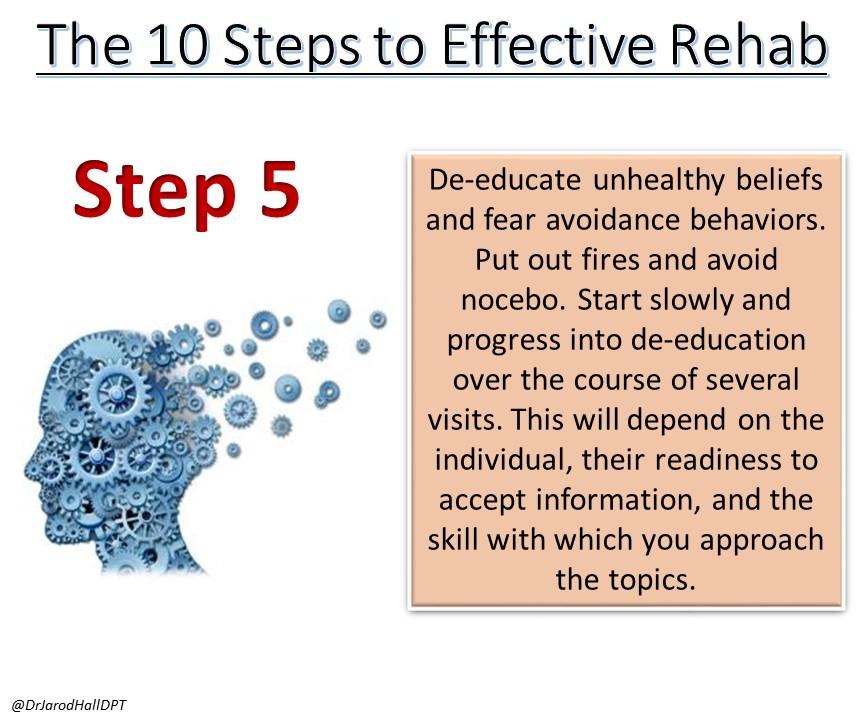
So, without further ado, I’ve listed the second 5 steps in my personal 10 step approach to providing effective rehab through an interactor mindset below. 

These 10 steps create a framework and are not intervention specific as I believe the specific intervention is only a fraction of the importance of the framework in which you use them. These steps allow you to choose specific interventions that meet your own preferences as well as the preferences of the patient.


Check out Jarod's blog, his facebook, and instagram pages!

Blog readers get a special discount on his upcoming book Therapeutic Alliance! Use Coupon code #modernmanualtherapy to get your discount!


Want an approach that enhances your existing evaluation and treatment? No commercial model gives you THE answer. You need an approach that blends the modern with the old school. Live cases, webinars, lectures, Q&A, hundreds of techniques and more! Check out Modern Manual Therapy!

Keeping it Eclectic...


You may have heard the saying:

“Give a man a fish and he shall eat for a day. Teach a man to fish and he shall eat for a lifetime”

The moral of this story is clear. In place of dependence and a single avenue for sustenance, it is more valuable to have knowledge and a method for continued self-sufficiency. It is more valuable to know how to fish than have a single fish given in a time of need. It is more valuable to learn how to provide for yourself and manage on your own than it is to allow yourself to be in a position in which your health, happiness, or life is completely dependent on others.

I prefer to view my approach to patient management as well as the framework in which I approach rehab much the same way. I am very fond of what Jason Silvernail and Diane Jacobs have referred to as the interactor mindset over that of an operator. This idea is eloquently written below:

“Traditional instructional books and courses on manual therapy often refer to the therapist as an ‘operator’. The implication of this terminology is that the patient is a passive recipient of the manual act. This seems at odds with not only the common practice of physical therapy, but the balance of research evidence which favors active over passive approaches. We feel a more current understanding of the mechanisms and processes of manual therapy leads naturally to a different understanding of the therapist’s role – that of an ‘interactor’. This interactor model of manual therapy is consistent with the authors’ statement that ‘the context of the treatment including the technique, the provider, the participant, the environment, and the interaction between these factors may contribute to patient outcomes.’ It is precisely this interaction between various factors that we need to consider, and not simply the performance of one or more techniques as an ‘operator.’ We believe this interactive model to also be scientifically congruent with the emerging explanatory model of the multifactorial, biopsychosocial pain experience, the neuromatrix.”

Many clinicians prefer to place their value in a “tool box” or bag of tricks approach in which treatments are applied to patients that fit a predetermined diagnostic criteria or subgroup often based on poorly defined or unreliable examination findings. These clinicians wear initials after their names like badges of honor. They strive to take as many tool-based courses as they can, often forgoing deep critical thought and building a comprehensive and systematic evaluative framework. Frequently, this leads them down a rabbit hole of cups, tapes, scrapers, rollers, electrodes, virbrators, and highly specific manual therapy techniques (oxymoron) they apply to patients. If this clinician only has a hammer, they only see nails. If they have a screw driver, they only see screws. However, no matter how many tools they acquire, without the blueprints they will rarely see the big picture or know what they are building. Meanwhile, the patient hangs in the balance constantly being batted around to whoever has the next tool to apply to them. The patient becomes chronically “operated” upon rather than “interacted” with. This inevitably leads to a passive mentality in their own care. The patient slowly learns helplessness and seeks more tools with the hope they just haven’t found the right toolsman yet.

Conversely, the interactor approach recognizes the immense complexity of human beings and their lived experience of pain. This type of approach reflects a thought process that attempts to facilitate patient independence and increase internal locus of control. Being an interactor teaches a patient to fish for themselves rather than making them dependent on the fish you provide them. Possibly of even greater importance, teaching clinicians to be interactors equips them with a framework and understanding that much reflects teaching them how to fish rather than mindlessly eating the fish that their current toolbox assortment permitted them to. The interactor chooses to focus their time understanding the blue prints and innerworkings of the system rather than stand on the assembly line hammering, screwing, tightening, loosening, scraping, etc.

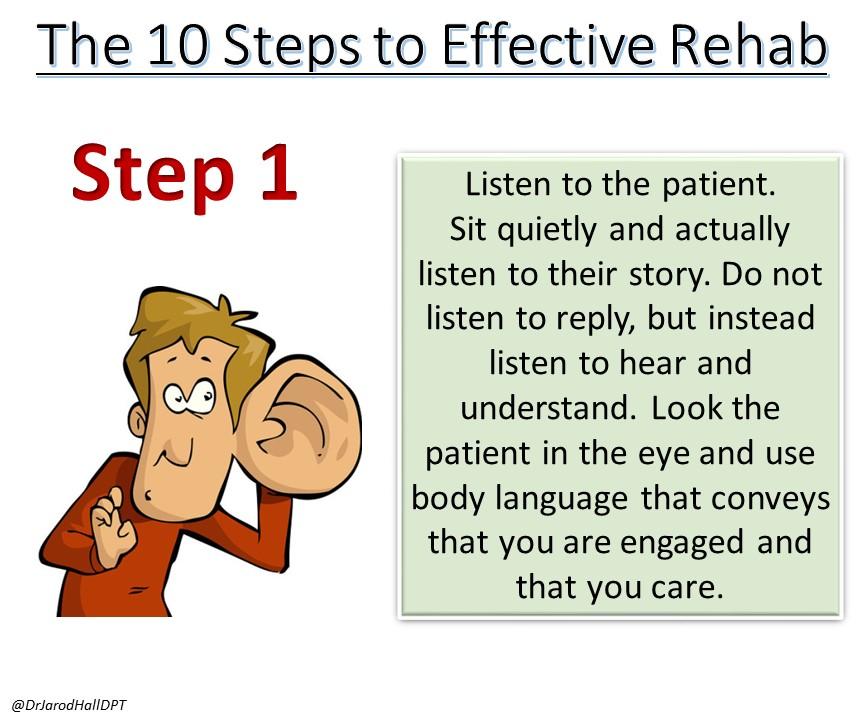
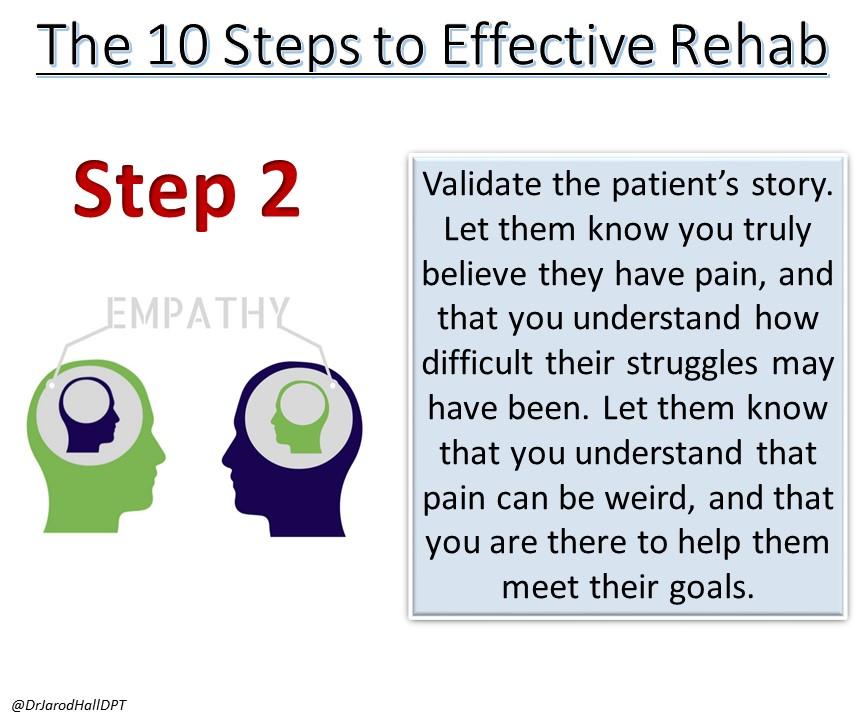
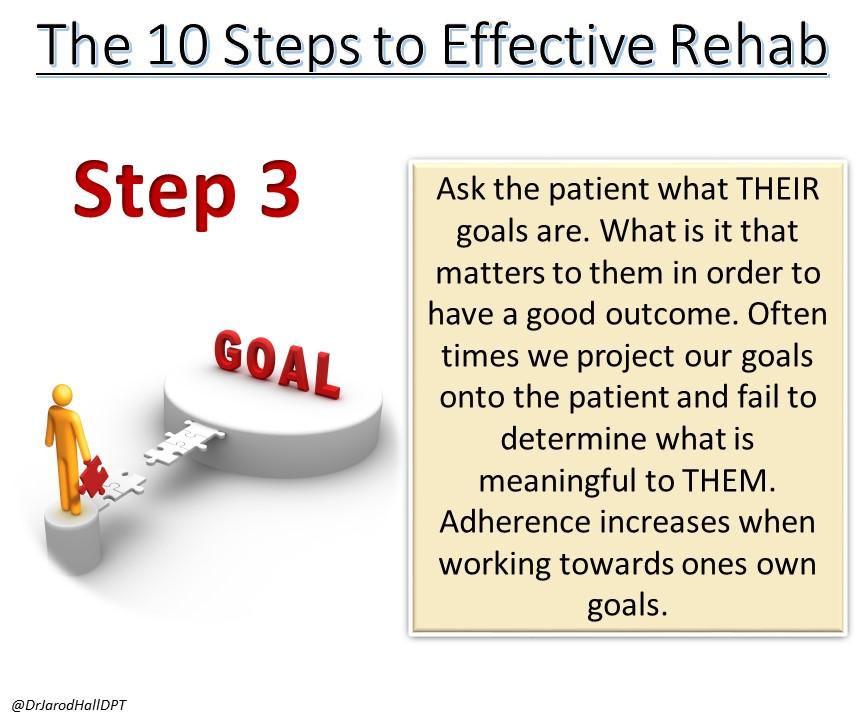
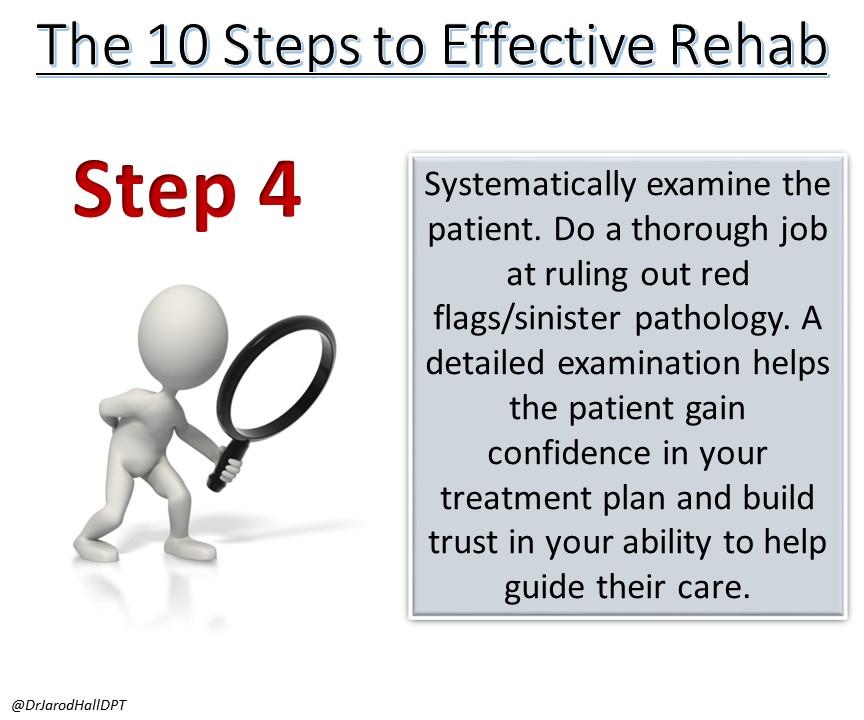
Below, I’ve listed the first 5 steps in my personal 10 step approach to providing effective rehab through an interactor mindset. In the second half to this post, I will provide steps 6-10.

These 10 steps create a framework and are not intervention specific as I believe the specific intervention is only a fraction of the importance of the framework in which you use them. These steps allow you to choose specific interventions that meet your own preferences as well as the preferences of the patient.


Check out Jarod's blog, his facebook, and instagram pages!

Blog readers get a special discount on his upcoming book Therapeutic Alliance! Use Coupon code #modernmanualtherapy to get your discount!


Keeping it Eclectic...