The previous
blog introduced why I feel breathing patterns are something we should be spending more time assessing or at least delving into more detail about. This blog looks at the different aspects of assessment - questioning and physical tests - that we can build into clinical practice.
The first question to address is - where does it fit in?
Do we start regionally or holistically? For example, a patient presents with chronic lower back pain and structural diagnostic label of a disc bulge.
- Day 1 - are you going to look at lumbar active range of movement, palpation, muscle strength and length tests. Then day 2 - look at the area above and below, clear a neurological exam, check a neurodynamic exam. Then day 3 - spend more time looking at breathing, motor control and functional positioning.
Or....
- Day 1 - are you going to look more holistically at the resting posture, quiet breathing and gait. Then build out the assessment to a more focussed structural or body-region-specific assessment?
How we choose and order the priority of our clinical assessment is a clinical reasoning challenging that we are faced with daily. What I am finding more frequently is that my approach changes depending on the person and depending on the program. I have to ask myself - is it more important to reproduce their pain on the first session or is it more important to look at global contributing influences to their pain - like abnormal breathing?
I don't think there is a right or wrong, and as I continue to practice, my ability to choose seems to become more refined. I do think that is all comes down to the personality of the individual and the expectations for treatment and recovery. Fundamentally breathing is like all our other areas of assessment and treatment. There is so much complexity to breathing alone, that it is impossible to assess every aspect in detail. But, after reading this book, these are the few key areas and tactics for treatment that I'll try to use in 2018.
"How we breathe and how we feel are intimately conjoined in a two-way loop." (Chaitow, Bradley & Gilbert., 2014, p. 24).
Patients don’t just choose to breath abnormally - their bodies are forcing them to adapt to a problem and our role as therapists is to understand the underlying drivers. When reading this book I came across the section below, which suddenly helped me grasp the reason breathing abnormally can have such a profound impact on the human body.
“Both respiratory suspension and over-breathing in preparation for action are unbalanced, in the sense that the individual is not living entirely in the present. This projection into the future creates a discrepancy between actual and anticipated metabolic needs. The trouble arises when the threat is non-physical or not imminent. If such feelings become habitual, then the preparation will become chronic.” (Gilbert., 2014, p.82).
ASSESSMENT OF BREATHING PATTERNS
The assessment by a physiotherapist is more than just physical, it includes understanding the past medical history, social history, medication history and general health for conditions or contributing factors to breathing disorders. Only once these have been questioned for and excluded, should one continue to look at physical and structural tests.
Breathing assessment might comment on posture and patterning:
- If the breathing is diaphragmatic, abdominal etc. Where is the movement coming from?
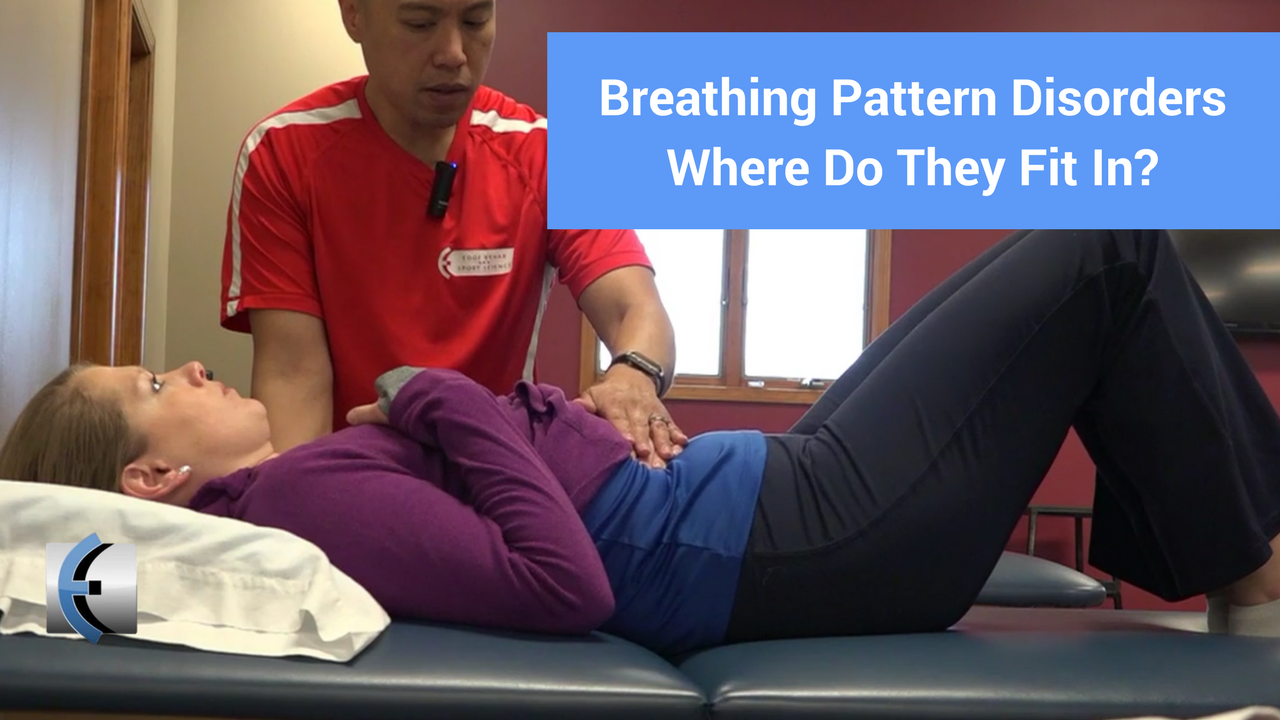
- Place one hand on the chest and other on the stomach. Inhale and comment on the movement of the hands. If the upper hands moves first and more then this is called upper chest breathing(Chaitow., 2014, p. 101).
- How much of the abdomen moves and in which direction? Does it expand forward, sideways or suck inwards?
- How much to the accessory muscles activation can be seen?
- Do the shoulders elevation during breathing? What is the resting position of the clavicles and scapula?
- What is the rate of breathing?
- How would you rate the duration of inspiration compared to expiration i.e. does the person completely exhale or stay hyper-inflated?
- Is there movement felt in-between the shoulder blades (posterior mediastinum) during inspiration or is all of the movement anterior in the chest?
- Is there a natural pause at the end of expiration?
- Does the person exhibit any altered phonation (voice changes) while they breathe?
Assessment can be performed in supine, sitting, quadruped or standing - it depends on how demanding you wish to make the postural component of breathing. For example, if you assess a patient in supine there is not a lot of room to palpation lateral and posterior expansion of the ribs. If you assess them on hands and knees (quadruped), you get a sense for scapulohumeral positioning, neck strength and expansion of the full thoracic spine, but is is more difficult to visualise the clavicles and accessory muscles.
ASSESSMENT IN SITTING