Modern Manual Therapy Blog - Manual Therapy, Videos, Neurodynamics, Podcasts, Research Reviews: Breathing Pattern Disorders
Showing posts with label Breathing Pattern Disorders. Show all posts
Untold Physio Stories - Breathing is a Habit - themanualtherapist.com


In this episode, Erson goes over a telehealth series of visits with another PT. What started out as a traditional lumbar radicular or neuropathy complaint rapidly turned to trying a LOT of different and non traditional treatments. Are you aware that over breathing/hyperventilation can affect many different systems in the body? Listen to this podcast to find out more.

Untold Physio Stories is sponsored by


⁠The Eclectic Approach Network⁠ - Check out Dr. E's all new private, non tracking and ad free network for rehab pros! It's free to join, has chat, feed, and all the features of other social networks without the creeping tracking.


Check out ⁠EDGE Mobility System⁠'s Best Sellers - Something for every PT, OT, DC, MT, ATC or Fitness Minded Individual https://edgemobilitysystem.com


⁠Curv Health⁠ - Start your own Virtual Clinic Side Hustle for FREE! Create your profile in 3 minutes, set your rates, and Curv will handle the rest! From scheduling to payments, messaging, charting, and a full exercise library that allow for patient/clinician tracking, it's never been easier! ⁠Click to join Dr. E's new Virtual Clinic Collective⁠ to help promote best online practices. 


Keeping it Eclectic...


Many thoracic, shoulder, cervical and some lumbar cases require breathing assessment and rib treatment.

This video is from a recent MMT Live seminar in Little Rock, AR. Normally to demonstrate my pain free take on "trigger point" work with a mobility ball, I place a ball under a tender point and have the participant work on diaphragmatic breathing.

Some patients are very sensitized, in severe pain, unable to move and/or have extremely high anxiety. These are not people who generally respond to repeated motions, mobilization/manipulation or other go to treatments.


This is the final blog on breathing pattern disorders and presents the main ideas that represent how my clinical practice has changed with regards to treatment. Before I started studying BPD more closely, I always thought that treating breathing meant teaching patients to breath through their abdomen and not their upper chest. But as you may have picked up from the previous blog - both techniques can be done in an ideal or unideal manner.


The previous blog introduced why I feel breathing patterns are something we should be spending more time assessing or at least delving into more detail about. This blog looks at the different aspects of assessment - questioning and physical tests - that we can build into clinical practice. 
The first question to address is - where does it fit in? 
Do we start regionally or holistically? For example, a patient presents with chronic lower back pain and structural diagnostic label of a disc bulge. 
  • Day 1 - are you going to look at lumbar active range of movement, palpation, muscle strength and length tests. Then day 2 - look at the area above and below, clear a neurological exam, check a neurodynamic exam. Then day 3 -  spend more time looking at breathing, motor control and functional positioning. 
Or....
  • Day 1 - are you going to look more holistically at the resting posture, quiet breathing and gait. Then build out the assessment to a more focussed structural or body-region-specific assessment?
How we choose and order the priority of our clinical assessment is a clinical reasoning challenging that we are faced with daily. What I am finding more frequently is that my approach changes depending on the person and depending on the program. I have to ask myself - is it more important to reproduce their pain on the first session or is it more important to look at global contributing influences to their pain - like abnormal breathing?
I don't think there is a right or wrong, and as I continue to practice, my ability to choose seems to become more refined. I do think that is all comes down to the personality of the individual and the expectations for treatment and recovery. Fundamentally breathing is like all our other areas of assessment and treatment. There is so much complexity to breathing alone, that it is impossible to assess every aspect in detail. But, after reading this book, these are the few key areas and tactics for treatment that I'll try to use in 2018. 
"How we breathe and how we feel are intimately conjoined in a two-way loop." (Chaitow, Bradley & Gilbert., 2014, p. 24). 
Patients don’t just choose to breath abnormally - their bodies are forcing them to adapt to a problem and our role as therapists is to understand the underlying drivers. When reading this book I came across the section below, which suddenly helped me grasp the reason breathing abnormally can have such a profound impact on the human body.

“Both respiratory suspension and over-breathing in preparation for action are unbalanced, in the sense that the individual is not living entirely in the present. This projection into the future creates a discrepancy between actual and anticipated metabolic needs. The trouble arises when the threat is non-physical or not imminent. If such feelings become habitual, then the preparation will become chronic.” (Gilbert., 2014, p.82). 

ASSESSMENT OF BREATHING PATTERNS

The assessment by a physiotherapist is more than just physical, it includes understanding the past medical history, social history, medication history and general health for conditions or contributing factors to breathing disorders. Only once these have been questioned for and excluded, should one continue to look at physical and structural tests. 
Breathing assessment might comment on posture and patterning:
  • If the breathing is diaphragmatic, abdominal etc. Where is the movement coming from?
  • Place one hand on the chest and other on the stomach. Inhale and comment on the movement of the hands. If the upper hands moves first and more then this is called upper chest breathing(Chaitow., 2014, p. 101). 
  • How much of the abdomen moves and in which direction? Does it expand forward, sideways or suck inwards?
  • How much to the accessory muscles activation can be seen?
  • Do the shoulders elevation during breathing? What is the resting position of the clavicles and scapula?
  • What is the rate of breathing?
  • How would you rate the duration of inspiration compared to expiration i.e. does the person completely exhale or stay hyper-inflated?
  • Is there movement felt in-between the shoulder blades (posterior mediastinum) during inspiration or is all of the movement anterior in the chest? 
  • Is there a natural pause at the end of expiration?
  • Does the person exhibit any altered phonation (voice changes) while they breathe?
Assessment can be performed in supine, sitting, quadruped or standing - it depends on how demanding you wish to make the postural component of breathing. For example, if you assess a patient in supine there is not a lot of room to palpation lateral and posterior expansion of the ribs. If you assess them on hands and knees (quadruped), you get a sense for scapulohumeral positioning, neck strength and expansion of the full thoracic spine, but is is more difficult to visualise the clavicles and accessory muscles. 

ASSESSMENT IN SITTING

When assessing a person in sitting I like to focus on movement of the sternum. Often patients don't realise it, but they are hitching their shoulders up, activating neck muscles and lifting the sternum upwards (cranially). The ideal breathing pattern would not exhibit scapula elevation, accessory muscle activation and instead show anterior movement of the sternum and posterior expansion of the ribs. To assess this, the patient can place one hand on their chest and belly while you place one hand between the shoulder blades and one on the top of one shoulder. This also provides the patient with a lot of proprioceptive feedback when moving towards changing their pattern. 

ASSESSMENT IN SUPINE

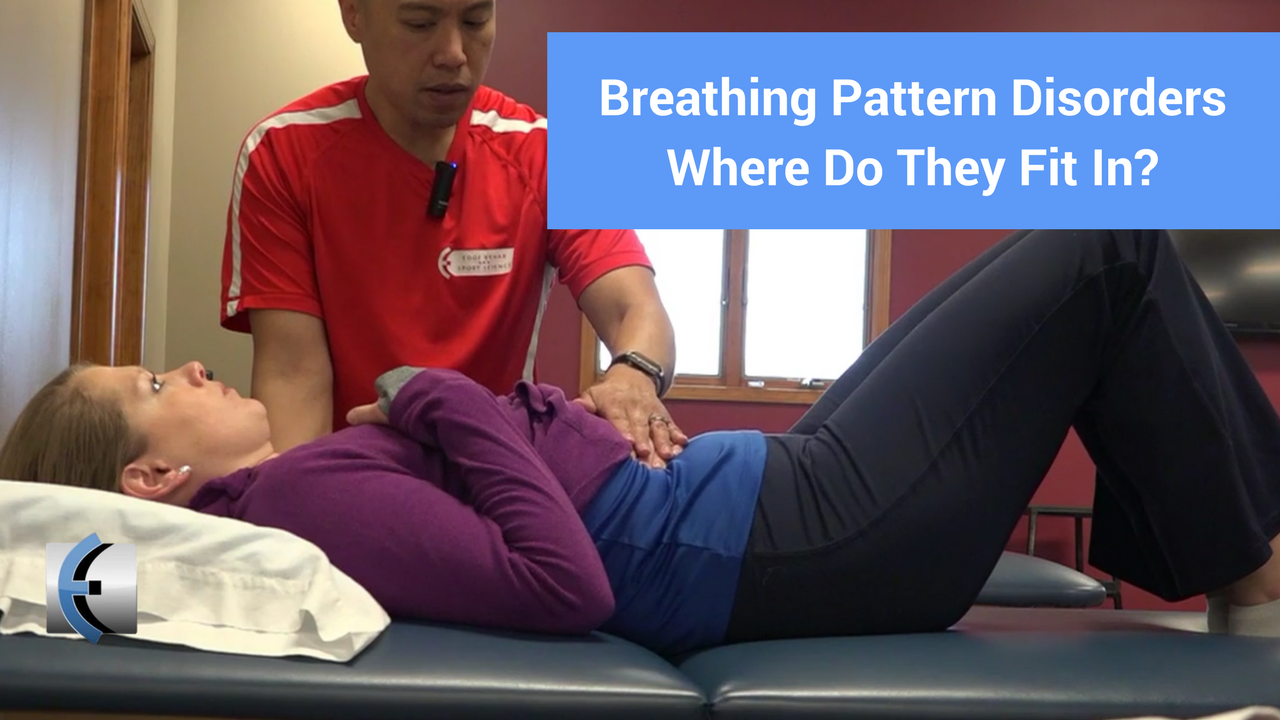
What I look for in supine is different from sitting and focusses on abdominal movement and rib flare. When in lying, if you can palpate the border of the inferior ribs the patient is demonstrating rib flare, which often indicates a loss of synchronisation of the abdominal muscles with the diaphragm and over-activity of the spinal extensor muscles. As the patient breathes in there should be an equal distribution of movement throughout the chest, not just the stomach lifting forward. As the patient breathes out, the ribs shoulder downwardly rotate and connect into the abdominal wall. This is why noting inhalation:exhalation ratios are important because if the patient doesn't fully exhale, their ribs will never drop down into the abdomen. 

ASSESSMENT IN QUADRUPED

The key finding I look for in quadruped is how well a person can position their scapula on the thorax. More importantly, as they exhale, if the ribs drop down towards the table the scapula will wing off the thorax (seen in image 2). If this occurs the patient is not able to stabilise their upper body while in a static position and this exercise will be a great starting point for rehabilitation.

OTHER POSITIONS FOR ASSESSMENT

The author of the book mentioned above describes in detail what an assessment entails with a patient sitting but also suggests that side lying hip abduction SLR and prone active SLR are great tests for palpating where movement begins and providing information about hip abduction or extension being initiated in the lumbar spine. These lumbar muscles are also breathing muscles, therefore if altered timing is found during the assessment, it may suggest poor synchronisation between muscle regions. 
You should also spend time watching how the patients spine is moving and the distribution of flexion (which I refer to often as segmental control). This often tells you how well ribs are moving and air is being distributed throughout the chest. You can observe their spinal movements in flexion or just as they lie prone. This is not diagnostic but a helpful way to approach your observation technique.
I actually have been integrating more observatory techniques into my practice to compliment my structural tests. 
So the observation of breathing can be built into many other tests we commonly use - it just has to be a specific intension and focus of what you are looking for. 

SOME OTHER TESTS WE CAN INCLUDE:

  • Measuring respiratory rate
  • Measuring controlled expiratory pause. 
    • “While no standardized test yet exist, breath-hold times are recorded by many clinicians as part of HVS/BPD assessment. Failure to hold beyond 30 seconds is considered by some a positive diagnostic sign of chronic hyperventilation (Gardner 1996).” (bradley., 2014, p. 122).
  • Pulse-oximetry
  • Peak-expiratory Flow Rate
  • Range of movement and palpation assessment of the thoracic spine, shoulder girdle and ribs
  • Looking a voice control during breathing. Things to observe include (Au Zveglic., 2014, p.208):
    • The audibility if inspiration
    • The speed of speech
    • The ability to finish phrases and sentences
    • The quality of the voice

QUESTIONNAIRES:

“Breathing is a dynamic system which is under the influence of many factors. These are of physical and pathological nature, as well as from psychic and emotional origin and also may be part of social and behavioural patterns.” (Courtney & van Dixhoorn., 2014, p.137).  Therefore, not all aspects of breathing can be assessed objectively. I love using questionnaires to improve my understanding of asking questions. I am not the most consistent in applying them to my patients - and perhaps this is an area I can improve on - but I integrate the questions into the subjective assessment. 

NIJMEGEN QUESTIONNAIRE:

  • The Nijmegen Questionnaire (NQ) assesses stress and arousal, presumed consequences and symptoms of hypocapnia and difficulty breathing.
  • The normative values differ depending on the country/population evaluated but it is generally accepted that a score >19 (out of max 64) demonstrates the presence of respiratory distress and dysfunction.
  • This questionnaire is used in populations other than breathing disorders (heart and lung disease, anxiety, depression) but is the most commonly mentioned one I’ve read about in the assessment of breathing pattern disorders. 
“As yet there is no ‘gold standard’ laboratory test to clinch the diagnosis of chronic HVS. However, the Nijmegen Questionnaire is the next best thing, and provides a non-invasive test of high sensitivity (up to 91%) and specificity up to 95% (Van Dixhoorn & Duivenvoorden 1985)" (Bradley., 2014, p.121). 

THE SELF-EFFICACY BREATHING QUESTIONNAIRE:

  • “The SEBQ is useful as a means of evaluating the quality and quantity of uncomfortable respiratory sensations, and the person’s perception of their own breathing, and may help to give insight into the origins of the discomfort.” (Courtney & van Dixhoorn., 2014, p.140)
  • It has questions relating to air hunger and ones relating to effort of breathing. 
Image source: https://ars.els-cdn.com/content/image/1-s2.0-S1360859210000951-gr2.jpg
Breathing difficulties come in many symptoms and forms and there is no single measure or diagnostic tool. Clinicians need to be aware of the variety of symptoms associated with breathing pattern disorders to best identity, document and address them. 
We're over half way through the book now and I hope your thinking around breathing is starting to expand (as well as the frequency of nasal breaths while you read). The next blog looks at tips for treatment drawn from physiotherapy, osteopathic and more alternative approaches. 

REFERENCES:

Chaitow, L., Gilbert, C., & Morrison, D. (2014). Recognizing and Treating Breathing Disorders E-Book. Elsevier Health Sciences.


Sian Smale is an Australian-trained Musculoskeletal Physiotherapist. Sian completed her Bachelor of Physiotherapy through La Trobe University in 2009 and in 2013 was awarded a Masters in Musculoskeletal Physiotherapy through Melbourne University. Since graduating from her Masters program, Sian has been working in a Private Practice setting and writing a Physiotherapy Blog "Rayner & Smale". Prior to moving to San Francisco, Sian worked at Physical Spinal and Physiotherapy Clinic and has a strong background in manual therapy and management of spinal spine, headaches and sports injuries. Since moving to the Bay area, Sian has become a Physiotherapist for the Olympic Winter Institute of Australia, traveling with their Para Alpine teams. Sian currently works full time at TherapydiaSF as a physical therapist and clinical pilates instructor. 

twitter @siansmale
instagram @siansmale_SF


Want an approach that enhances your existing evaluation and treatment? No commercial model gives you THE answer. You need an approach that blends the modern with the old school. Live cases, webinars, lectures, Q&A, hundreds of techniques and more! Check out Modern Manual Therapy!

Keeping it Eclectic...


I spent many hours in 2017 contemplating the importance of one key element of human survival - breathing. As a physiotherapist working with patients in chronic pain and also while teaching pilates, I have continually questioned myself about:
  • the appropriate time and way to assess breathing,
  • the most efficient method to educate patients about normal and abnormal breathing patterns, and
  • the timing of teaching breathing cues, variety of verbal cueing and type of therapeutic exercise to choose. 
I strongly fear that breathing is unanimously recognised as a vital component of human posture and function yet braised past quickly when we are taught as clinicians and when we teach our patients. 
Breathing underlies all dynamic movement and function. 
Screen Shot 2018-01-14 at 1.39.55 PM.png
So, in order to expand my personal knowledge I've been studying a well-regarded textbook; Recognizing and Treating Breathing Disorders. It is incredibly well written and packed with information from multiple clinical domains and approaches. The goal for these next few blogs is to summarise the key learnings from the book and highlight areas of focus for 2018 to improve how I assess and treat breathing disorders in patients presenting to physical therapy in a private practice setting. 

WHY IS BREATHING SO IMPORTANT?

I have a personal fascination with the history of our profession and love reading about howe we began, where we came from and our evolution over time. There was a surge or maybe the real birth of physiotherapy which came after the second world war. But, the patients, diseases and injuries that physiotherapy was focussed around is so vastly different to what we see now as clinicians in 2018. Something I've observed is that through this evolution our professional streams have become more defined: musculoskeletal, neurological, cardiopulmonary, paediatric, sport etc. But, they didn't begin that way. My fear is that this streamlining or specialisation has caused our younger generations to loose their skills in connecting the streams together. 
Breathing is vital for human life and non specific to any domain of our profession. In order to better understand the musculoskeletal, neurological, cardiac, pulmonary, emotional, psychological and behavioural determinants of breathing, we must delve across into other streams. This book has helped me understand how this expanded approach is possible in an outpatient setting. We just have to start thinking more broadly again. 

WHAT ARE BREATHING PATTERN DISORDERS?

It was around the 1980's when physiotherapists (Innocenti and Cluff) ramped the discussion about the impact that Co2 levels have physiologically in patients and their associated symptoms, in particular, hyperventilation syndrome (HVS) (Chaitow, Bradley et Gilbert., 2014, p.3-5). What they speculated/studies is that:
  • Reduced Co2 causes increased pH and a more alkaline environment. 
  • Increased breathing rate leads to reduced CO2 levels and respiratory alkalosis. 
  • Physiological effects of HVS include exhaustion, tingling, cramps, weakness, irregularities of heart rhythm and more. 
  • Psychological effects of HVS include tiredness, sensory disturbance and dizziness. 
Breathing pattern disorders describe a variety of different presentations that often lead to hyperventilation syndrome or disruption in carbon dioxide levels. They occur in about 1/10 people (not everyone). It is important to reinforce from the beginning that BPD is not a disease, but a disorder that can coexist with many diseases and something that also mimics other disease processes (Chaitow, Bradley et Gilbert., 2014, p.4). BPD are a cluster of symptoms and signs of abnormal breathing that present in patients who have systemic changes as well and altered posture, movement and pain. (BPD) are being "increasingly recognized as a major cause of ill health, though still remain widely underdiagnosed and undertreated" (Chaitow, Bradley et Gilbert., 2014, p.1).
“Structure and function are intertwined and interdependent, in respiration as in most other body processes.” (Chaitow, Bradley et Gilbert., 2014, p.5).

SIGNS OF NORMAL BREATHING:

  • The upper seven ribs should move synchronously with the sternum and move anteriorly during inspiration, not cranially. 
  • Visible accessory muscle activation is not seen in normal quiet breathing. 
  • When the diaphragm and intercostal muscles activate, the thoracic cavity should enlarge anteriorly and laterally at the same time. 
  • During inspiration, the lower ribs shoulder expand laterally with the thoracic cavity. 
  • Normal alignment of the clavicle is considered a 25-30 degrees angle from the horizontal while the thoracic spine is erect. 
  • Ribs should align with the pelvis. “When the thoracic spine is erect, the ribcage is positioned parallel to the pelvis and the centrum tendineum of the diaphragm is on a horizontal plane.” This horizontal alignment of the central tendon allows for the diaphragm to act in a caudal direction, “as a piston against the pelvic floor”. (Konlar, Kobesova, Valouchova et Bitnar., 2014, p. 13). 
  • PaCo2 35-40 mmhg, Bicarbonate 24 mEg/L, pH 7.4, SpO2 95-98%, respiratory rate is 10-14 breaths per minute, and breathing occurs through nose (Bradley., 2014, p.64).
  • There should be a relaxed pause at the end of exhalation to allow the diaphragm to relax.
  • The mean swallowing rate is 3-4 times per 15 minutes (Bradley., 2014, p.64).
  • You should be unaware of your breathing. 

SIGNS OF ABNORMAL BREATHING:

These are a few of the symptoms which I see more commonly, not the entire list (Bradley., 2014, p. 53):
  • Neuro signs: increased sympathetic NS activation, reduced concentration and memory, tremors, sweating, palpitations, dizziness, weakness, visual disturbance, spinal hyperreflexia
  • Cardiac signs: chest pain
  • Gastro signs: gulping, bloating, burping, IBS
The diagnosis of hyperventilation syndrome (HVS) is a clinical one. It is also a diagnosis of exclusion. The symptoms are full body and can mimic more severe disease processes eg. air hunger, dry cough, sighing, pain, myalgia, increased muscle tone, dizziness, headache, fainting, tingling, chest pain, arrhythmia and impaired thinking. Therefore, subjective symptomology is not a reliable diagnostic tool, but, important for understanding the depth and variety of different system symptoms. As physical therapists we can look at breathing patterns (abdominal, pursed lip, apical, paradoxical etc), controlled pause, respiratory rate, heart rate - which I will go into more detail in the next blog. 

WHY IS THE NOSE SO IMPORTANT?

“The nasal cycle, which is part of an overall body cycle, is controlled by the hypothalamus. Increased airflow through the right nostril is correlated to increased left brain activity and enhanced verbal performance, whereas increased airflow through the left nostril is associated with increased right brain activity and enhance spatial performance.” (Bartley., 2014, p.46). 
Nasal breathing:
  • There is twice as much airway resistance in nasal breathing compared to mouth breathing,
  • This causes an increased in total lung volume, functional residual capacity, and improved arterial oxygen concentration (about 10% increase) (Gilbert., 2014, p. 82).
  • Nasal breathing is achieved by placing the tongue gently behind the top teeth on the hard palate during inspiration. No noise should be heard when inhaling.
  • Slower breathing is better for O2 and Co2 concentration.
  • Mouth breathing is a habit that may be triggered by an event (a cough or congestion) but does not subside and it must be untrained once established!
Building nose breathing into the assessment:
  • Is the patient a nose or mouth breather?
  • Mouth breathing is connected with nasal obstruction and congestion. 
  • Do they have a septal deviation? This would cause a unilateral nasal obstruction
  • Do they report snoring or sleep apnoea? 
  • Do they report inappropriate daytime somnolence? This is assessed with the Epworth Sleepiness Scale
  • They they have other symptoms such as sneezing, itchy nose or eyes or nasal discharge or fascial pain?
What this all means is that there is a very well designed system within our body that maintains our pH levels and is vital for function of all body systems. Maintaining disequilibrium is a term I learnt during chemistry about how the chemical reactions within the body are always counteracting the external environment. The outcome of a balanced flow of oxygen in and carbon dioxide out is that our tissues get a steady supply of oxygenated blood and that carbon dioxide remains stable. Breathing is fundamental in maintaining this balance, which is known as homeostasis. (Gilbert., 2014, p 61). 
In summary, breathing is vital to our survival and while breathing pattern disorders may only occur in 1/10 patients we see clinically, knowing how to observe breathing, questions for breathing difficulties and educate patients about normal versus abdnormal breathing techniques, can have a profound impact on many other systems in their body. This blog was focussed on understand the importance of breathing and the next blog is focussed deeply on improving assessment. 
A thought to finish on...
Patients don’t just choose to breath abnormally - their bodies are forcing them to adapt to a problem and our role as therapists is to understand the underlying drivers. 
Sian

REFERENCES:

Chaitow, L., Gilbert, C., & Morrison, D. (2014). Recognizing and Treating Breathing Disorders E-Book. Elsevier Health Sciences.


Sian Smale is an Australian-trained Musculoskeletal Physiotherapist. Sian completed her Bachelor of Physiotherapy through La Trobe University in 2009 and in 2013 was awarded a Masters in Musculoskeletal Physiotherapy through Melbourne University. Since graduating from her Masters program, Sian has been working in a Private Practice setting and writing a Physiotherapy Blog "Rayner & Smale". Prior to moving to San Francisco, Sian worked at Physical Spinal and Physiotherapy Clinic and has a strong background in manual therapy and management of spinal spine, headaches and sports injuries. Since moving to the Bay area, Sian has become a Physiotherapist for the Olympic Winter Institute of Australia, traveling with their Para Alpine teams. Sian currently works full time at TherapydiaSF as a physical therapist and clinical pilates instructor. 

twitter @siansmale
instagram @siansmale_SF


Want an approach that enhances your existing evaluation and treatment? No commercial model gives you THE answer. You need an approach that blends the modern with the old school. Live cases, webinars, lectures, Q&A, hundreds of techniques and more! Check out Modern Manual Therapy!

Keeping it Eclectic...