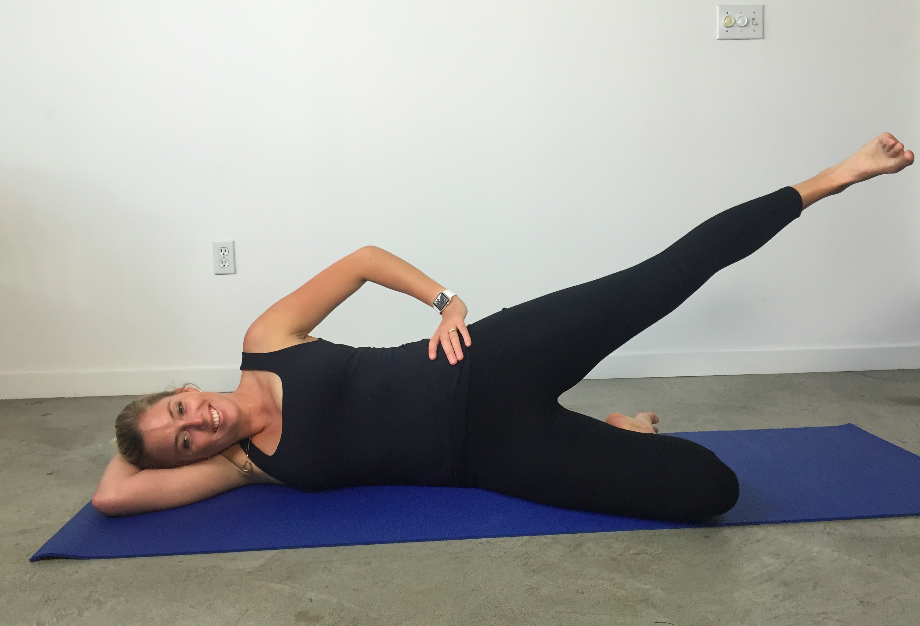
SUMMARY OF FINDINGS:
“Current evidence suggests that management of tendinopathy needs to be targeted to the tendon and in that regard: (a) the diagnosis should involve a combination of clinical examination and MRI confirmation of tendon involvement, (b) an injection should be guided by imaging so as to be specific and (c) any exercise be undertaken as part of a load management approach, which is now being recommended as the frontline treatment for managing tendinopathy.” (Mellor, Grimaldi, et al., 2016, p. 14).
“For gluteal tendinopathy, education plus exercise and corticosteroid injection use resulted in higher rates of patient reported global improvement and lower pain intensity than no treatment at eight weeks. Education plus exercise performed better than corticosteroid injection use. At 52 week follow-up, education plus exercise led to better global improvement than corticosteroid injection use, but no difference in pain intensity. These results support EDX (exercise and education) as an effective management approach for gluteal tendinopathy.” (Mellor, Bennell & Grimaldi., 2018, p.1).
Sian Smale is an Australian-trained Musculoskeletal Physiotherapist. Sian completed her Bachelor of Physiotherapy through La Trobe University in 2009 and in 2013 was awarded a Masters in Musculoskeletal Physiotherapy through Melbourne University. Since graduating from her Masters program, Sian has been working in a Private Practice setting and writing a Physiotherapy Blog "Rayner & Smale". Prior to moving to San Francisco, Sian worked at Physical Spinal and Physiotherapy Clinic and has a strong background in manual therapy and management of spinal spine, headaches and sports injuries. Since moving to the Bay area, Sian has become a traveling Physiotherapist for the Olympic Winter Institute of Australia, a volunteer faculty member teaching on the Doctorate of Physical Therapy program, and is working as a Physical Therapist at UCSF.
twitter @siansmale
instagram @siansmale_SF
REFERENCES:
Cook, J., & Purdam, C. R. (2009). Is tendon pathology a continuum? A pathology model to explain the clinical presentation of load-induced tendinopathy. British journal of sports medicine, 43(6), 409-416.
Cook, J. L., & Purdam, C. (2012). Is compressive load a factor in the development of tendinopathy?. Br J Sports Med, 46(3), 163-168.
Fearon, A. M., Scarvell, J. M., Neeman, T., Cook, J. L., Cormick, W., & Smith, P. N. (2013). Greater trochanteric pain syndrome: defining the clinical syndrome. Br J Sports Med, 47(10), 649-653.
Grimaldi, A., & Fearon, A. (2015). Gluteal tendinopathy: integrating pathomechanics and clinical features in its management. journal of orthopaedic & sports physical therapy, 45(11), 910-922.
Grimaldi, A., Mellor, R., Hodges, P., Bennell, K., Wajswelner, H., & Vicenzino, B. (2015). Gluteal tendinopathy: a review of mechanisms, assessment and management. Sports Medicine, 45(8), 1107-1119.
Grimaldi, A., Mellor, R., Nicolson, P., Hodges, P., Bennell, K., & Vicenzino, B. (2017). Utility of clinical tests to diagnose MRI-confirmed gluteal tendinopathy in patients presenting with lateral hip pain. Br J Sports Med, 51(6), 519-524.
Mellor, R., Grimaldi, A., Wajswelner, H., Hodges, P., Abbott, J. H., Bennell, K., & Vicenzino, B. (2016). Exercise and load modification versus corticosteroid injection versus ‘wait and see’for persistent gluteus medius/minimus tendinopathy (the LEAP trial): a protocol for a randomised clinical trial. BMC musculoskeletal disorders, 17(1), 196.
Mellor, R., Bennell, K., Grimaldi, A., Nicolson, P., Kasza, J., Hodges, P., ... & Vicenzino, B. (2018). Education plus exercise versus corticosteroid injection use versus a wait and see approach on global outcome and pain from gluteal tendinopathy: prospective, single blinded, randomised clinical trial. bmj, 361, k1662.