Modern Manual Therapy Blog - Manual Therapy, Videos, Neurodynamics, Podcasts, Research Reviews: PNF
Showing posts with label PNF. Show all posts
Untold Physio Stories - You're Doing it All Wrong - themanualtherapist.com


Have you ever been corrected or called out by an instructor in front of the class? It's not a great feeling and not a good way to learn. Listen to this story where a course participant gets corrected by the instructor which makes him realize techniques and assessments are probably non-specific.


Untold Physio Stories is sponsored by


Helix Pain Creams - I use Helix Creams in my practice and patients love them! Perfect in combination with joint mobs, IASTM and soft tissue work. Use code MMT2 to get your sample and get an additional revenue stream for your practice. Click here to get started.


Check out EDGE Mobility System's Best Sellers - Something for every PT, OT, DC, MT, ATC or Fitness Minded Individual


My PT Insurance - Insurance just got easier. check out the self employed and employed plans. Easy sign up and coverage that follows you wherever you practice in the United States. Save $20 if you sign up using our link.


Keeping it Eclectic...

Rolling Patterns are a popular assessment and corrective exercise for both upper and lower quarter MSK issues. Many resort to complex methods of banded resistance to help promote the correct motor program. Since you're already spending time with your patient/client, why not use manual resistance via isometrics and resistance through the range to help get through the sticking points?


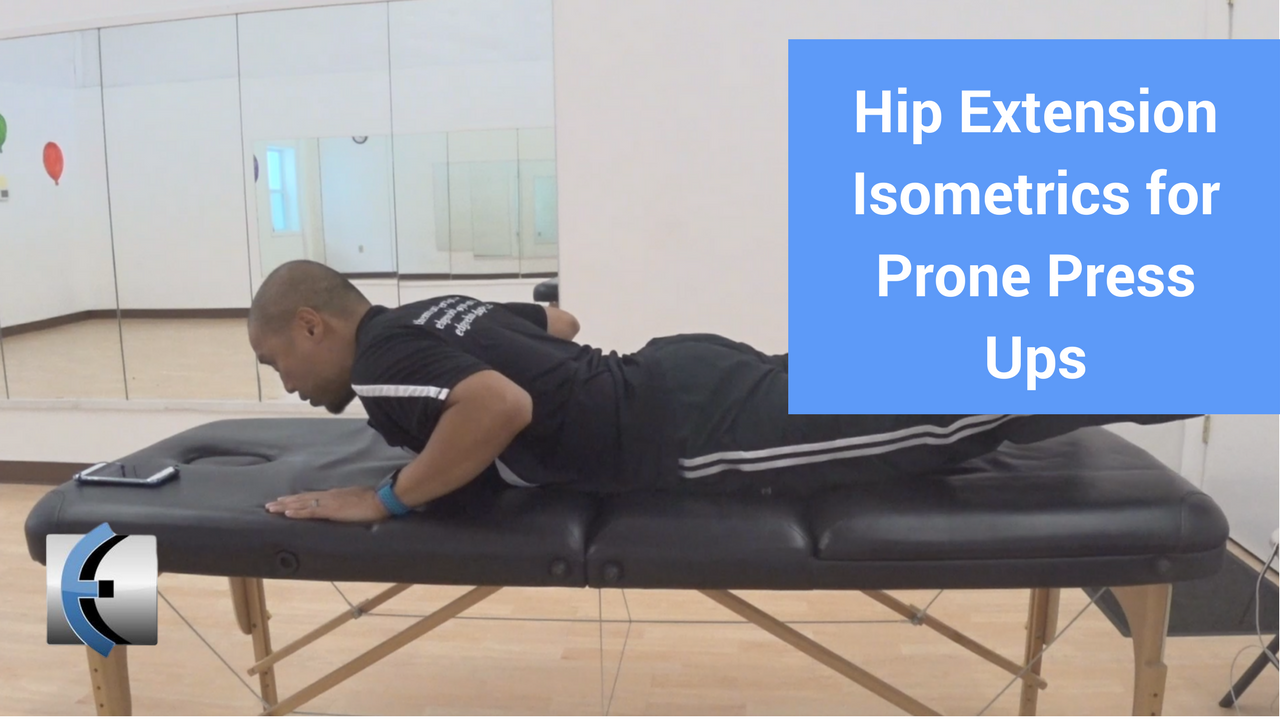
Overpressure, IASTM, or various mobilizations may enable a patient to obtain threat free end range with a prone press up; the implication may be that the patient needs the manual technique to get the same results. 

When active motion is limited, passive motion is not, but there is still pain or a sticking point, there is no physical barrier. There is a perception of pinch or pain, but it's neurologically limited. Often we find the most painful "hard end feel" and oscillate it or thrust through it. It usually improves upon re-test. Some patients will be too tender to use your go to mobilization or thrust techniques. Using manual resistance or agonist reversals gets your through a sticking point and often restores threat free end range. The goal is get the patient repeatedly loading the same motion to end range with passive overpressure repeatedly to keep the treatment effects going after you're done. All manual techniques should be applied with the goal of empowering the patient for self treatment. 

An Easier Way to Mobilize the Cervical Spine


Want an approach that enhances your existing evaluation and treatment? No commercial model gives you THE answer. You need an approach that blends the modern with the old school. Live cases, webinars, lectures, Q&A, hundreds of techniques and more! Check out Modern Manual Therapy!

Keeping it Eclectic...


Patient having some shoulder mobility, motor control, or impingement like complaints? Sometimes they need a little PNF to help them restore motor control and proprioceptive awareness to their scapula. 

In this case, the DC student was unable to do push ups without shoulder pain. After restoring her ability to load right cervical retraction and SB, with IASTM and then repeated motions, her scapula stability immediately improved in a push up position. However, resetting an area and eliminating pain may improve function, but it does not improve capacity. She still lacked endurance of her scapular stabilizers and needed some PNF cuing to help facilitate her mid/lower traps on the involved (right side).

PNF For Scapular Stabilization

The entire 12 min mini-case, including regression, progression, and stability exercise for HEP can be found on Modern Manual Therapy Premium!


Want an approach that enhances your existing evaluation and treatment? No commercial model gives you THE answer. You need an approach that blends the modern with the old school. Live cases, webinars, lectures, Q&A, hundreds of techniques and more! Check out Modern Manual Therapy!

Keeping it Eclectic...


Many clinicians doing manual muscle test may mistake motor pattern inhibition for true weakness. How do you tell the difference? If someone tests weak, try applying very light resistance and slowly increase. If the pattern/muscle test significantly increases as you gradually increase resistance, the muscles are not weak, the pattern is inhibited.

Testing Weakness vs Inhibition


Want an approach that enhances your existing evaluation and treatment? No commercial model gives you THE answer. You need an approach that blends the modern with the old school. Live cases, webinars, lectures, Q&A, hundreds of techniques and more! Check out Modern Manual Therapy!

Keeping it Eclectic...