Modern Manual Therapy Blog - Manual Therapy, Videos, Neurodynamics, Podcasts, Research Reviews: Laurey Lou
Showing posts with label Laurey Lou. Show all posts


This weekend is the NSCA Training for Combat Sports conference in Las Vegas. Day 1 featured tons of super relevant and interesting content, including a talk about fight camp nutrition with Dan Garner. Dan is a strength coach and nutrition specialist that works with many UFC fighters. This is a topic I’ve talked about before on this blog and something I’m deeply interested in – how do we make weight while maximizing performance?
Dan’s talk was packed with information, but I do want to share some important concepts. Remember that nutrition is highly individual and while these are great guidelines, you should contact a professional for a personalized program.
shutterstock_617843204


Dan reviewed 6 elements for a strong fight camp nutrition framework:
  1. Psychology
  2. Energy Balance
  3. Carbohydrate Intake
  4. Peri-Workout Nutrition
  5. Immune Function
  6. Vitamin & Mineral Status
Dan’s ideal timeframe for fight camp is 10 weeks with a goal of cutting 1-2 pounds per week in order to minimize extremes as you approach weigh-in. As you train hard through fight camp (or in the weeks leading up to your competition), your focus should be on performance and NOT making weight. This comes with precise, strategic planning.
Although there are tons of weight cutting and diet strategies, the bottom line is that everything is dependent on energy balance or imbalance. Meaningful strategies to determine calories in versus out allows a fighter to plan their weight loss over the duration of a fight camp. This sets up the final weight cut to start from a lower number in order to reduce extreme methods and unpredictability at the 11th hour.

The most common weight cutting strategy I hear around the gym is some kind of carbohydrate sparing or ketogenic diet. However, the importance of carbs for for fighters is critical. To get some buy in, Dan referenced studies by Noakes et al and Hall et al that found no difference in weight changes across subjects who sustained a low or high carbohydrate diet given the same decrease in overall calories. In addition, another study showed that subjects who included bread in their diets actually lost more weight than those who did not – highlighting the importance of a diet that is sustainable, rather than the mystery weight loss qualities of bread.

Proteins, carbohydrates, water, and electrolytes should all be consumed before, during, and following a training session. The main one most fighters don’t get enough of is actually WATER. Can you imagine water being the difference between winning and tapping out? Actually, performance and endurance levels start to decline with as little as a .5% loss in body water! This only worsens at greater levels of dehydration with strength and coordination deficits, cramping, heat exhaustion, and even altered mental capacity when you exceed a 4% water loss. This can mean a slower reaction time to get your underhook or maybe even forgetting your game plan.

Immune function depends on 2 major factors: diet and sleep. We’ve touched upon energy balance, but I’d like to quickly discuss sleep. Sleep is an essential component of recovery and regeneration without which our bodies could never see gains. While it’s important to achieve an adequate training level to spark adaptation, it’s equally important to sleep in order to maintain these gains and minimize the risk of getting sick during your fight camp. There are tons of methods to improve sleep hygiene including decreasing screen time before bed, breathwork, and meditation, but I think the biggest takeaway from Dan’s talk is that even a 15 minute increase in sleep has been demonstrated to improve immune system function.

Your supplement needs depend on your personal vitamin and mineral status, so it’s really important to work with a professional. But I will share 2 of Dan’s examples of how supplementation can influence training if appropriate.

  • ZINC: Your body needs zinc to create thyroid hormones; thus, depending on your baseline, zinc levels can significantly affect your metabolism. Dan referenced someone who added zinc supplementation and increased their metabolism by 992 calories per day. This not only impacts the possibility for weight loss, but also could be used as an additional 900+ calories towards fuel for performance and recovery.
  • IRON: Iron is critical for strength development and muscle function. Dan referenced a study where a volleyball team was split into a control group and a group receiving an iron supplement. During the season, all members of the team had the same training and competition program, but those who were repleting iron experienced 2x increases in strength. This could be critical for maintaining strength levels in sports with constant competition, such as BJJ.
Below I’ve added a few takeaways from Dan’s lecture that I found most interesting regarding each of these elements:
1. Psychology
2. Energy Balance
3. Carbohydrate Intake
So not only is it supported by the literature that percentage of carbs doesn’t affect weight loss, but carbs are essential for performance and recovery. Carbs fuel anaerobic performance – this means kicking, punching, jumping, and many other integral movements for martial arts. In addition, carbs are truly the master fuel. This means that when you’re training, the body uses carbs as the primary fuel source. In a carbohydrate depleted state, there is an increase in stress hormones that actually breakdown muscle tissue and decrease muscle mass and immune function. The body needs a readily available fuel source in order to spare muscle tissue.
Peri-Workout Nutrition
You can see that it is essential to achieve proper hydration to maximize performance. Dan suggests a minimum threshold of .5oz per pound body weight daily, that increases with training intensity. Strategies that I use to ensure that scaled amounts above threshold are appropriate for training include re-hydrating based on weight change during a training session, as well as urine analysis.
Immune Function
Vitamin and Mineral Status
A big thank you to Dan Garner for sharing what was obviously just a tiny peek into his vast knowledge about training nutrition. Remember that your nutrition needs may not be the same as your teammate’s. It’s important to reach out to a professional to develop the best program for you. Finally, always listen to your body, it will give you more insight than you can imagine. I am looking forward to rewatching this lecture on the online stream to pick up even more information!
----------
Find out more about Dan Garner at www.coachgarner.com.
Read more from Laurey at @Combat_Physio or combatphysio.com

One of the reasons I love working with martial arts athletes is that it is hard to paint one picture for a typical combat sport injury. What you see includes mechanisms of both traumatic contact as well as overuse injuries from the upper quarter all the way down to the toes. What makes martial arts uniquely vulnerable to all of these injuries is not only the vastly different movements, but also the fact that it’s performed barefoot.

The barefoot aspect of martial arts is an interesting double edged sword for those training in martial arts. On one hand, it helps to develop extraordinary sensorimotor processing skills from hours of rich input into the foot during training; on the other hand, it leads to injuries that are not as commonly seen in shod sports. Today I’m going to talk a little bit about barefoot considerations for training. This post is inspired by Kate Buttino, pictured above, who not only kicks ass at BJJ but she also drew the beautiful foot and ankle sketches that you see below.

Fighters have AMAZING balance! There was an interesting study by Perrin et al that compared balance competencies of judo athletes versus ballet dancers. While many might think that ballet dancers are the quintessence of balance mastery, it was actually judoists that were found to have superior balance control across all of the sensory challenges. The authors attribute this to the goal of martial arts – to disturb the balance of the opponent in order to submit or strike. “During fights, each judoist learns to use unstable dynamic situations to turn them to his advantage, using the stimulation of muscular, articular and cutaneous mechanoreceptors to adapt to the constant modifications of posture, support, ground, and partner contact.” Although ballet dancers also demonstrate techniques involving unstable dynamic conditions, authors point out that ballet dancers generate their own controlled instability from choreography, whereas judo fighters are subjected to uncontrolled instability as a result of counter-movements from their opponents.

The very essence of barefoot technique that produces superior balance is also the cause of a unique set of injuries. Traumatic injuries of the foot that often occur during striking techniques, such as kicks and jumps, include toe dislocations, fractures, turf toe, and metatarsalgia. The ankle is also a common site for both traumatic and overuse injuries. Most traumatic injuries at the ankle involve the outside of the ankle, and are due to high level stability challenges of the sport in combination with plant and twist skills, such as turn and throw and shuffle and lunge. Finally, a common overuse injury is Achilles tendinopathy due to the strain on the calf muscles from explosive push off from the toes.


by K. Buttino

Most of these injuries are unavoidable, considered to be the nature of combat sports. However, some may be avoided with proper striking techniques and training considerations:
Striking skills include both location of foot contact as well as strategies to decrease the mechanical symptoms 

Training considerations include core and low body strengthening to improve the body’s capability to exert and absorb these great forces

Balance and proprioception drills to improve activation and feedforward mechanisms in order to decrease stress on the toes and ankle


by K. Buttino

It is very important to appreciate the high levels of balance that a fighter must return to when determining exercises prescription. Just as it’s not enough to discharge a gymnast with enough shoulder stability to do a pushup but not a handstand, we must maintain higher dynamic stability milestones for our martial arts athletes. The exercises that we choose must be sport specific, which includes being barefoot on a mat.

For me, I typically start rehab with intrinsic foot exercises, such as short foot (focusing on keeping the toes relaxed or extended), as well as eccentrics for the ankle stabilizers. Concurrently, the fighters will also be working on a ton of exercises for lumbopelvic stability, glute strength, and core stiffness. As soon as I can, I like to get them through the developmental sequence once they’ve mastered the ability to demonstrate proper activation and a good movement pattern. I’ll linger in kneeling positions for the hip but will quickly get fighters on their feet to challenge their ability to activate intrinsics and ankle stabilizers with perturbations (these can get pretty aggressive!), movement, multi-tasking, and under fatigue conditions. Finally, I’ll introduce double and single leg plyometrics. Although to the naked eye martial arts doesn’t seem to require as much jumping intelligence as basketball, the importance of powerful movements coupled with stability makes plyometrics an integral piece of the full rehab picture.

What are some of the things you do to improve dynamic stability for your martial arts athletes?

Laurey Lou, PT, DPT, CSCS

See more from Laurey at combatphysio.com or Twitter/IG @Combat_Physio

See more from Kate Buttino at kbuttino.wix.com/portraits.

References:

Perrin, P., Deviterne, D., Hugel, F., & Perrot, C. (2002). Judo, better than dance, develops sensorimotor adaptabilities involved in balance control. Gait & posture, 15(2), 187-194.

Vormittag, K., Calonje, R., & Briner, W. W. (2009). Foot and ankle injuries in the barefoot sports. Current sports medicine reports, 8(5), 262-266.


Want an approach that enhances your existing evaluation and treatment? No commercial model gives you THE answer. You need an approach that blends the modern with the old school. Live cases, webinars, lectures, Q&A, hundreds of techniques and more! Check out Modern Manual Therapy!

Keeping it Eclectic...


Welcome to the beginning of hockey season! Growing up loving, playing, and breathing hockey, this time of the year is like Christmas. So in honor of the kickoff of the NHL season, I’m going to talk about a really common injury in hockey — the dreaded groin strain. Studies have found the incidence of groin strains in professional hockey players to be 8-10% of all injuries and over 40% of all muscle strains, with possible recurrence rates over 30%. That ends up to be lot of NHL games missed. Not good if you’re in the hunt for Lord Stanley. A big contributor is the fundamental movement of the skating stride – where your glutes are prime movers and your adductors and hip flexors are prime stabilizers. This leads to a common profile of muscle imbalance and eventual muscle strain.

But what if I told you that this could be avoided? It all starts at the hips.
A study by Tyler et al in 2001 looked at the hip strength profiles of 81 NHL players and followed them over 2 seasons. The authors measured abduction strength (muscles that bring the leg out to the side) and adduction strength (“groin” muscles that pull the leg in). What they found was that hip adduction strength was 18% lower in the players who ended up sustaining a groin strain. In addition, players whose adductor strength was less than 80% of their abductor strength were actually 17 times more likely to have a groin strain!

Now what? Let’s say you find out you or your hockey playing client has a low adductor to abductor ratio. Can we change this? Tyler et al sought to answer this question in a study published in 2002 where they took “at risk” NHL players (<80% ratio) and put them through an intervention program consisting of adductor strengthening and sport specific exercises. The authors found a significant reduction in risk by implementing this intervention program.

Although there is more research to be done, those in elite hockey are definitely interested in what looks to be a way to prevent a very common injury. In fact, over the past couple months I have been involved with testing at the university level for a colleague’s study as well as at the professional level for injury prevention program prescription as part of my Sports Physical Therapy Residency.


ADDUCTOR STRENGTHENING


What are adductors? They are a group of muscles commonly referred to as your “groin muscles,” located on the inside of your leg. Your adductors pull the leg towards the body, but they are also very important stabilizers. That means they help you to stay balanced when you are doing challenging dynamic exercises such as jumping or skating. 

To strengthen these muscles you can start with something easy to activate them and then slowly add weights or resistance bands. The general motions will be bringing the leg in and squeezing together.
I’m demonstrating an example of each in the first 2 photos above:

1. Bottom leg lifts: In this exercise your are bringing your leg toward midline. This can be done off the floor like this, or it can be done in standing. When you do it in standing, you can experiment with therabands or even a slide board when it starts to get easy. Try to vary the speed as well, making sure to do some reps where you are lowering your leg slowly to fire the adductors eccentrically.

2. Bridge with ball squeeze: In this exercise you are doing a normal bridge but squeezing your knees into a ball at the same time to fire your adductors. You can do the same movement with single leg bridges too by holding the other leg straight with your knees in line. I like this exercise because it works the adductors along with the hip extensors and your core, which is a really powerful combination. Just remember that this shouldn’t be your only exercise since it is also working the hip abductors.

Squeezes can also be done with the legs straight. It’s good to consider exercises where your legs are straight as well as exercises where your legs are bent in order to hit the different fibers of the adductor muscles 

The same can be said about stretching position. The last 2 photos above demonstrate a stretch with the leg straight (3) and one with the leg bent (4). You can also use a form roller for mobility drills, but keep it short. Remember that the main goal is to strengthen the adductor muscles. If you overstretch, it’s possible to do the opposite of what you’re going for here.

Finally, it’s important to incorporate dynamic and sport specific drills as well. Athletes can start with generic stability exercises that challenge all of your hip and core musculature such as lateral hops, zig zag hops, jump landings, and agility ladder drills.

At the same time, you need to be doing exercises that are sport specific. For a hockey player this can be advanced exercises on the slide board as well as exercises on the ice. For other athletes this will look a little different. The most important this is that your body starts to learn how to use the strength you’re building in a functional manner that can help you improve performance and decrease injury risk in your sport. 

Good luck — and for you hockey players, make sure you give yourself a hip check!
Go Islanders! Read more from Laurey at combatphysio.com

edit: Go Pens! - Dr. E

————————————————————————————————————-
RESOURCES 
Tyler TF, Nicholas SJ, Campbell RJ, Donellan S, McHugh MP. The Effectiveness of a Preseason Exercise Program to Prevent Adductor Muscle Strains in Professional Ice Hockey Players. The American Journal of Sports Medicine 30:5, 2002.
Tyler TF, Nicholas SJ, Campbell RJ, McHugh MP. The Association of Hip Strength and Flexibility with the Incidence of Adductor Muscle Strains in Professional Hockey Players. The American Journal of Sports Medicine 29:2, 2001.


Interested in live cases where I apply this approach and integrate it with pain science, manual therapy, repeated motions, IASTM, with emphasis on patient education? Check out Modern Manual Therapy!

Keeping it Eclectic...


This past month I participated in the 18th running of the Great Wall Marathon in Tianjin, a province north of Beijing. The course was equal parts challenging as it was beautiful, taking runners climbing (or sometimes even crawling) over the treacherous wall and through the local villages. Although it was my longest marathon time yet (thanks to the 5,164 steps), I was still really happy with my run – not to mention finishing 10th in my age group! But I have never been one to care much about finishing time. Rather, I do road races for the overall experience. My goal is to perform well while still enjoying the course. The Great Wall Marathon was likely my hardest marathon course yet; however, there wasn’t really a moment that I truly struggled. I also realized midway through, uncoincidentally, that it was also my first race since beginning my mindfulness practice earlier this year.

Running through the villages, being cheered on in Chinese by children who have no idea why crazy foreigners are running 26 miles for fun, is a once in a lifetime experience. However, it’s easy to lose sight of that as you focus on the 20 miles ahead, the cramp in your calf that feels like a knife is stabbing you with every step, or the daunting ascent up the wall at the 22nd mile when you’re already hitting a different wall. But I actively tried to stay present throughout the run, taking a deep breath and looking around at the scenery. I would think about how a year ago living in Santa Monica I could never imagine I’d be living in Beijing, running a marathon on the wall. Sometimes as I was silently pacing with someone (running term for “stalking”), I would wonder where they were from and how they got to this moment here with me.
 Instead of ignoring all my aches and pains, I actively thought about everything I was feeling – the pressure on my foot, stinging of my calf, the chafing on my arm – all the sensations my body was experiencing while still running.
Whenever I thought about how I couldn’t wait to cross the finish line (and that was often), I acknowledged that it was challenging and anyone would be anxious for it to pass, before letting the thought go. I then thanked my body for putting up with all of the crap I ask of it time and time again. Instead of ignoring all my aches and pains, I actively thought about everything I was feeling – the pressure on my foot, stinging of my calf, the chafing on my arm – all the sensations my body was experiencing while still running. It's a 26 mile race, why not enjoy each of the 50,000 steps to get there? It’s supposed to be hard, that’s what makes it great. All of the moments leading up to it are what make crossing the finish line such an incredible feeling. Breathe it in.

I know this sounds a bit hokey. And I’m not saying that the race wasn’t challenging – of course it was. But I was surprised how enjoyable each moment was, and I believe it was because of the mindfulness and presence I found along the way. I know mindfulness is a practice – sometimes I’ll be better and it and sometimes worse; but I look forward to continuing my journey, and hope to inspire you along yours too. So next time you run, try not to run just to finish; instead, try to be present and mindful with every step. You might just have the most enjoyable run of your life.

Read more at laureypt.weebly.com @FightClubPhysio

******************************************
Special thanks to Marisa Moore for her inspiration along my mindfulness journey – as well as her amazing love and friendship. Marisa is a psychologist who provides therapy and adjunct teaches at Marist College. Below are some of her resource recommendations:

ARTICLES

BOOKS
  • How to Meditate: A Practice Guide to Making Friends with Your Mind by Pema Chodron
  • Mindfulness for Beginners: Reclaiming the Present Moment and Your Life by Jon Kabat-Zinn
  • Wherever You Go, There You Are by Jon Kabat-Zinn

MEDITATION APPS
  • Buddify
  • Calm
  • Headspace


Interested in live cases where I apply this approach and integrate it with pain science, manual therapy, repeated motions, IASTM, with emphasis on patient education? Check out Modern Manual Therapy!

Keeping it Eclectic...


Most fighters understand the importance of cross training, strength training, and developing general strength outside of the ring. However, many don’t realize just how integral a role core work can be in force development during specific combat skills. For example, punching and kicking are movements that are generated at the hips/glutes. However, the power must be transmitted through a stiff core; otherwise there will be losses of power referred to as energy leaks. This concept can be described with the analogy “you can push a stone but you cannot push a rope” (McGill 2010).

Much of the work that I do with my combat athletes around developing their core is based on the studies of spine biomechanist Stu McGill. There are 2 components to a functional core for combat athletes:
  1. Core Stiffness
  2. Rate of muscle contraction and relaxation

1. CORE STIFFNESS
Core stiffness is generally a low-threshold task. This means that the core muscles must be contracted for long periods of time, but only at a low level. This is not a challenge of strength; rather it is a challenge of endurance and stability / motor control. Typically, corrective exercises that target this will look like movement around a stable core.

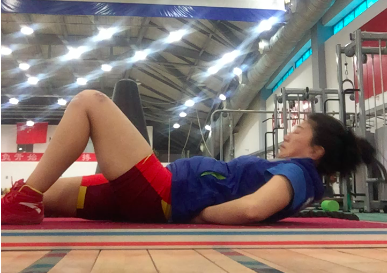
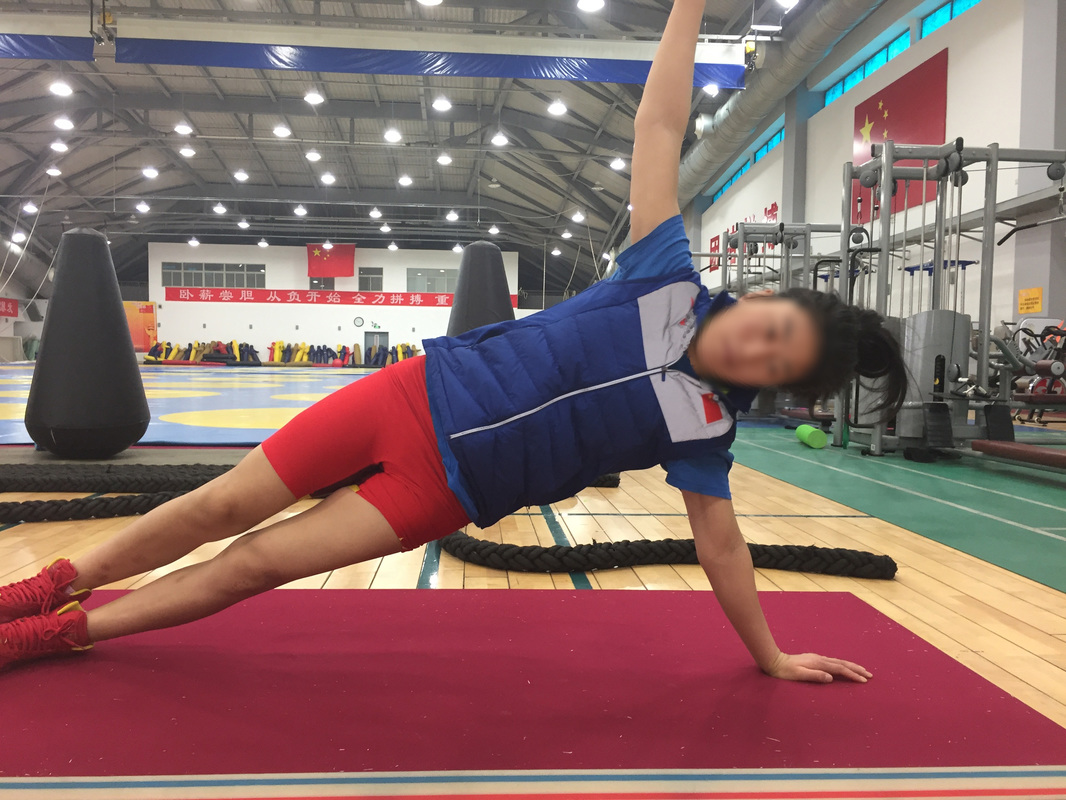
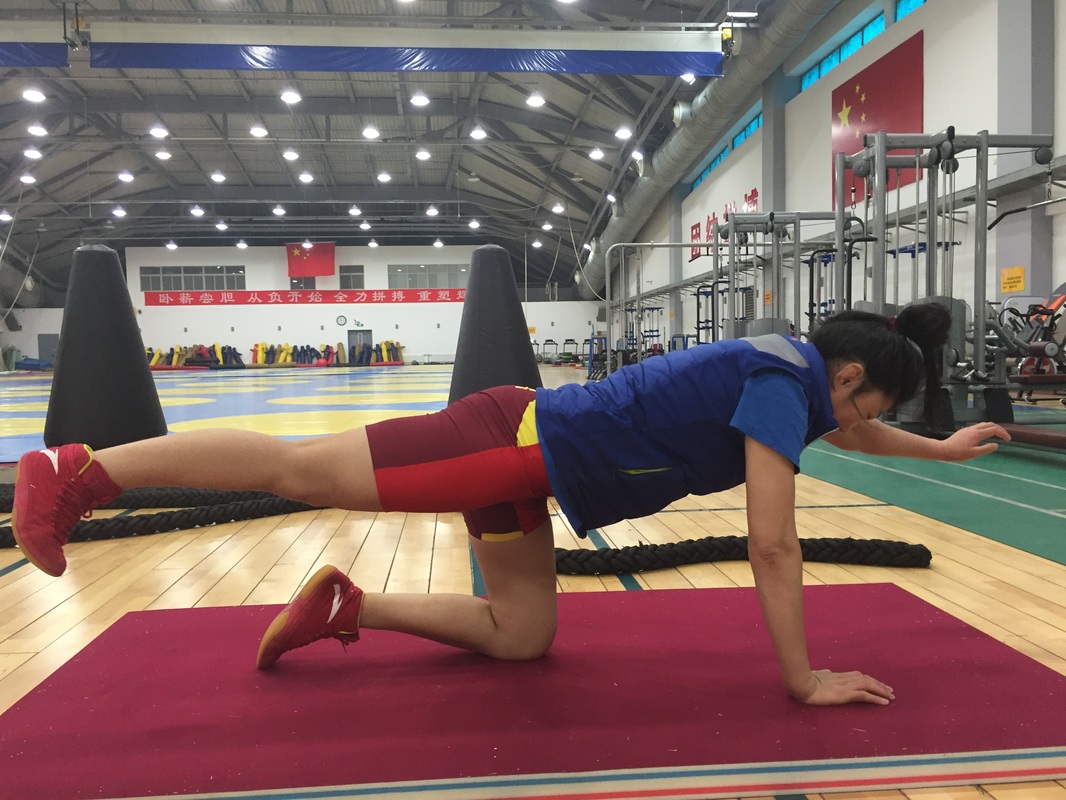
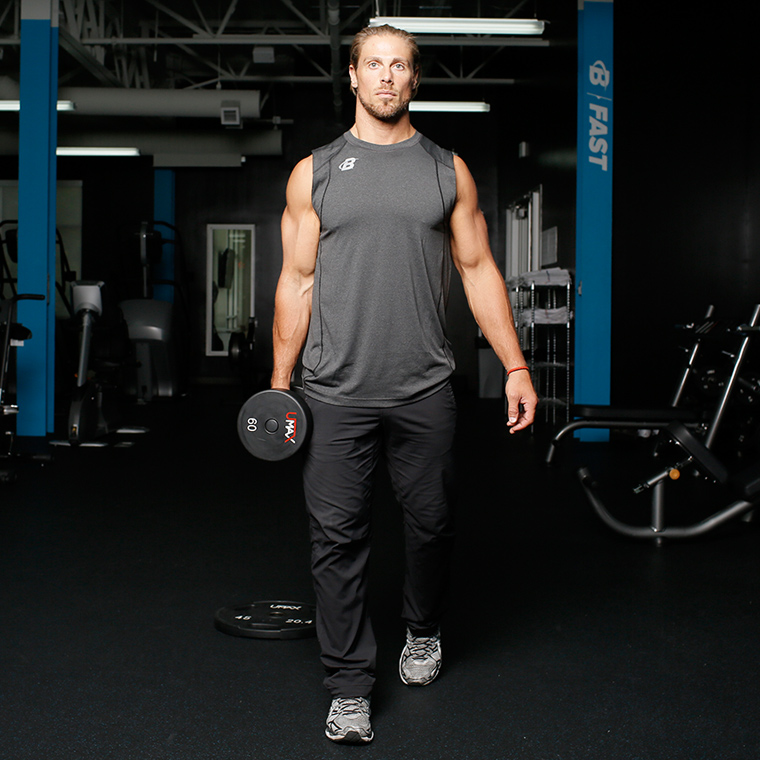
As prior discussed, the ability to maintain a stiff core will prevent energy leaks while performing striking movements. The most effective way to develop core stiffness has been shown to be isometric exercises (Lee 2015). A study by McGill showed that the duration of these exercises should be less than 10 seconds with endurance built up by increasing repetitions, rather than overall hold time. A few examples of my favorite isometric exercises for improving core stiffness are included at the end of this post.

2. RATE OF MUSCLE CONTRACTION AND RELAXATION
Speed of combat techniques is directly related to rate of muscle contraction. This is why coaches will often integrate a component of “nonstop” time blocks during training. However, the rate of muscle contraction is only as good as the rate of muscle relaxation. This is due to the double pulse phenomenon seen in core musculature during striking movements. Typically there is a peak in core muscle contraction just before the limb moves, and then again close to impact. Between the two periods of core stiffness there is a relaxation phase (McGill et al 2010).

Performance can be limited by either the rate of muscle contraction OR by the rate of muscle relaxation. Thus, it may be helpful to train both of these components. Unfortunately, there are no studies yet published that provide an effective guide to this specific training; however some untested strategies mentioned in Mcgill’s work are:
  • Isometrics into speed work
  • Double pulse imagery techniques
  • Training double pulse at slow speed and then increasing speed

I think an integration of all 3 of these techniques could result in improvements in the rate of muscle contraction and relaxation, and an efficient double pulse. The 3rd strategy is particularly interesting and I would like to see some research done with variable speeds and perhaps use of a metronome to help with automaticity.

In summary, it’s very important that combat athletes devote time to developing a functional core in order to maximize their technical skill performance. Otherwise, all of the force development and skills training will be lost to energy leaks. Finally, core work must address both overall ability to generate stiffness, as well as rate of muscle contraction and relaxation.
header image credit

Read more at laureypt.weebly.com
Follow me @FightClubPhysio


* SOME OF MY FAVORITE EXERCISES FOR IMPROVING CORE STIFFNESS *

Photo Credits: Personal, McGill, Bodybuilding.com, SpiderSport.com, Functionalmovement.com

References:
Lee, Benjamin C. Y.; McGill, Stuart M. 2015. Effect of Long-term Isometric Training on Core/Torso Stiffness. Journal of strength and conditioning research. 29 (6): 1515-1526.

McGill SM. 2010. Core training: evidence translating to better performance and injury prevention. Strength & Conditioning journal. 32(3).
McGill SM, Chaimberg JD, Frost DM, Fenwick MJ. 2010. Evidence of a double peak in muscle activation to enhance strike speed and force: an example with elite martial art fighters. Journal of strength and conditioning research. 24 (2): 348 – 357.


Interested in live cases where I apply this approach and integrate it with pain science, manual therapy, repeated motions, IASTM, with emphasis on patient education? Check out Modern Manual Therapy!

Keeping it Eclectic...


Like anyone had to give me another excuse to buy a new pair of kicks. Embarrassingly, I must admit that the photo at left is what I've accumulated IN CHINA with regards to sneakers. Apparently if I wanted to go on a trip with a suitcase full of just shoes I would still have to be picky. And this doesn't even touch on what is in my storage unit in Los Angeles!


Lately, I've been doing a lot of research on shoes and gait patterns during my own recovery from a foot and ankle injury that has had me sidelined for months. With two marathons on my race calendar this year, I need to make sure that my rehabilitation is effective and efficient.


Most of my research and experimentation has focused on running cadence and foot strike pattern. While I won't get into the exact reasoning behind all of my choices (although I promise I will write about this in the future -- it's been quite an interesting and enlightening journey), a lot of what I believe is based on the importance of sensory input at the foot and its effect up the kinetic chain. When I first got hurt I saw multiple medical practitioners, including MDs, Podiatrists, and Physical Therapists. They were quick to put me in super supportive shoes, orthotics, shoot me up with Cortisone, and even suggest surgery as an option. Many told me to find a new sport and that running wasn't a good choice.


After getting progressively worse (despite being a good patient,), I started to think maybe all of this support was actually resulting in global weakness. Although this is a concept I tell my patients about all the time, telling myself was a different beast - but my atrophied right calf don't lie. I had to take the blindfold off my foot and get it back! All of it; the small muscles, the stabilizers, the proprioceptors, the sensory units, the bigger muscles - everything. This led to a lot of time barefoot (see my Feb barefoot post) doing toe yoga and dry needling myself. After 3 months of waking up my foot from its hibernation along with consistent strength training, I was finally ready to get back on a running progression. But which shoes to lace up? My newer support shoes or my older minimalist shoes?

There is a fair amount of research coming out that actually ties high support shoes to increased forces - the exact opposite of what a lot of people pay the big bucks for. A new article, available this month ahead of print in the Journal of Applied Biomechanics, found that forces up the leg were significantly higher when running in maximalist shoes versus minimalist shoes. This supports another study by Ruder et al presented at last year's ACSM Annual Meeting that had similar findings. Fluctuations in forces have been attributed to changes in strike pattern due to cushioning, as well as blunting of sensory receptors. With my first hand ties to the importance of sensory receptors in the foot, my instinct was to toss out my super supportive Pegasus and Zoom Structures in lieu of my Lunar Tempos and Frees. But I just wasn't sure I was 100% committed to the idea of minimalist shoes and forefoot running.

The more I read and the more I experimented out on the track, I realized the reason I couldn't commit to one strike pattern is because there isn't one best strike pattern for everyone. 
Perhaps its the ability to adapt to varied force distributions and striking patterns that makes you most resilient to injury. In a study published in 2015 in the Scandinavian Journal of Medicine & Science in Sport, authors Malisoux et al found that runners who rotated between different pairs of running shoes were 39% less likely to get injured versus those who ran in predominantly the same pair of shoes over 22 weeks. It's possible that rotating between different shoes, and thus different strike patterns, minimizes the repetitive strain at each specific tissue structure and allows for more effective recovery and overall decrease in injury risk.


To circle back to my suitcase full of sneakers... Now that I'm ramping up training for my upcoming race in May, I'm strategically varying my shoes (although runners in the study rotated between an average of only 3.6 shoes...) - as well as cadence, pace, and terrain. I believe that adaptability is the key to injury reduction and, ultimately, performance. More to come!

Read more from Laurey at LaureyPT.weebly.com

Resources:
http://www.ncbi.nlm.nih.gov/pubmed/24286345
https://www.ncbi.nlm.nih.gov/pubmed/26959346
http://www.abstractsonline.com/Plan/ViewAbstract.aspx?sKey=72d1e156-0cfb-4165-89aa-c4c7f9ef5760&cKey=8e7a0703-1768-41ae-9691-df41b7cbe0da&mKey=8ba47590-f6fa-424e-a609-471a2e1de3bc

Interested in live cases where I apply this approach and integrate it with pain science, manual therapy, repeated motions, IASTM, with emphasis on patient education? Check out Modern Manual Therapy!

Keeping it Eclectic...